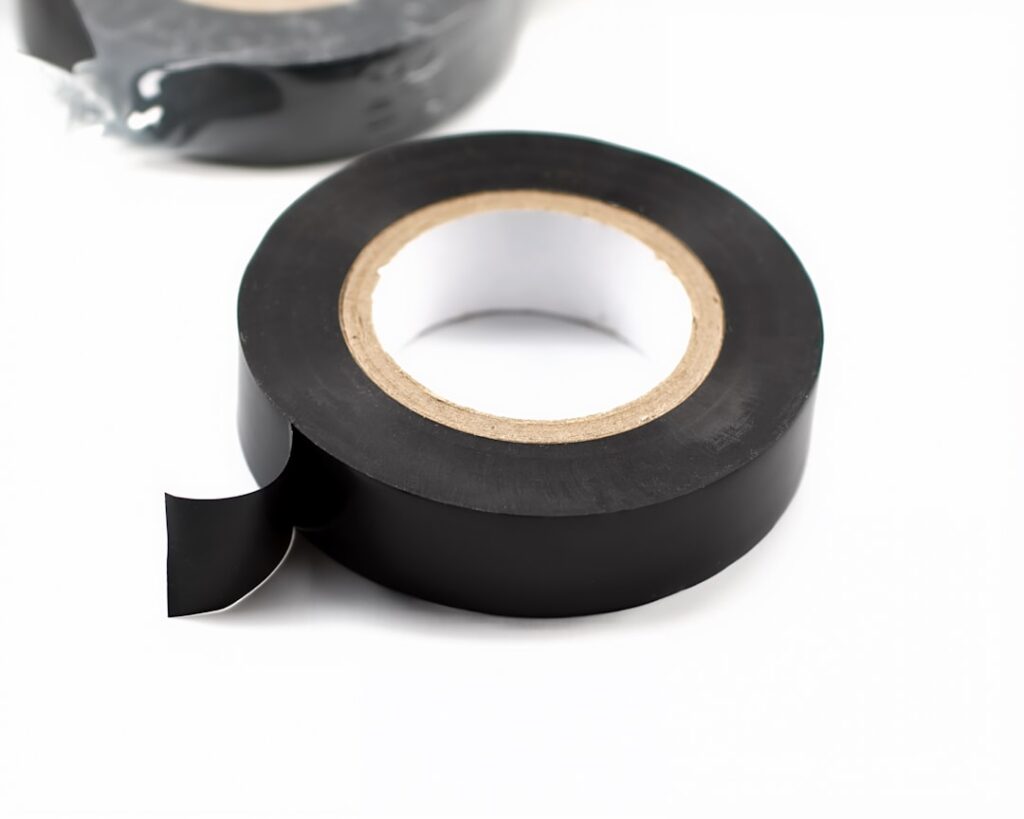
Almost every junk drawer has a roll of it, and almost everyone uses it slightly wrong. Vinyl electrical tape is a stretchy, insulating PVC tape designed to wrap and protect electrical connections, but its convenience leads people to slap it on everything from leaky hoses to broken handles, often where it doesn’t belong. Used correctly, it’s a reliable, code-recognized insulator with real performance ratings. Used carelessly, it’s a fire hazard or a sticky mess. This guide covers what it’s actually for, how to read its ratings, the proper wrapping technique, and the jobs it should never do.
What Vinyl Electrical Tape Is Made For
The tape is made of flexible PVC vinyl with a rubber-based pressure-sensitive adhesive. The vinyl backing is an electrical insulator, meaning it resists the flow of current, and it’s stretchy so it conforms tightly around wires and connectors. Its primary, intended purpose is insulating and protecting electrical connections: covering a wire splice, insulating an exposed conductor, and wrapping a wire nut connection for extra protection.
Beyond pure insulation, electricians use it for color-coding and phase identification, since it comes in standard colors that mark hot, neutral, ground, and phase conductors. It also bundles and protects cables, seals against moisture and abrasion, and provides general mechanical protection where a flexible, self-conforming wrap helps.
Reading the Ratings That Matter
Not all electrical tape is equal, and the ratings tell you whether a roll is suitable for a given job. Look for these:
- UL listing: A UL-listed tape has been tested to recognized safety standards. For any electrical work, use UL-listed tape, not a generic unrated roll
- Voltage rating: Quality electrical tape is typically rated to 600 volts, suitable for standard residential and commercial wiring
- Temperature rating: Look at the operating temperature range. Better tapes perform from around 0°F up to roughly 220°F, staying flexible in cold and stable in heat
- Thickness: Often 7 mils for general use, with premium professional tapes around the same range but with better adhesive and conformability
Cheap, unrated tape may not hold its adhesion, can dry out and unravel, and isn’t verified for electrical safety. For anything carrying current, spend the small extra for a UL-listed, properly rated roll.
How to Wrap It Correctly
Wrapping technique separates a safe, lasting job from one that unravels in a year. The professional method:
- Start with a clean, dry connection. The wire and the surface must be free of dirt, oil, and moisture for the adhesive to grip
- Begin half an inch back onto the insulated wire before the bare area, anchoring the tape on existing insulation
- Stretch the tape as you wrap. Pull it taut so it stretches slightly; this is key, because stretched vinyl conforms tightly and the tension makes the wrap secure
- Overlap each turn by half the tape width, spiraling along so every part of the connection gets a double layer
- Wrap multiple layers, usually building up to match or exceed the original insulation thickness, several passes for a solid connection
- Finish on insulation, ending the wrap back on the existing wire jacket, and press the final turn down without stretching so it doesn’t pull back
The half-overlap, stretched-as-you-go method is what makes the wrap self-amalgamate slightly and stay put. A loose, unstretched wrap with gaps is the version that unwinds and exposes the conductor.
Color Coding Basics
The colors aren’t just decoration; they carry meaning in electrical work. While exact conventions can vary and you should always follow local code and the existing system, common usage marks conductors by color so anyone working on the circuit later can identify them. Electricians wrap a band of colored tape on a conductor to re-identify it, for example marking the ends of a white wire being used as a hot with a band of colored tape. Using the right color for identification is a safety practice, not a cosmetic one.
What It Should Never Be Used For
This is where most homeowners go wrong. Vinyl electrical tape is an insulator and a protector, not a structural repair or a substitute for proper connections:
- Never use it as the sole connection between two wires. Wires must be mechanically joined with proper connectors or wire nuts; tape only insulates a connection that’s already secure
- Don’t use it to fix damaged cords on appliances as a permanent solution. A frayed or damaged cord should be replaced or properly repaired, not wrapped and forgotten
- Don’t use it where heat is extreme, beyond its temperature rating, where it can soften, melt, or fail
- Avoid it for plumbing and air leaks. Its adhesive and stretch aren’t made to seal pressure or water long-term, despite how often it gets used that way
- Don’t substitute it for heat-shrink where a sealed, permanent insulation is required in demanding environments
Storage and Shelf Life
Vinyl tape degrades if stored badly. Heat and sunlight dry out the adhesive and make the vinyl brittle, so keep rolls in a cool, dry place out of direct sun. An old, hardened roll that won’t stretch or unwinds stiffly should be replaced; using degraded tape on an electrical connection defeats the purpose. Quality tape stored properly stays usable for years, but it’s cheap enough that replacing a questionable roll is never the wrong call.
The Bottom Line
Vinyl Tape Versus Other Electrical Insulators
Vinyl tape isn’t the only way to insulate or protect a connection, and knowing the alternatives helps you reach for the right one. Heat-shrink tubing slides over a wire and shrinks tight with heat to form a sealed, durable insulation, better than tape for permanent, weather-exposed, or vibration-prone connections. Self-fusing silicone tape bonds to itself rather than relying on adhesive, making it useful for sealing against moisture and high heat where vinyl’s adhesive would fail.
For most everyday indoor jobs, insulating a wire-nut connection or covering a splice that’s already mechanically secure, quality vinyl tape is perfectly suited and far quicker than fishing tubing onto a wire. The point is to match the insulator to the demands: vinyl tape for general indoor insulating and identification, heat-shrink for sealed permanent connections, and self-fusing tape where moisture and heat resistance matter most.
Buying the Right Roll
With so many cheap rolls on shelves, a little selectivity pays off. Prioritize a UL-listed, 600-volt, 7-mil tape from a recognized maker over a bargain three-pack of unrated tape. Premium professional-grade rolls cost only a little more and reward you with stronger adhesion, better cold-weather flexibility, and a backing that stretches and conforms without tearing, which is exactly what makes a wrap stay sealed for years.
Keep a couple of colors on hand: a black roll for general insulating and a few standard colors for identification work. For outdoor or damp applications, look specifically for tape rated for moisture and a wider temperature range. A small upfront choice in quality is cheap insurance on a product whose entire job is electrical safety.
Vinyl electrical tape is a genuinely useful insulator when you treat it as what it is: a flexible PVC wrap for insulating, protecting, and color-coding electrical connections that are already mechanically sound. Buy UL-listed tape rated for 600 volts, wrap it stretched with a half-overlap over a clean connection, and respect its limits. The mistakes that make it dangerous, using it as the only connection, repairing damaged cords with it, or pushing it past its temperature rating, are all avoidable. Used as designed, it’s one of the most reliable rolls in any toolbox.
Prefer to explore on your own?
See how new flooring looks in your actual room in seconds — free, no signup.
Try the free Floor Studio →