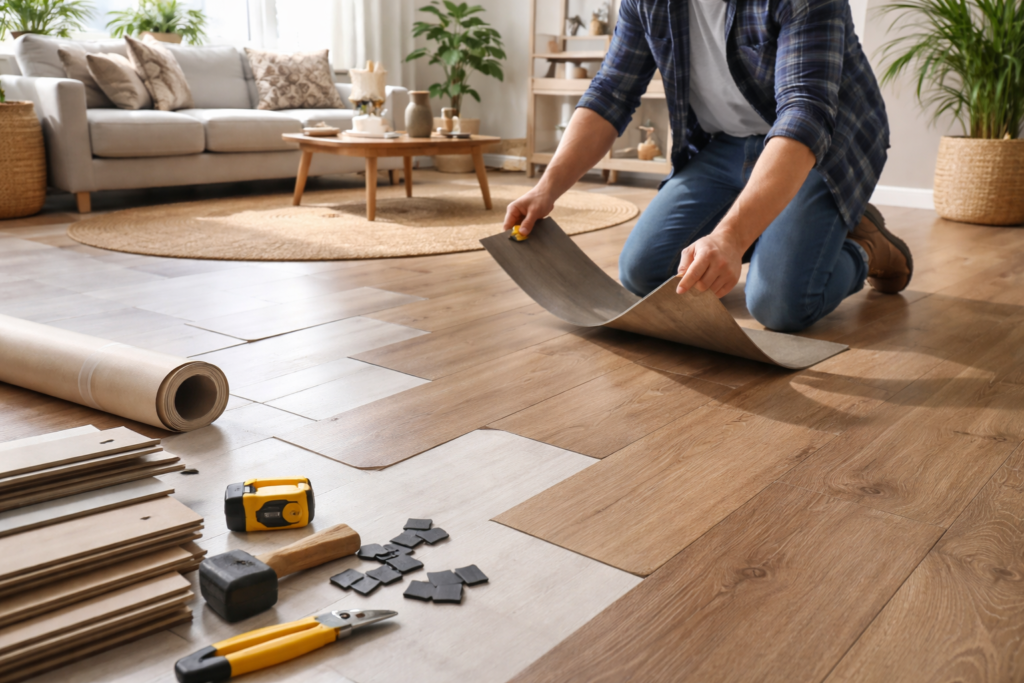
Flooring a 500-square-foot rental for under $250 in materials sounds impossible until you know where to look. Vinyl flooring under 50 cents sq ft absolutely exists — in sheet vinyl, peel-and-stick tiles, and bargain-bin plank — and for the right project it is a smart, budget-stretching choice. The honest trade-off is durability and feel: at this price you are buying a thin product that works beautifully in low-traffic and short-term situations but will not match the look or lifespan of premium LVP. Knowing what you actually get keeps your expectations realistic and your money well spent.
What Types Hit This Price Point
Three categories of vinyl regularly sell below 50 cents a square foot, each with a different installation method and feel.
- Sheet vinyl: Sold off a 12-foot-wide roll, often $0.40 to $0.99 per square foot, with bargain rolls dipping under 50 cents. It covers large areas seamlessly and is the most water-resistant budget option.
- Peel-and-stick vinyl tiles: Self-adhesive squares, frequently $0.30 to $0.70 per square foot. Easy DIY install with no special tools — just peel the backing and press down.
- Entry-level glue-down or thin floating LVP: The cheapest planks occasionally fall in this range during closeouts, though most quality LVP costs more.
Sheet vinyl gives you the best water resistance for the money, while peel-and-stick tiles win on ease of installation and the ability to replace a single damaged tile.
What You Give Up at This Price
Cheap vinyl is thin vinyl. Budget products typically have a wear layer of 4 to 8 mil or less, versus 12 to 20 mil on mid-grade LVP, so they scuff, dent, and wear through faster — expect 3 to 7 years in a busy household rather than the 15 to 25 years a quality floor delivers.
You also feel the thinness underfoot; there is little cushion, and the floor telegraphs every imperfection in the subfloor below. Peel-and-stick adhesive can fail over time, lifting at edges or seams, especially with temperature swings or moisture creeping underneath. The printed patterns are simpler and less convincing than the embossed, registered textures on premium plank.
Where This Flooring Makes Sense
Budget vinyl shines when the situation is temporary or low-stakes. It is ideal for rental units between tenants, basements and laundry rooms, closets, garages, workshops, mudrooms, and quick flips where you need a clean, presentable floor without sinking money into a space.
It is also a reasonable stopgap — covering a dated floor cheaply now while you save for a permanent upgrade later. For a kid’s playroom or a craft space that takes abuse, an inexpensive floor you can replace without heartbreak is a feature, not a flaw.
Where to Avoid It
Skip the cheapest vinyl in your forever home’s high-traffic zones, in front of entry doors, or in a kitchen where you cook daily. The thin wear layer simply will not hold up, and you will be redoing the floor in a few years.
Be cautious in bathrooms with peel-and-stick tiles, where water working into the seams undermines the adhesive and invites subfloor damage. If moisture is a factor and you want budget vinyl, choose sheet vinyl, which has far fewer seams for water to penetrate.
Where to Buy and How to Save
The best hunting grounds for sub-50-cent vinyl are big-box clearance racks, Floor & Decor and discount flooring outlets, and overstock or closeout sellers online. Home Depot and Lowe’s regularly stock entry-level sheet vinyl and peel-and-stick tiles in this range, and end-of-line discontinued colors get marked down sharply.
To stretch the budget further, buy a full roll or enough boxes for the whole job at once so you do not have to chase a discontinued color later. Measure carefully and add about 10 percent for sheet vinyl waste and 5 percent for tiles. Watch for free shipping thresholds online, since freight can quietly erase the savings on cheap material.
Getting the Best Results on a Budget
Cheap vinyl performs far better over a smooth, clean, dry subfloor — because it telegraphs flaws, prep matters even more than with thick plank. Skim-coat any low spots, fill cracks, and sand down high ridges. For peel-and-stick, the surface must be spotless and fully cured; dust or moisture is the enemy of adhesion.
Roll sheet vinyl and tiles firmly with a floor roller or a J-roller to seat the adhesive, and let the material acclimate to room temperature for 24 to 48 hours before installing. Done with care, vinyl flooring under 50 cents sq ft gives you a clean, functional, easily replaced surface that punches above its price for the right space.
Reading the Specs on Budget Vinyl
Even at this price, the numbers on the box tell you what you are getting. The wear layer is the single most important spec — it is the clear top coating that resists scuffs and abrasion. Budget products often list 4 to 8 mil or even just a “thickness” in millimeters without specifying the wear layer, which is a sign the protective layer is minimal. Whenever a wear layer is stated, choose the highest you can find in your price range.
Overall thickness affects feel and how well the floor hides subfloor imperfections. A 2 mm peel-and-stick tile telegraphs every flaw beneath it, while a slightly thicker sheet vinyl with a felt or foam backing feels more forgiving underfoot. Check whether the product is rated for the room you have in mind; some cheap vinyl is labeled for light residential use only and is not meant for wet areas.
How Long Budget Vinyl Really Lasts
Setting realistic expectations prevents disappointment. In a low-traffic guest room or closet, sub-50-cent vinyl can hold up five to seven years looking acceptable. In a busy entry, kitchen, or hallway, the thin wear layer may show visible scuffing and pattern wear within two to three years, and peel-and-stick edges can begin lifting even sooner.
The math still favors it for the right use. At 40 cents a square foot, refloating a 200-square-foot rental room costs about $80 in material, so even replacing it every few years stays cheaper than a single premium installation. Treat budget vinyl as a planned, replaceable surface rather than a permanent floor, and it delivers exactly what it promises: a clean look now at the lowest possible cost.
Prefer to explore on your own?
See how new flooring looks in your actual room in seconds — free, no signup.
Try the free Floor Studio →