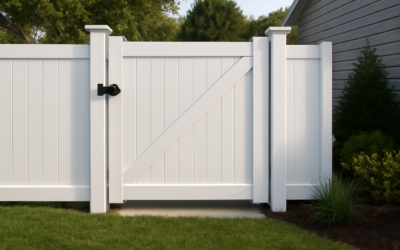
A gate is the part of your fence that gets used every single day, which means it takes the most abuse and shows wear fastest. A vinyl gate sidesteps the warping, rotting, rusting, and repainting that plague wood and metal, delivering a clean, low-maintenance entry that matches a vinyl fence and holds up for decades. If you are fencing a yard, securing a pool, or framing a driveway, understanding vinyl gate styles, hardware, and installation will help you get one that swings smoothly for years.
Why Choose a Vinyl Gate
Vinyl, technically PVC, has become a go-to fencing material for good reasons that carry over to gates. It never needs painting or staining, resists moisture and insects, will not rot or rust, and wipes clean with a hose. The color goes all the way through the material, so scratches are far less noticeable than on a painted surface. For a gate that opens and closes thousands of times a year, that durability and freedom from upkeep is a major advantage over wood, which warps and needs refinishing, and metal, which can rust.
Common Vinyl Gate Styles
Gates come in styles to match the fence and the function:
- Privacy gates: Solid panels matching a privacy fence, blocking sightlines into the yard.
- Picket gates: Spaced pickets for a classic, open look around front yards and gardens.
- Semi-private and lattice-top gates: A solid lower section with decorative lattice or spacing on top for airflow and style.
- Pool gates: Designed to meet safety requirements with self-closing, self-latching hardware.
- Driveway and double gates: Wider spans, often double-leaf, for vehicle access.
Durability and Maintenance
The standout feature of a vinyl gate is how little it asks of you. There is no painting, staining, or sealing. Cleaning is as simple as spraying it down with a garden hose, and for stubborn dirt, mild soap and a soft brush handle it. Quality vinyl is formulated with UV inhibitors to resist fading and brittleness from sun exposure, though very cheap vinyl can become brittle over many years. Choosing a reputable, properly reinforced gate makes a real difference in how it ages, especially for larger spans.
Hardware That Makes or Breaks a Gate
A gate is only as good as its hardware, and this is where many installations fail. Vinyl gate frames are often hollow, so they need internal reinforcement, frequently aluminum inserts, to keep larger gates from sagging. Use sturdy, weather-resistant hinges and latches rated for the gate’s size and weight. Self-closing hinges and self-latching mechanisms are required for pool gates in many areas for safety, and they are a smart upgrade anywhere you want a gate to shut behind you. A gate wheel or anti-sag kit helps wider gates stay level over time.
Installation Basics
A vinyl gate hangs between posts, and the posts do the heavy lifting. For a gate to swing true and not sag, the posts must be set deeply and squarely in concrete, plumb and at the correct spacing. Steps in brief:
- Set the gate posts in concrete, plumb and properly spaced for the gate width plus hardware clearance.
- Let the concrete cure fully before hanging the gate so the posts do not shift.
- Attach reinforced hinges to the post and gate, checking that the gate sits level.
- Install the latch and, for pool or safety gates, the self-closing and self-latching hardware.
- Test the swing and adjust the hinges so the gate clears the ground and latches cleanly.
Wide, double, and driveway gates are heavier and more demanding; if you are unsure, hiring a fence installer is worth it for a gate that lasts.
What a Vinyl Gate Costs
Pricing depends on size, style, and hardware quality. A standard single walk gate is the most affordable, while wide privacy gates, double gates, and driveway gates cost more because of the larger panels, reinforcement, and heavier hardware. Quality hinges, latches, and anti-sag kits add to the total but are worth it for longevity. Posts and concrete are additional if you are installing from scratch. Get quotes for the specific style and width you need, and remember that spending a little more on reinforcement and hardware prevents the sagging that ruins cheap gates.
Preventing and Fixing a Sagging Gate
Sagging is the number one complaint with vinyl gates, and it is almost always preventable. Sag happens when the gate’s own weight pulls the latch side down over time, usually because the frame lacks reinforcement or the hinge-side post moved. The fixes start at installation: use aluminum-reinforced gate framing, set posts deep in concrete, and install an anti-sag kit, which is a cable and turnbuckle running diagonally from the top hinge corner to the bottom latch corner. If an existing gate already sags, you can often install an anti-sag cable kit, add a gate wheel that supports the latch side as it swings, or adjust and re-shim the hinges. Catching sag early keeps the gate latching cleanly instead of dragging on the ground.
Seasonal Care and Longevity
Vinyl gates are low-maintenance, but a little seasonal attention extends their life. Wash the gate a couple of times a year with a hose and mild soap to remove dirt, pollen, and mildew, which can leave stains if left for long periods. Lubricate the hinges and latch with a suitable lubricant so the gate continues to swing and close smoothly, especially before the cold season. Check the hardware and reinforcement once a year, tightening any loose screws and inspecting for sag. In regions with heavy snow, clear buildup that could press against the gate. These simple habits keep a quality vinyl gate looking and working like new for many years.
Is a Vinyl Gate Right for You
If you want a gate that looks clean, resists weather and pests, and never needs painting, a vinyl gate is an excellent choice, especially paired with a matching vinyl fence. Prioritize reinforced framing and quality hardware, set the posts properly in concrete, and choose self-closing, self-latching hardware for pools and safety. Do those things and your gate will swing smoothly and look great with almost no maintenance for many years to come.
Prefer to explore on your own?
See how new flooring looks in your actual room in seconds — free, no signup.
Try the free Floor Studio →