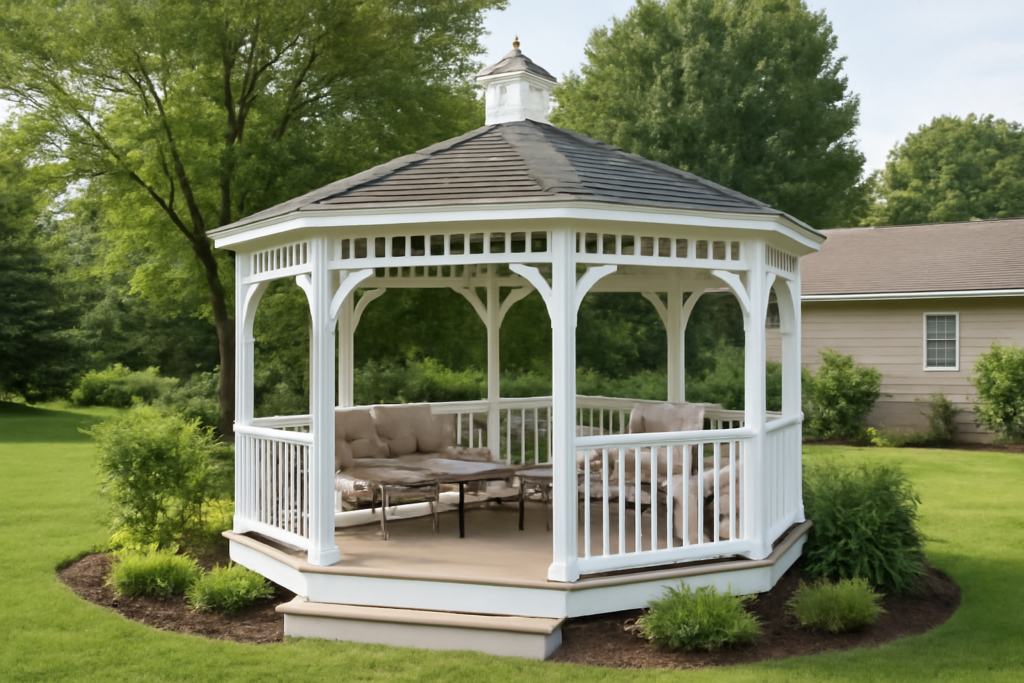
A backyard gazebo turns an ordinary lawn into a destination, but the material you build it from decides how many weekends you will spend maintaining it instead of enjoying it. A vinyl gazebo trades the annual sanding, staining, and sealing that wood demands for a structure you wash with a garden hose. The vinyl here is cellular PVC wrapped around structural framing, the same family of material as quality vinyl fencing and railing, and it shrugs off rot, insects, and peeling paint. The tradeoff is a higher upfront cost and fewer ways to change the color later, so it pays to understand what you are buying before a kit shows up on a pallet.
Part of our Decks & Outdoor guide — explore the full guide →
What Makes a Gazebo “Vinyl”
A vinyl gazebo is not solid plastic. The posts, beams, and trim are typically aluminum or pressure-treated wood structural members sleeved in rigid vinyl, or solid cellular PVC components engineered to carry load. The vinyl skin is what you see and clean; the structure underneath is what holds up the roof and resists wind.
This construction matters because a hollow vinyl post with nothing inside would flex and crack. Reputable manufacturers reinforce posts with aluminum inserts or galvanized steel, especially on larger spans. When you compare kits, ask what is inside the posts and beams, not just the outside finish.
Vinyl vs. Wood and Aluminum
Each material has a clear personality:
- Vinyl: Lowest maintenance, won’t rot or attract carpenter bees, stays bright white or its molded color for decades. Higher upfront cost and limited color choices.
- Wood (cedar or pressure-treated): Warm, classic, fully customizable in stain. Requires regular sealing and is vulnerable to rot and insects.
- Aluminum: Lightweight and rust-proof, often the cheapest, but reads more utilitarian and can dent.
For a homeowner who wants a clean, traditional look and zero ladder time with a paintbrush, vinyl is the natural middle ground. You pay more once and stop paying in labor every season.
Common Sizes and Shapes
Gazebos come in a few standard footprints, and the right one depends on what you plan to put inside:
- 8 by 8 feet: Cozy, fits a bistro set or a hot tub in a small yard.
- 10 by 10 to 10 by 12 feet: The sweet spot for a dining table that seats six.
- 12 by 14 feet and up: Room for a full outdoor living set or a large hot tub with walk-around clearance.
Shapes split between rectangular, square, and the classic octagon. Octagonal gazebos are the traditional garden look and feel open; rectangular models suit decks and patios and use space more efficiently for furniture. Measure your patio or deck and leave at least 2 to 3 feet of clearance on the sides you will walk around.
Roofing Options
The roof is where a vinyl gazebo earns its keep against weather, and you have choices:
- Asphalt shingles: The most common roof, matching your house and rated for decades. Adds weight, so the frame must be sized for it.
- Metal roofing: Sleek, reflective, and excellent for shedding snow and rain.
- Polycarbonate panels: Let filtered light through, good for a sunroom feel but warmer underneath.
Single-roof models keep things simple, while double-roof or cupola designs add a vented top tier that releases hot air and adds a finished, decorative crown. In snowy climates, confirm the roof and frame carry an adequate snow-load rating before you buy.
Kit vs. Custom Installation
Most homeowners buy a pre-engineered kit, which ships as labeled, pre-cut components with hardware and instructions. A kit install for a 10 by 12 model usually takes two people a weekend, plus the prep for a proper base. The frame must anchor to something solid: a concrete pad, a paver patio, a deck, or footings dug below the frost line in cold regions.
Custom-built vinyl gazebos cost more but let you match an exact footprint, integrate screens, or add electrical for fans and lighting. If you want a screened-in space, plan for screen panels at purchase rather than retrofitting them, because the post spacing and channels need to accommodate the frames.
Cost Expectations
A vinyl gazebo kit typically runs from roughly $4,000 for a small 8 by 8 model to $12,000 or more for a large double-roof structure, before site prep and installation. Adding a concrete or paver base, electrical, screens, or a professional crew raises the total. Compared to a wood gazebo, expect to pay more at purchase, but factor in the wood version’s lifetime of stain, sealer, and labor when you compare.
Accessories and Add-Ons
A bare gazebo is a frame; the accessories make it a room. The most popular add-ons are worth planning for at purchase rather than retrofitting later:
- Screen panels: Turn the gazebo into a bug-free three-season space. Easiest to install if the posts are designed to accept them.
- Privacy walls and curtains: Vinyl or fabric panels that block wind and afternoon sun on one or two sides.
- Ceiling fans and lighting: Require electrical run to the gazebo, ideally planned before the roof goes on so wiring stays hidden.
- Cupola and weathervane: A vented top crown that adds height, ventilation, and a finished traditional look.
Even if you do not add these on day one, choosing a model that can accept them later saves you from drilling into the structure down the road. Check the post and beam design for built-in channels or mounting points.
Maintenance and Longevity
This is the entire selling point. To keep a vinyl gazebo looking new:
- Rinse the posts and beams with a garden hose a couple of times a season.
- For grime or mildew, wash with mild soap, water, and a soft brush, then rinse. Avoid abrasive pads that can dull the finish.
- Clear the roof and gutters of leaves so water sheds properly.
- Inspect anchor points and hardware once a year, especially after a storm.
No sanding, no staining, no repainting. A quality vinyl gazebo can hold its color and structure for 20 years or more with little more than the occasional wash, which is exactly why so many homeowners are willing to pay the premium up front. Choose the size for your furniture, the roof for your climate, and a solid base, and you will have a backyard centerpiece that asks almost nothing of you in return.
Prefer to explore on your own?
See how new flooring looks in your actual room in seconds — free, no signup.
Try the free Floor Studio →