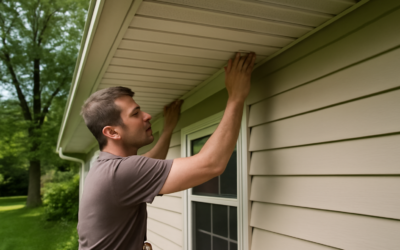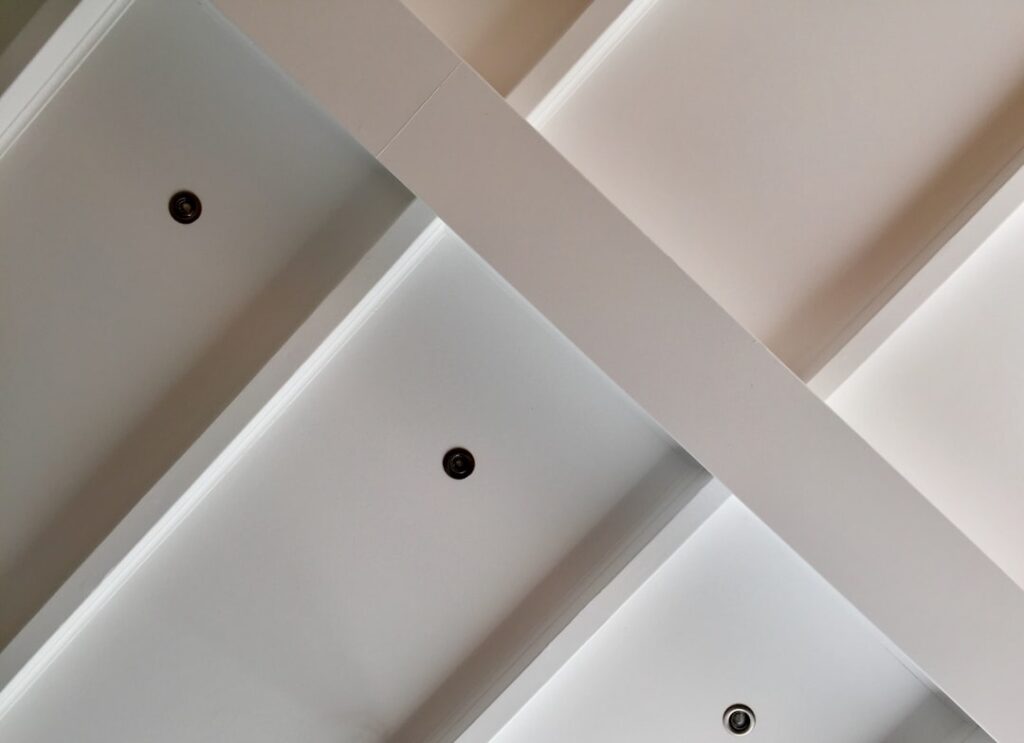
Soffit isn’t just the material tucked under your roof’s overhang — it’s also one of the best ways to finish a porch, carport, or breezeway ceiling. A vinyl soffit ceiling gives you a durable, weather-resistant, low-maintenance surface that won’t rot, warp, or need repainting the way a wood ceiling does. Builders and remodelers use vinyl soffit panels for covered ceilings because they’re affordable, they go up fast, and the vented versions handle airflow where it’s needed. If you’re finishing the underside of a porch roof or replacing a tired wood ceiling, here’s everything you need to know.
Part of our Roofing guide — explore the full guide →
What Vinyl Soffit Is
Vinyl soffit is the same family of PVC paneling used to enclose the underside of roof overhangs, designed to resist moisture, insects, and UV without rotting or peeling. The panels interlock along their edges and install in long runs, much like vinyl siding turned to face down. Used as a porch or patio ceiling, it gives you a clean, finished look that stands up to humidity, splashing rain, and temperature swings far better than painted wood or drywall. It comes in panel widths and lengths suited to ceiling spans, in a range of colors and a few profiles, so you can match it to your home’s trim and siding.
Vented vs. Solid Soffit Panels
The single most important choice is whether to use vented or solid panels, and it depends entirely on the application.
- Vented soffit — perforated with small slots or holes that allow air to flow. Under a roof overhang, this venting is critical: it lets the attic and roof breathe, reducing heat and moisture buildup that can damage the roof structure. For an enclosed porch ceiling that sits below a vented attic or ventilated roof, vented panels keep air moving.
- Solid soffit — no perforations, used where ventilation isn’t needed or where you want a fully closed surface, such as a porch ceiling that doesn’t require airflow above it, or in combination with vented runs.
Many ceilings use a mix — solid panels for most of the field with vented sections to provide the required airflow. Getting the ventilation right matters for the health of the roof structure above, so when in doubt, lean toward including vented panels.
Why Choose a Vinyl Soffit Ceiling
The advantages add up quickly for an exterior or semi-exterior ceiling:
- Weather resistance — vinyl won’t rot, warp, or absorb moisture the way wood does, making it ideal for humid and rainy climates.
- Low maintenance — it never needs painting or staining, and it cleans with a hose or a soft brush.
- Insect and pest resistance — no wood for insects to bore into.
- Affordability — generally cheaper than a finished wood ceiling, in both material and labor.
- Fast installation — interlocking panels go up quickly, especially over a straightforward, level framework.
For a porch ceiling that takes weather abuse but that you don’t want to babysit, vinyl soffit is a practical, good-looking answer.
Installation Basics
Installing a vinyl soffit ceiling is within reach of a confident DIYer, though long spans and high ceilings make it a two-person job. The general approach:
- Install the perimeter channel. J-channel or F-channel (receiving channel) goes around the edges of the ceiling area to hold the panel ends.
- Measure and cut panels to span the ceiling, cutting them slightly short to allow for vinyl’s expansion and contraction with temperature.
- Slide panels into the channels and lock each one into the previous panel’s edge, working across the ceiling.
- Fasten loosely. Nail or screw through the panel’s nailing slots into the framing, but don’t drive fasteners tight — vinyl must be able to move with temperature changes, so leave a little play.
- Finish the edges with trim pieces for a clean look where the ceiling meets the wall or fascia.
The two things first-timers get wrong are not allowing for expansion (which causes buckling) and fastening too tightly (same result). Leave room for the vinyl to move and the ceiling stays flat through every season.
What It Costs
Vinyl soffit is one of the more budget-friendly ceiling options. Material commonly runs in the range of $1 to $4 per square foot for the panels, with vented and premium-finish panels at the higher end. Installed by a contractor, a vinyl soffit ceiling often lands somewhere around $4 to $10 per square foot depending on ceiling height, complexity, and your region. DIY brings the cost down to mostly materials plus channel and trim. Those are general ranges — get local quotes, since labor and material pricing vary by market and by the difficulty of the specific ceiling.
Care and Maintenance
This is where vinyl earns its keep. A vinyl soffit ceiling essentially cleans itself in the rain, and when it needs attention, a garden hose and a soft-bristle brush handle dirt and cobwebs. For tougher grime or mildew in shaded, humid spots, a mild soap-and-water solution wipes it clean — skip harsh abrasives and aggressive solvents that can dull the finish. Check the vented panels occasionally to make sure airflow isn’t blocked by debris or nests. Beyond that, there’s no painting, no staining, and no sealing. That hands-off upkeep is a big part of why vinyl soffit has become the default for porch ceilings and overhangs.
Colors, Profiles, and Finishes
Vinyl soffit comes in more than just plain white, and the options let you match or complement your home. Common colors range from white and almond to clay, tan, and darker tones that mimic stained wood, and some manufacturers offer realistic woodgrain-textured panels for a porch ceiling that looks like a beadboard or tongue-and-groove wood ceiling without the upkeep. Profiles vary too: a flat or smooth panel reads clean and modern, while a beaded profile gives that classic Southern-porch beadboard look that many homeowners love overhead. Pick a color that works with your siding, fascia, and trim — a white or light ceiling keeps a porch feeling bright, while a woodgrain finish adds warmth. Bringing home a sample panel to view in your actual light, as with any exterior material, helps you avoid a color that looks different on the house than it did in the store.
Common Mistakes to Avoid
A few errors trip up first-time installers, and knowing them ahead of time saves headaches. The biggest is fastening the panels too tightly or cutting them too long, both of which prevent the vinyl from expanding and contracting and lead to buckling and waviness on hot days. Leave a gap at the panel ends and drive fasteners in the center of the nailing slots, snug but not crushed. Another mistake is skipping or under-sizing the ventilation when the ceiling sits below an attic or roof that needs airflow — trapped heat and moisture can damage the structure above. Finally, an uneven or out-of-level framing substrate shows through as a wavy ceiling, so check that your furring or framework is straight before you start hanging panels. Get those basics right and the install goes smoothly.
The Bottom Line
A vinyl soffit ceiling is a durable, affordable, and genuinely low-maintenance way to finish a porch, carport, or overhang. Choose vented panels where airflow matters and solid panels where it doesn’t, or mix the two to get the ventilation right. Install with room for expansion and loose fasteners so the panels can move freely, and you’ll have a ceiling that shrugs off weather for decades with nothing more than an occasional rinse. For most covered outdoor ceilings, it’s the practical choice that looks clean and lasts.
Prefer to explore on your own?
See how new flooring looks in your actual room in seconds — free, no signup.
Try the free Floor Studio →