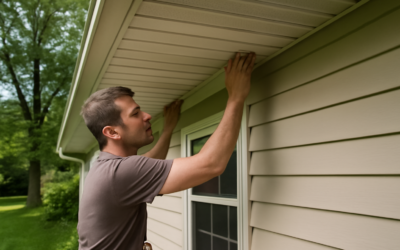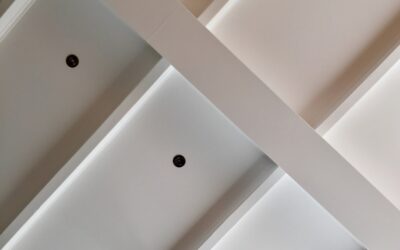
A natural wood porch ceiling or tongue-and-groove eave looks fantastic for about three years, then it needs sanding, staining and a watchful eye for rot and carpenter bees. Wood grain soffit solves that problem by giving you the warm, cedar-toned look under your roofline in vinyl or prefinished aluminum that never needs refinishing. It has become one of the most requested upgrades on modern farmhouse, craftsman and contemporary homes, especially where a stained ceiling contrasts with white or dark siding.
Part of our Roofing guide — explore the full guide →
There are two main families: embossed vinyl in a printed or solid wood tone, and aluminum with a printed wood pattern baked into the finish. Both install like standard soffit, both can be vented or solid, and both typically cost somewhat more than plain white panels but far less over time than real wood. Comparing materials, colors, ventilation, installation and cost will help you pick the right product for eaves or a covered porch.
- What Is Wood Grain Soffit?
- Wood Grain Vinyl Soffit
- Wood Grain Aluminum Soffit
- Wood-Look Panels vs Real Wood
- Vented vs Solid in Wood Tones
- Design Tips for Warm Eaves and Porch Ceilings
- Installing Wood Look Soffit Step by Step
- Ladder Safety for Overhead Work
- Troubleshooting
- Cost and When to Call a Pro
- Frequently Asked Questions
What Is Wood Grain Soffit?
Wood grain soffit is any manufactured soffit panel finished to look like natural wood. The appearance comes from two techniques. Embossing presses a grain texture into the surface so it feels like brushed wood. Printing applies a realistic wood pattern, with knots and color variation, on top of the base material before a protective clear layer is added. The best products combine both, giving a convincing look from the ground and even up close on a porch ceiling.
Shoppers use several names for the same idea: wood look soffit, wood look vinyl soffit, wood look aluminum soffit, wood grain vinyl soffit, and wood grain aluminum soffit. They all refer to the same goal, a stained-wood appearance with a maintenance-free material. Common tones range from light pine and natural cedar to honey, walnut and deep espresso.
Wood Grain Vinyl Soffit
Vinyl is the most affordable route to the look. Panels are typically 10 to 12 inches wide in 12-foot lengths with beadboard, triple 4-inch or V-groove profiles. Color goes all the way through or is capstocked with a weather-resistant top layer, so minor scratches do not expose a white core.
- Pros: lowest cost, easy to cut with snips or a fine-tooth saw, will not dent, lightweight for overhead work.
- Cons: more expansion and contraction than aluminum, can sag over wide spans, may soften near high heat sources like grills, and darker vinyl colors can fade over many years of direct sun.
A quality vinyl soffit panel with a wood-look finish is a smart choice for standard eaves up to about 16 to 18 inches and for porch ceilings supported by furring strips every 12 to 16 inches.
Wood Grain Aluminum Soffit
Printed aluminum costs more but delivers a stiffer panel, sharper lines and better resistance to heat and fading. The print is applied to the coil and baked on, so it does not peel. Aluminum also pairs naturally with aluminum fascia and trim coil in the same wood tone, which helps create a continuous look around the house.
- Pros: spans wider overhangs, minimal movement, excellent heat tolerance, crisp shadow lines, long finish warranties.
- Cons: higher price, can dent from ladders or impacts, and cut edges should be handled with gloves.
Choose wood look aluminum soffit for deep overhangs, high-end exteriors, and porches with grills or heaters nearby.
Wood-Look Panels vs Real Wood
| Factor | Wood-look vinyl or aluminum | Real wood (cedar, pine) |
|---|---|---|
| Maintenance | Wash occasionally | Restain or seal every 2 to 5 years |
| Rot and pests | Not affected | Vulnerable to rot, bees, woodpeckers |
| Ventilation | Vented versions available | Needs added vents or gaps |
| Look up close | Very good, slightly uniform | Authentic, varies board to board |
| Upfront cost | Moderate | Moderate to high |
Real tongue-and-groove wood is still the purist’s choice for a show-piece porch ceiling, and it can be refinished in any stain. For most homeowners, though, the lifetime cost of upkeep tips the balance toward wood grain soffit, especially on eaves that are hard to reach with a brush.
Vented vs Solid in Wood Tones
Most wood-look product lines include both vented and solid panels. Along eaves that open into the attic, use vented or center-vent panels so intake air can reach the attic and work with ridge or roof vents. Check the net free area on the label to confirm you are meeting your ventilation target. On covered porches, solid panels give the most realistic plank-ceiling appearance, since perforations are a giveaway that the ceiling is not wood. Some installers use solid panels on the porch ceiling and vented panels on the surrounding eaves in the same color, which keeps the look unified while the attic still breathes.
Design Tips for Warm Eaves and Porch Ceilings
- Contrast works best. A mid-tone cedar soffit against white, gray or black siding creates the high-end look people are after. Wood tone on wood-tone siding can feel heavy.
- Match the trim plan. Decide whether fascia will be wood-look or match the siding. A wood-look soffit with a dark fascia is a popular modern combination.
- Run boards the right way. On porches, panels usually run parallel to the house or to the longest dimension for the cleanest look. On eaves, they run wall to fascia.
- Plan the lighting. Recessed soffit lights look great in wood-tone ceilings. Low-voltage fixtures are simpler, but any line-voltage lighting or new circuits should be installed by a licensed electrician, with the breaker off and power confirmed off with a non-contact voltage tester before anyone touches wiring.
- Order samples. View samples outdoors in the shade of an actual overhang. Printed wood looks darker and warmer in shadow.
Installing Wood Look Soffit Step by Step
- Prep the framing. Repair rot in rafter tails, subfascia or porch beams. For porch ceilings, install furring strips perpendicular to the panel direction every 12 to 16 inches.
- Snap level lines. Mark where the wall receiver will go so the soffit is level and parallel to the fascia.
- Install receivers. Fasten J-channel or F-channel in a matching or coordinating color along the wall and at the fascia, nailing into framing.
- Measure and cut. Measure each run and subtract about 1/4 inch for vinyl expansion (less for aluminum). Cut vinyl with snips or a fine-tooth saw; cut aluminum with a reversed fine-tooth circular saw blade or snips.
- Check the grain. Before nailing, dry-lay a few panels and shuffle them so repeated print patterns are not side by side. This simple step makes printed wood look far more natural.
- Fasten loosely. Slide panels into both channels, lock each to the last, and nail through the nailing hem in the center of the slot, leaving a small gap under the nail head for movement.
- Trim out. Install fascia cover, corner channels and any light or vent cutouts, then caulk only where the manufacturer allows.
Ladder Safety for Overhead Work
Soffit and porch ceiling installs mean working overhead for hours, often while holding long, flexible panels. Use a sturdy ladder set on firm, level ground at about a 4-to-1 angle, with a standoff to keep it off gutters. For porch ceilings, a rolling scaffold or a pair of step ladders with a rated plank is safer than repositioning an extension ladder every few feet. Work with a helper to support long panels. Leave two-story eaves and steep or unstable ground to a professional crew with fall protection.
Troubleshooting
- Waves or buckling in vinyl. Panels were nailed too tight or cut too long. Loosen fasteners and trim.
- Obvious repeating pattern. Remove and reshuffle panels so identical prints are separated.
- Sagging over a wide porch. Add more furring or switch to stiffer aluminum panels.
- Color mismatch between boxes. Buy all material from the same production run and blend panels from several boxes as you go.
Cost and When to Call a Pro
Expect wood grain vinyl soffit to cost roughly 1.5 to 2 times the price of standard white vinyl panels, and wood grain aluminum soffit to cost more again. Installed, many projects fall in the range of about $8 to $25 per linear foot of eave or $10 to $25 per square foot for porch ceilings, depending on material, height and prep. Matching wood-look fascia and trim adds to the total.
Call a pro for two-story eaves, porch ceilings with integrated lighting, rotted framing, or when you want custom-bent fascia in a matching wood tone. Ask installers for the panel line, color name, gauge and vent rating in writing.
Frequently Asked Questions
Does wood grain soffit look fake?
Quality embossed and printed panels look convincing from the ground and on most porch ceilings. Shuffling panels during installation to avoid repeated patterns makes a big difference up close.
Is wood look aluminum soffit better than vinyl?
Aluminum is stiffer, handles heat better and moves less, so it suits deep overhangs. Vinyl costs less and will not dent. Both work well on standard eaves.
Can wood grain soffit be vented?
Yes. Most lines offer vented or center-vent panels for attic intake and solid panels for porch ceilings, often in the same wood tone.
Will wood look vinyl soffit fade?
Soffit sits mostly in shade, so fading is slow. Darker vinyl colors on sun-exposed sides may lighten gradually over many years.
Can I install wood grain soffit over an existing ceiling?
Often yes, if the existing surface is sound and dry. Add furring strips for a flat, well-supported nailing base and cut vent openings behind any vented panels.