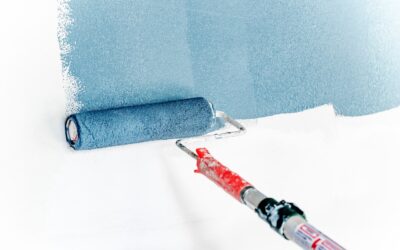
That “new house smell” after a flooring install or a fresh coat of paint is not harmless ambiance. It is a cocktail of volatile organic compounds evaporating out of finishes, glues and pressed-wood panels, and it is the main driver of poor voc indoor air quality in otherwise clean homes. Most of these chemicals peak within the first few days and fade over weeks, but a few sources keep releasing low levels for months. The good news is that you can control nearly all of it with ventilation, timing and a handful of cheap habits.
Part of our Windows & Doors guide — explore the full guide →
Short version: indoor VOC concentrations are routinely two to five times higher than outdoor levels, and they can spike far higher right after a renovation. Your job is to remove the source where you can, dilute what remains with fresh air, and keep temperature and humidity in check so products off-gas slowly instead of all at once. If someone in the house has asthma, is pregnant, or is very young, the airing-out period matters even more.
- What Drives VOC Indoor Air Quality in a Typical Home
- Safe Levels and How VOC Air Testing Works
- Off-Gassing Timelines for Common Materials
- Airing-Out Protocol After Flooring, Paint or Cabinets
- Everyday Fixes That Lower VOCs Long Term
- Troubleshooting Persistent Odors and Symptoms
- Costs to Improve Indoor Air Quality
- When to Call a Professional
- Frequently Asked Questions
This guide focuses on where VOCs come from inside a house, what readings actually mean, how long common materials keep releasing fumes, and a practical protocol for clearing the air after a project. Choosing low-emission products before you buy is a separate topic; here the goal is managing the air you already have.
What Drives VOC Indoor Air Quality in a Typical Home
Volatile organic compounds are carbon-based chemicals that evaporate at room temperature. Formaldehyde, toluene, xylene, benzene, acetone and a long list of glycol ethers all fall under the umbrella. Some are odorless at levels that still irritate eyes and airways, so your nose is a poor gauge of voc indoor air quality. Others, like the solvent smell in oil-based polyurethane, are obvious but fade faster than you would expect.
Renovation is the biggest single trigger of poor voc indoor air quality. A room that gets new flooring, cabinets and paint in the same week can go from background readings to many times that level overnight. Everyday products add a steady drip on top: air fresheners, scented candles, dry-cleaned clothing, aerosol sprays and cleaning chemicals.
Common household sources of VOCs in the house
- Flooring and adhesives: vinyl plank and sheet goods, carpet backing and carpet glue, laminate core boards, and solvent-based flooring adhesives.
- Wood finishes: oil-based polyurethane, stains and sealers; water-based finishes emit less but are not zero.
- Paint and caulk: conventional latex and especially oil-based paints, primers, and solvent caulks.
- Cabinets and furniture: particleboard and MDF bound with urea-formaldehyde resins, plus new upholstered furniture and mattresses.
- Garage spillover: gasoline, paint thinner, lawn chemicals and car exhaust migrating through an attached garage door.
- Daily habits: fragrances, aerosol cleaners, hobby glues, and combustion from gas ranges or unvented heaters.
Safe Levels and How VOC Air Testing Works
There is no single federal limit for total VOCs in homes, which surprises most people. Instead, researchers and green-building programs use rough bands for total volatile organic compounds (TVOC). Readings below about 300 micrograms per cubic meter are generally considered low. Between roughly 300 and 1,000 is worth attention, particularly right after a project. Sustained readings above that range call for more ventilation and a hunt for the source.
Formaldehyde gets its own attention because it is common and irritating at low levels. Many guidelines aim to keep it well under 0.1 parts per million, and sensitive people notice burning eyes or throat at levels near that mark.
Your options for VOC air testing
- Consumer air-quality monitors: typically use metal-oxide sensors that report a relative TVOC index. They are good at showing trends, such as a spike when you open a can of stain, but not precise about which chemical is present.
- Formaldehyde test badges: passive samplers you leave out for a set period and mail to a lab. They cost more but give a real number for one compound.
- Professional indoor air testing: an industrial hygienist or indoor environmental consultant collects canister or sorbent-tube samples and reports specific compounds. This is the right step when symptoms persist and the source is unclear.
Treat cheap sensor numbers as a trend line. If the reading jumps whenever the HVAC is off and falls when you open windows, you have learned something useful even without lab precision.
Off-Gassing Timelines for Common Materials
Emission rates are highest in the first 48 to 72 hours and drop sharply after that. Temperature matters a great deal: every jump in room temperature speeds evaporation, which is why a hot, closed-up house smells stronger than a cool, ventilated one. These are typical patterns, not guarantees, because product formulas vary widely.
| Material | Heaviest emissions | Tapers to low levels |
|---|---|---|
| Latex paint | First 1-3 days | About 2-4 weeks |
| Oil-based paint or polyurethane | First 3-7 days | About 1-3 months |
| New carpet and pad | First 3 days | About 1-2 months |
| Vinyl plank or sheet vinyl | First week | Several weeks to months |
| Particleboard cabinets | First month | Months to a few years at low levels |
Pressed-wood products are the slow burners. Formaldehyde from composite wood continues to seep out at low rates for a long time, and heat and humidity push the rate up. Sealing exposed particleboard edges inside cabinets reduces that trickle.
Airing-Out Protocol After Flooring, Paint or Cabinets
Planning the ventilation before the project starts makes the biggest difference. Here is a sequence that works for most rooms.
- Unwrap outside when possible. Let new carpet, mattresses or furniture air out in a garage or covered porch for a few days before they come inside.
- Set up cross-ventilation. Open windows on opposite sides of the room and put a box fan in one window blowing out. Pulling air out works better than pushing it in, because it keeps fumes from spreading through the rest of the house.
- Run bath and kitchen exhaust fans. They are already ducted outside, so keep them running continuously during the first few days.
- Close off the space. Shut interior doors, and cover return-air grilles in the work room with plastic so the HVAC does not distribute fumes to bedrooms. Remove the plastic once the heavy phase passes.
- Consider a gentle bake-out, carefully. Raising the room temperature a few degrees while ventilating hard can speed emissions so they are over sooner. Never do this without strong ventilation, and skip it if anyone sensitive is home.
- Stay out of the room for 48-72 hours after heavy finishing work, especially for sleeping. Children, pregnant people and anyone with asthma should wait longer.
- Keep ventilating for two to four weeks. Even a window cracked a couple of inches plus an exhaust fan keeps concentrations falling.
Chemical safety while you work
Solvent-based products need real precautions. Work with windows open and fans running, wear chemical-resistant gloves and eye protection, and use a respirator with organic-vapor cartridges when the product label calls for it; a dust mask does nothing for vapors. Never mix cleaning chemicals, particularly bleach with ammonia or acids. Keep flammable vapors from stains, thinners and oil-based finishes far away from pilot lights, water heaters, furnaces and any spark source, and store oily rags spread flat outdoors or in a sealed metal can filled with water because they can self-ignite.
Everyday Fixes That Lower VOCs Long Term
Once the renovation phase is behind you, the goal shifts to keeping background levels low. Small changes add up, and over months they do more for voc indoor air quality than any single gadget.
- Increase fresh-air exchange. Tight modern homes trap pollutants. A balanced ventilation system such as an energy recovery ventilator (ERV) or heat recovery ventilator (HRV) brings in outdoor air without a big energy penalty.
- Control humidity and temperature. Keep indoor humidity around 30-50 percent and avoid overheating rooms. Warm, damp air pulls more formaldehyde out of composite wood.
- Cut fragrance products. Plug-in air fresheners, scented candles and incense add VOCs instead of removing them.
- Store chemicals outside the living space. Move paint cans, solvents and fuel to a detached shed or a well-ventilated garage cabinet, and weatherstrip the door between an attached garage and the house.
- Use range hoods. Gas cooking releases combustion byproducts; run a vented hood on every burner use.
- Filter strategically. An activated carbon air purifier can adsorb many gaseous VOCs that a HEPA filter alone will not catch. Look for a unit with a substantial carbon bed rather than a thin carbon-dusted sheet, and replace the carbon on schedule because saturated carbon stops working.
Purifiers are a supplement, not a substitute for ventilation. Dilution with outdoor air remains the fastest way to drop concentrations after a spike.
Troubleshooting Persistent Odors and Symptoms
The smell never fades after several weeks. Look for an ongoing source: an uncured adhesive under flooring, a solvent container leaking in a closet, or an attached garage feeding fumes through a gap. Moisture under vinyl flooring can also react with adhesive and cause a lingering chemical odor.
Symptoms improve when you leave the house. Headaches, eye irritation, sore throat or dizziness that clear up away from home are a classic sign of indoor air issues. Ventilate hard, remove recent products if possible, and consider professional testing. See a doctor if symptoms are significant.
Sensor readings spike at night. That usually means the HVAC fan shuts off and air stagnates. Run the system fan on a circulate setting or add continuous low-speed exhaust.
Only one room smells. Check for new furniture, a stack of stored boxes, or a craft area with glues and paints. Sometimes the answer is simply relocating a product.
Costs to Improve Indoor Air Quality
Most of the fixes cost little or nothing: opening windows, running existing exhaust fans and removing fragrance products. For equipment and testing, general ranges look like this:
- Consumer air-quality monitor with a TVOC sensor: roughly $80 to $300.
- Mail-in formaldehyde test kit: roughly $50 to $150 per sample.
- Room air purifier with a meaningful activated carbon bed: roughly $200 to $800, plus replacement filters.
- Professional indoor air quality assessment: often several hundred dollars, more for extensive lab panels.
- Installed ERV or HRV system: commonly a few thousand dollars depending on ductwork.
When to Call a Professional
Bring in an indoor environmental consultant or industrial hygienist when symptoms persist despite good ventilation, when you suspect an unknown chemical source, or when a household member has serious respiratory illness. A licensed HVAC contractor is the right call for adding balanced mechanical ventilation, sizing an ERV, or fixing a gas appliance that may be producing combustion byproducts. If you smell gas, leave the house and call the utility from outside.
Frequently Asked Questions
How long does it take for VOCs to leave a newly renovated room?
The heaviest emissions usually pass within 48 to 72 hours, and most finishes and flooring drop to low levels within two weeks to three months with steady ventilation. Composite wood cabinets can release low formaldehyde levels for much longer.
Do air purifiers remove VOCs?
Standard HEPA filters capture particles, not gases. A purifier with a substantial activated carbon bed can adsorb many VOCs, but it works best alongside fresh-air ventilation and needs regular carbon replacement.
Are home VOC monitors accurate?
They are good at tracking trends and spikes but not at identifying specific chemicals or exact concentrations. Use them to judge whether ventilation is working, and use lab testing when you need precise numbers.
Is it safe to sleep in a room right after painting?
With low-VOC latex paint and good ventilation, many people return after a day or two. With oil-based products or new flooring adhesives, waiting at least three days is wiser, and longer for children or anyone with asthma.
Does opening windows in winter really help?
Yes. Even brief bursts of cross-ventilation, ten minutes a few times a day, can drop concentrations noticeably. Running bath and kitchen exhaust fans continuously helps without losing much heat.