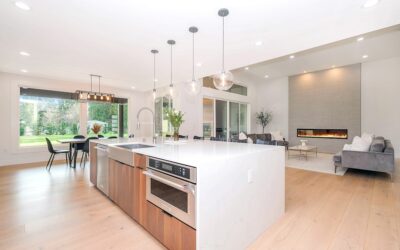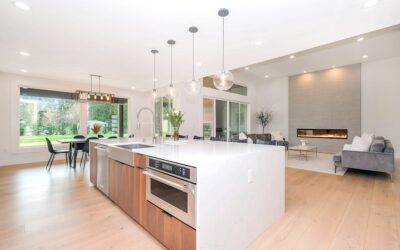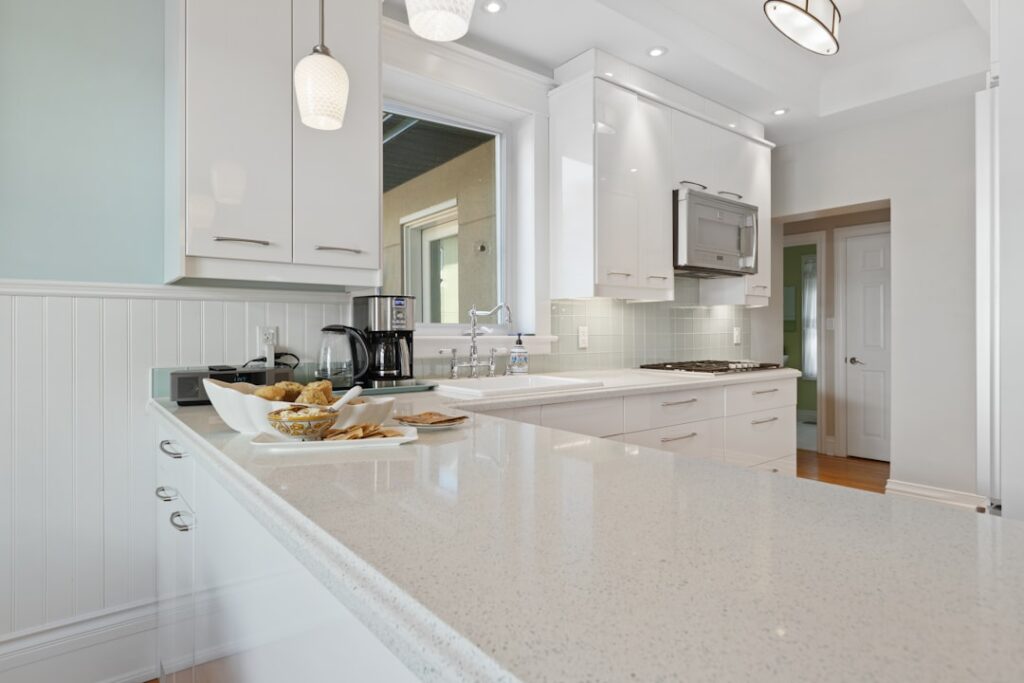
Walk into any high-end kitchen built in the last five years and you will probably spot one signature feature pulling the room together. Waterfall counters have moved from designer showrooms into mainstream remodels, and the look is hard to ignore once you see it done well. The basic idea is simple: the countertop turns 90 degrees at one or both ends and continues straight down to the floor, creating a continuous sheet of stone. The execution, however, is anything but simple.
What a Waterfall Counter Actually Is
A waterfall edge takes a horizontal slab and mitered-joins it to a vertical slab that drops down the side of an island, peninsula, or base cabinet. Done right, the veining flows uninterrupted around the corner, which is why the technique is sometimes called a book-matched waterfall. Some kitchens have one waterfall side, others have both ends finished this way.
This treatment changes the visual weight of an island. Instead of looking like a counter sitting on cabinets, the island reads as a single sculptural object. That sculptural quality is the entire appeal, and it is why builders charge a premium for the upgrade.
How Much Waterfall Counters Cost
Expect to pay between $1,200 and $4,500 more than a standard countertop install for a single waterfall side, depending on material and slab size. The cost comes from three places: extra material (you need a larger or second slab), the mitered cut and seam work, and added install labor for the vertical panel.
- Quartz waterfall: $90 to $180 per square foot installed
- Granite waterfall: $80 to $200 per square foot installed
- Marble waterfall (Calacatta, Carrara): $150 to $350 per square foot installed
- Porcelain slab waterfall: $100 to $220 per square foot installed
- Wood (walnut, white oak): $70 to $140 per square foot installed
If your kitchen island measures 7 feet by 3 feet and you waterfall both ends, you are looking at roughly 39 square feet of stone instead of 21. Add the miter labor and you can see why this detail pushes counter budgets toward the $8,000 to $15,000 range on midsize kitchens.
Best Materials for the Look
Quartz dominates the waterfall market and for good reason. Brands like Cambria, Caesarstone, and Silestone produce slabs with consistent veining, predictable color, and the structural strength to handle a mitered edge without chipping. If you want the veining to wrap convincingly around the corner, ask your fabricator for book-matched slabs cut from the same block.
Natural stone delivers a more dramatic, one-of-a-kind appearance. Calacatta marble and bold-veined quartzite are showstoppers, but they need extra care. Marble etches from lemon juice and red wine within minutes if you do not seal it properly. Quartzite handles heat and acid better but costs more to fabricate because the material is harder than granite.
Porcelain slabs from manufacturers like Neolith and Dekton are gaining ground for waterfall installs because they come in 5-foot by 10-foot or larger sheets, which reduces the need for seams entirely.
The Mitered Edge Detail
The seam where horizontal meets vertical is what separates a great install from a mediocre one. Most fabricators cut a 45-degree miter on both pieces so the joint forms a clean 90-degree corner with no visible end-grain of the stone. A skilled installer fills the seam with color-matched epoxy and polishes it until you have to run your finger along the joint to find it.
Watch for these red flags during install: a visible gap thicker than a credit card, a hairline color mismatch in the epoxy, or veining that obviously stops at the corner. Any of these means the fabricator rushed the work and you have grounds to ask for a redo before final payment.
Design Combinations That Work
Waterfall counters look strongest in kitchens with relatively simple cabinetry around them. Flat-panel doors, slab fronts, or shaker styles in a single color let the stone do the talking. If your island has heavy ornamentation, fluted panels, or strong contrasting hardware, the waterfall fights with everything else for attention.
- Pair white Calacatta-style quartz with matte black cabinets for high contrast
- Use a warm-veined marble look against natural white oak cabinetry
- Choose a leathered black granite waterfall with light gray perimeter counters for two-tone interest
- Match a dramatic quartzite waterfall to a polished brass or aged bronze pendant trio
Many designers keep the perimeter counters in a quieter material and reserve the dramatic stone strictly for the island. This gives you the impact of a marble waterfall without paying for marble across all 40 linear feet of counter space.
Practical Downsides to Know
The vertical slab eliminates one or two end cabinets, which means lost storage. On a typical island that costs you 6 to 9 cubic feet of drawer or shelf space per end. Plan your cabinet layout accordingly, or push extra storage to the other side of the island.
Repair is another consideration. If you chip the corner of a regular countertop edge, your fabricator can usually patch it. If you damage the visible miter seam, the fix is harder and may show. Avoid swinging cast iron pans or heavy stand mixers near the corners.
Cleaning the vertical face needs the same products you use on the horizontal. Skip ammonia, bleach, and abrasive pads on engineered quartz, and seal natural stone annually with a penetrating sealer such as Miracle Sealants 511 Impregnator.
Should You Install a Waterfall Counter
If you are remodeling a kitchen you plan to keep for 10 plus years and you love the modern aesthetic, the upgrade is worth the cost. Real estate agents in higher-end markets confirm that a well-executed waterfall island reads as a luxury feature and helps a home photograph well, which matters when you eventually sell.
If you are flipping a starter home or working a tight budget, skip it. Spend that $2,000 to $4,000 on better appliances, a quality range hood, or upgraded cabinet hardware instead. A standard eased-edge counter on a well-designed island still looks great and frees up budget for items buyers notice.
For homeowners on the fence, ask your fabricator to do a single-side waterfall instead of both ends. You get the visual hit on the side guests see most when they walk in, you save material and labor, and you keep storage on the working side of the island.