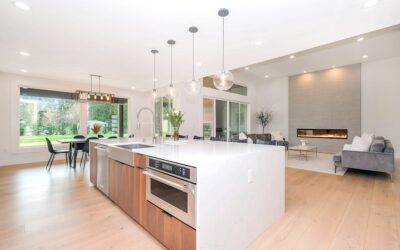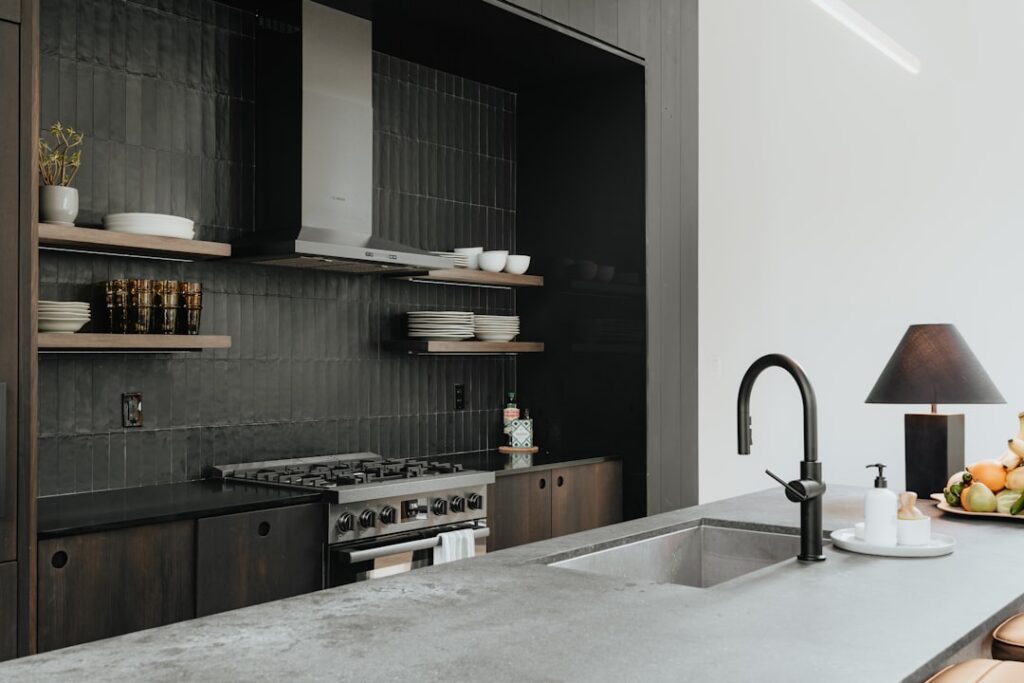
Walk into a high-end kitchen showroom and the island that stops you in your tracks is almost always the one where the stone appears to pour over the edge and cascade straight down to the floor. A waterfall granite countertop takes the horizontal counter surface and continues it vertically down the sides of an island or cabinet, creating a seamless, dramatic look that turns a work surface into a design centerpiece. This guide covers what makes a waterfall edge special, how the stone is matched and seamed, the cost factors, and how to care for it once it’s installed.
Part of our Countertops guide — explore the full guide →
- What a Waterfall Countertop Is
- Why Homeowners Choose the Waterfall Look
- The Importance of Slab Selection and Matching
- Seams and the Miter Detail
- Cost Factors to Expect
- Granite vs Other Waterfall Materials
- Caring for a Waterfall Granite Countertop
- Design Ideas and Where Waterfalls Shine
- Planning the Project With Your Fabricator
- Is a Waterfall Right for Your Kitchen?
What a Waterfall Countertop Is
In a standard countertop, the stone sits flat on top of the cabinets and the sides are finished with a wood or panel end. In a waterfall design, the granite slab continues past the edge and runs vertically down to the floor, so the same stone that forms the countertop also forms the side of the island. The effect is that the counter looks like it’s flowing over the edge, hence the name.
This is most common on kitchen islands, where both ends can be finished as waterfalls, but it’s also used on peninsulas, bars, and even bathroom vanities. Because the vertical panels are the same stone as the top, the veining and pattern can be matched to appear continuous, which is where the real visual magic happens.
Why Homeowners Choose the Waterfall Look
The appeal is largely aesthetic, and it’s significant. A waterfall edge makes an island feel monolithic and custom, showcasing the granite as a full sculptural piece rather than a thin slab on top of cabinets. It reads as modern and luxurious, and it’s a favorite in contemporary and transitional kitchens where designers want a strong focal point.
There are practical perks too. The vertical stone panels protect the cabinet sides from scuffs, kicks, and wear, and they’re far easier to wipe clean than a painted wood panel. On a busy family island, that durable, wipeable surface earns its keep. Granite in particular brings natural variation and hardness that make the dramatic panels feel substantial and unique.
The Importance of Slab Selection and Matching
A waterfall design lives or dies on stone selection. Because the vertical panels are meant to look continuous with the top, the fabricator often uses adjacent sections of the same slab so the veining flows over the edge. This is called a book-match or a continuous vein match, and it’s what makes the stone appear to genuinely pour over the side rather than just being two separate pieces meeting at a corner.
Granite is a natural stone with dramatic, unpredictable veining and movement, which makes matching both an art and a challenge. When you’re selecting stone for a waterfall island, view the full slab in person and work with your fabricator to plan how the pattern will wrap the corners. Highly veined or dramatic granites create the most striking waterfalls but require the most careful layout to keep the pattern flowing. Because a waterfall uses more material and demands precise matching, choosing the slab is not a step to rush.
Seams and the Miter Detail
Where the horizontal top meets the vertical panel, the two pieces of granite join at the corner, and how that joint is handled defines the quality of the installation. The premium approach is a mitered edge, where both pieces are cut at 45-degree angles so they meet in a clean, near-invisible corner with the veining wrapping around. A well-executed miter makes the stone look like a single folded piece.
This is precision work. The miter has to be cut accurately and the seam glued and polished so it’s tight and smooth. A skilled fabricator can make the corner nearly disappear, while a poor one leaves a visible, chippable edge. Because granite is heavy and the vertical panels are large, proper support and professional installation are essential; this is not a DIY project. When you’re comparing fabricators, ask to see photos of their waterfall miters, since that corner is the hardest part to get right.
Cost Factors to Expect
A waterfall countertop costs more than a standard one, and it’s worth understanding why so you can budget realistically. Keep in mind that prices vary widely by region, stone, and fabricator, so treat these as directional factors rather than fixed quotes.
- More material: the vertical panels add square footage of granite, sometimes significantly, since a tall island end panel can be several feet of additional stone per side
- More fabrication labor: cutting, mitering, matching, and polishing the panels takes skilled time
- Slab yield: matching veins across the top and sides can mean buying more slab so the fabricator has material to lay out the pattern
- Stone grade: exotic or heavily veined granites cost more per square foot than basic colors, and they’re the ones that make the best waterfalls
- Installation complexity: the weight and precise assembly of the panels add to install labor
Because a two-sided waterfall island can add meaningful material and labor over a plain top, get itemized quotes from a few fabricators and ask them to break out the waterfall panels separately so you can see the added cost clearly.
Granite vs Other Waterfall Materials
Waterfall edges work in quartz, marble, and quartzite too, so it’s worth knowing where granite fits. Granite is a natural stone prized for its hardness, heat resistance, and one-of-a-kind veining. Every slab is unique, which makes a granite waterfall genuinely singular, though that same natural variation is why matching takes care. Granite does need periodic sealing to resist stains, unlike engineered quartz.
Quartz offers more uniform patterns and no sealing, but it can be less heat tolerant and lacks the natural depth of real stone. Marble is stunning but softer and more prone to etching and staining. If you love the character and durability of natural stone and want a truly unique island, granite is a compelling choice for a waterfall; just plan for the sealing maintenance and the careful slab matching it requires.
Caring for a Waterfall Granite Countertop
Granite is durable, but it’s still a natural stone that benefits from proper care, and a waterfall has both horizontal and vertical surfaces to maintain. Wipe up spills promptly, especially acidic ones like citrus, wine, or vinegar, so they don’t sit on the surface. Clean with a mild dish soap and water or a cleaner made specifically for stone; avoid harsh or abrasive cleaners that can dull the polish over time.
Granite typically needs to be sealed periodically to resist staining, and how often depends on the specific stone and how porous it is. A simple water test tells you when it’s time: if water beads on the surface, the seal is intact; if it soaks in and darkens the stone, it’s time to reseal. Follow the sealer manufacturer’s instructions, and don’t forget the vertical waterfall panels, which get touched and scuffed just like the top.
Design Ideas and Where Waterfalls Shine
Waterfall edges look best where they can be seen and appreciated, which is why the kitchen island is the classic home for one. On a two-sided island, wrapping both ends in waterfall panels creates symmetry and a strong architectural presence. Some designs run the waterfall on just one end, particularly where seating occupies the other side, so the panel becomes a striking bookend to the island.
Beyond the kitchen, waterfall granite works beautifully on a home bar, a wet bar, or a bathroom vanity where you want a spa-like, high-end feel. It pairs especially well with modern and transitional cabinetry, and it lets a dramatic slab become the star of the room. Consider the flooring too, since the panel meets the floor directly; a clean transition where the stone reaches a hardwood or tile floor makes the whole piece look intentional and grounded rather than abruptly cut off.
Planning the Project With Your Fabricator
A successful waterfall island comes down to close collaboration with your fabricator from the very start. Before anything is cut, walk the full slab with them and agree on how the veining will be laid out so the pattern flows over each corner. Ask to see a layout drawing or template that shows exactly where each piece comes from on the slab, since this is what guarantees the continuous-vein effect you’re paying for.
Confirm how they’ll handle the miter, the support for the heavy panels, and the seam between the top and the sides, and ask about their experience with waterfall installs specifically. A fabricator who does these regularly will have a smooth process and photos to prove it. Because the panels are heavy and the matching is unforgiving, this is not the place to hire the cheapest bid; the skill of the fabricator shows in every corner of the finished piece.
Is a Waterfall Right for Your Kitchen?
A waterfall granite countertop is the move when you want a bold, luxurious focal point and you’re willing to invest in the extra material, matching, and skilled fabrication it demands. The seamless flow of natural stone over the edge of an island is genuinely striking, and the durable vertical panels protect your cabinets while looking spectacular. Choose your slab in person, work with an experienced fabricator who can execute a clean mitered corner, and plan for routine sealing. Get those pieces right and you’ll have an island that anchors the entire room for years.