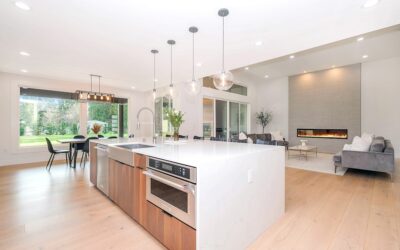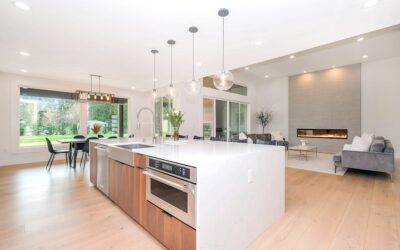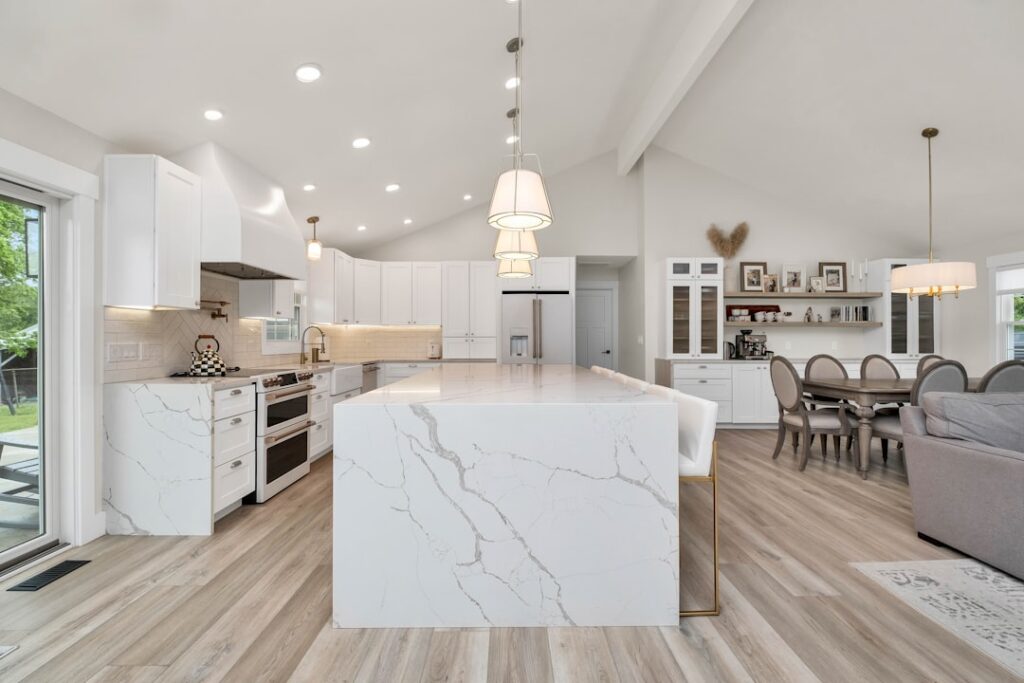
Few design elements make a kitchen feel more modern and polished than waterfall countertops. This style, where the countertop material cascades down the sides of a cabinet or island to the floor, creates a seamless, sculptural look that transforms any kitchen into a showpiece. At DnG Flooring, we have watched waterfall countertops evolve from a luxury novelty into one of the most requested kitchen upgrades of the past decade.
Part of our Countertops guide — explore the full guide →
Whether you are planning a full kitchen remodel or simply upgrading your island, this guide covers everything you need to know about waterfall countertops, including material choices, costs, design inspiration, and practical installation advice.
- What Is a Waterfall Edge Countertop?
- Best Materials for Waterfall Countertops
- How Much Do Waterfall Countertops Cost?
- Pros and Cons of Waterfall Countertops
- Waterfall Countertop Kitchen Island Designs
- Single vs Double Waterfall Edges
- Installation Process and Tips
- Design Pairings and Style Ideas
- Frequently Asked Questions
What Is a Waterfall Edge Countertop?
A waterfall edge countertop is a design where the countertop material continues vertically down one or both sides of a base cabinet, island, or peninsula until it reaches the floor. The name comes from the way the stone or surface material appears to “fall” like water over the edge, creating a continuous, unbroken surface from the top down the side.
Unlike a standard countertop with an overhang or a simple finished edge, waterfall countertops require a mitered joint where the horizontal surface meets the vertical panel. When executed properly by a skilled fabricator, this joint is nearly invisible, giving the appearance of a single, flowing piece of stone.
The waterfall edge trend gained major traction in the 2010s and has only grown in popularity. What was once a feature found exclusively in high-end designer kitchens is now accessible to a broader range of budgets, thanks to improved fabrication techniques and a wider selection of materials.
Best Materials for Waterfall Countertops
Not every countertop material works equally well for a waterfall application. The best choices offer consistent patterning, durable edge performance, and clean miter joints. Here are the top options:
Quartz
Engineered quartz is the most popular material for waterfall countertops in 2026. Its consistent patterning makes grain matching at the miter joint easier than natural stone, and it requires virtually no maintenance. Brands like Caesarstone, Silestone, and Cambria offer dozens of colors and patterns designed specifically for seamless waterfall applications. Cost ranges from $80 to $150 per square foot installed.
Marble
Natural marble creates the most dramatic waterfall countertops, especially varieties with bold veining like Calacatta or Statuario. The challenge is matching the vein pattern at the miter joint, which requires an experienced fabricator and careful slab selection. Expect to pay $120 to $250 per square foot installed for a marble waterfall.
Granite
Granite works well for waterfall edges, particularly in solid or lightly patterned varieties. Heavily veined or speckled granites can be harder to match at the joint. Installed costs run $100 to $200 per square foot.
Porcelain Slabs
Large-format porcelain slabs have become a compelling alternative for waterfall countertops. They are lighter than natural stone, highly durable, and available in convincing stone-look patterns. Installed costs range from $70 to $130 per square foot.
Concrete
Poured concrete can create a striking industrial waterfall look. However, the weight and sealing requirements make it more challenging to install. Costs vary widely from $100 to $200 per square foot depending on finish and complexity.
How Much Do Waterfall Countertops Cost?
Waterfall countertops cost more than standard countertops because they require additional material for the vertical panels and more complex fabrication for the mitered joints. Here is a breakdown:
- Additional material cost: Each waterfall panel adds roughly 8 to 12 square feet of material depending on counter height (typically 36 inches)
- Miter joint fabrication: $200 to $500 per mitered joint for precision cutting and bonding
- Single waterfall island (one side): $1,500 to $4,000 more than a standard countertop on the same island
- Double waterfall island (both sides): $3,000 to $7,000 more than a standard countertop
For a typical 8-foot kitchen island with a single waterfall edge in quartz, expect a total installed cost of $5,000 to $8,000. The same island in Calacatta marble could run $8,000 to $15,000 or more depending on slab pricing.
While waterfall countertops are a significant investment, they add substantial visual impact and can increase your home’s resale value. Real estate agents consistently report that waterfall islands are among the features that attract buyer attention in kitchen photos.
Pros and Cons of Waterfall Countertops
Advantages
- Stunning visual impact — A waterfall edge creates an immediate focal point that elevates the entire kitchen design.
- Showcases beautiful materials — Premium stones with dramatic veining or unique patterns get maximum visibility when they extend down the sides.
- Protects cabinet sides — The stone panel shields the island’s side panels from kicks, scuffs, and spills.
- Hides appliances and storage — Waterfall panels can conceal dishwashers, wine fridges, or open shelving integrated into the island.
- Increases home value — Waterfall countertops are a sought-after feature that can boost your kitchen’s appeal to potential buyers.
- Modern and timeless — Despite being a trend, the clean lines of a waterfall edge work across contemporary, transitional, and even some traditional design styles.
Disadvantages
- Higher cost — The additional material and fabrication add significantly to the project budget.
- No seating on waterfall side — A waterfall panel eliminates the overhang needed for bar stools on that side of the island.
- Visible miter joint — Even with expert fabrication, the joint where the horizontal and vertical pieces meet may be slightly visible, especially in strongly veined materials.
- Difficult to repair — If the vertical panel is damaged, repair or replacement is more complex and expensive than a standard countertop edge.
- Requires precise installation — Uneven floors or out-of-level cabinets can create visible gaps at the base of the waterfall panel.
Waterfall Countertop Kitchen Island Designs
The kitchen island is by far the most common application for waterfall countertops. Here are the most popular design configurations:
Single-Side Waterfall
The most common and budget-friendly option. One end of the island features the waterfall panel while the other end has a standard overhang for seating. This creates an asymmetric design that balances drama with function.
Double-Side Waterfall
Both short ends of the island feature waterfall panels, creating a symmetrical, furniture-like appearance. This design works best for islands that do not need end seating, and it delivers the strongest visual impact.
Full Waterfall (Four Sides)
The countertop material wraps the entire island like a monolithic block. This ultra-modern design is the most expensive but creates an incredible sculptural statement. It works best with solid-colored materials where seam matching is less of a concern.
Waterfall with Contrasting Base
A waterfall panel on one or both ends paired with a contrasting material on the remaining sides. For example, a marble waterfall panel combined with wood or painted cabinet panels creates visual interest through material contrast.
Stepped Waterfall
The countertop drops to a lower level before continuing down to the floor, creating a stepped or tiered effect. This design adds dimension and can incorporate a breakfast bar at the lower level.
Single vs Double Waterfall Edges
Choosing between a single and double waterfall edge comes down to budget, function, and aesthetics.
A single waterfall is the practical choice for most kitchens. It keeps costs manageable while still delivering the waterfall look. Position the waterfall panel on the side most visible from the main living area for maximum impact. The opposite end can accommodate seating with a standard overhang.
A double waterfall is the designer’s choice for homeowners who want a completely finished, furniture-like island. It costs roughly twice as much as a single waterfall in additional material and fabrication, and it eliminates end seating entirely. This works best in kitchens where the island is purely a prep and gathering surface, with dining seating located elsewhere.
Our recommendation: if your island is 8 feet or longer, a double waterfall creates a proportional, balanced look. For smaller islands under 6 feet, a single waterfall often looks better and makes more functional sense.
Installation Process and Tips
Installing waterfall countertops requires precision that goes beyond standard countertop installation. Here is what the process involves:
Template and slab selection: Your fabricator will template the countertop and waterfall panels together, marking exactly where the stone needs to be cut. If you are using a veined material, slab selection is critical. The fabricator should “bookend” cut the stone so the veining on the horizontal surface flows naturally into the vertical panel.
Miter cutting: The fabricator cuts both the horizontal and vertical pieces at precise 45-degree angles. These mitered edges are then bonded together with color-matched epoxy to create the seamless corner joint.
Support structure: The vertical panel needs a sturdy backing framework. Most installers build a plywood or steel support structure within the island cabinet to bear the weight and keep the panel perfectly plumb.
Leveling: The floor where the waterfall panel meets must be dead level. Any unevenness will create a visible gap at the base. Shims and scribing can address minor irregularities, but significant floor issues should be corrected before installation.
Final fitting: The installer dry-fits all pieces, makes any final adjustments, and then sets the countertop and waterfall panels using adhesive and mechanical fasteners. The miter joint is cleaned and filled to create the smoothest possible transition.
Design Pairings and Style Ideas
Waterfall countertops work across multiple design styles when paired thoughtfully:
- Modern minimalist: White or gray quartz waterfall with flat-panel white cabinets and integrated appliances.
- Contemporary warm: Calacatta marble waterfall with natural wood cabinets and brass hardware.
- Industrial chic: Concrete waterfall edge with black steel-frame cabinets and exposed bulb lighting.
- Transitional: Soft gray granite waterfall with shaker-style cabinets in a complementary neutral tone.
- Dramatic contrast: Black soapstone waterfall with white cabinetry and gold fixtures for a bold, high-contrast look.
The key is ensuring the waterfall material is the star of the show. Keep surrounding elements relatively simple to let the cascading stone surface command attention.
Frequently Asked Questions
Are waterfall countertops still in style in 2026?
Yes. Waterfall countertops have proven to be more than a passing trend. Their popularity has remained strong for over a decade, and they continue to appear in top kitchen design projects. The clean, architectural lines transcend specific style eras, which is why we consider them a safe long-term investment.
Can you add a waterfall edge to an existing countertop?
It is technically possible but rarely practical. Adding a waterfall panel to an existing countertop requires cutting a new miter on the installed slab, which risks damaging it. In most cases, it is more cost-effective and results in a better finish to fabricate the entire countertop and waterfall panel together as a new piece.
How do you hide the seam on waterfall countertops?
Skilled fabricators use a precise 45-degree miter cut and color-matched epoxy to make the joint nearly invisible. For veined materials, bookend cutting ensures the pattern flows continuously from the horizontal surface to the vertical panel. Choosing a material with less dramatic veining also helps minimize seam visibility.
Do waterfall countertops work with undermount sinks?
Absolutely. Undermount sinks are fully compatible with waterfall countertops. The sink is installed in the horizontal surface exactly as it would be with a standard countertop. The waterfall panel is a separate element that does not affect sink installation.
What is the best thickness for waterfall countertops?
Most waterfall countertops use standard 3-centimeter (approximately 1.25-inch) thick slabs. This thickness provides enough material for a strong miter joint while keeping the overall look proportional. Thicker 2-inch slabs create a bolder, more substantial appearance but significantly increase material costs and weight.