
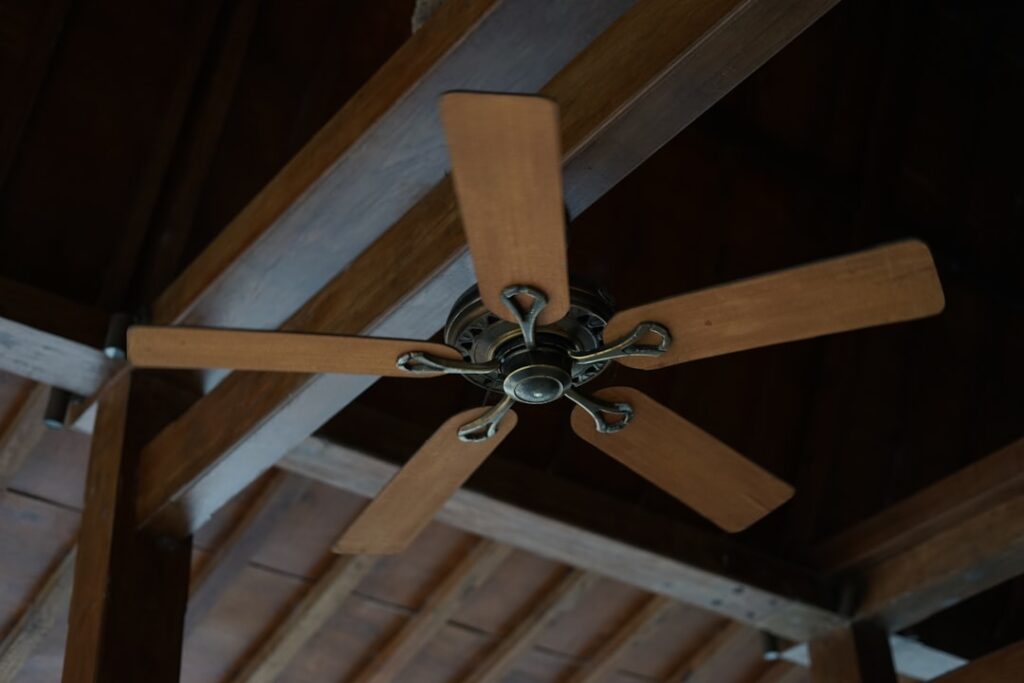
Hang an ordinary indoor ceiling fan on a patio and you will be shopping for its replacement within a year or two, usually after the blades warp and the motor housing starts shedding rust streaks onto your deck. Shopping for waterproof outdoor ceiling fans really means shopping for UL wet-rated fans, because “waterproof” is a marketing word while the wet rating is the actual certification that matters. Get the rating right, size the fan to your space, and a good outdoor fan will run for 10 to 15 years through rain, humidity, and summer dust. This guide walks through the ratings, the specs worth paying for, and what you should expect to spend in 2026.
Part of our Roofing guide — explore the full guide →
- Wet-Rated vs Damp-Rated: What the Labels Actually Mean
- What Makes a Fan Survive Outdoors
- Sizing: Match Blade Span and CFM to Your Space
- Features Worth Paying Extra For
- What Waterproof Outdoor Ceiling Fans Cost in 2026
- Installation Details That Prevent Problems
- Keeping an Outdoor Fan Running for 15 Years
Wet-Rated vs Damp-Rated: What the Labels Actually Mean
Every ceiling fan sold in the US carries one of three UL listings, and the difference determines where you can legally and safely install it. A dry-rated fan is indoor-only. A damp-rated fan can handle humidity and condensation but never direct water contact, which makes it right for a fully covered porch or a screened-in room where rain cannot blow in. A wet-rated fan is built to take direct rain, snow, and even a blast from a garden hose, so it belongs in pergolas, open gazebos, exposed patio edges, and coastal installations.
When a product listing says waterproof, flip to the specifications and confirm it says UL wet rated (sometimes written as “UL listed for wet locations”). If the listing only says damp rated, it is not waterproof in any meaningful sense, no matter what the headline claims. The practical test is simple: if wind-driven rain could ever touch the fan, buy wet-rated. The price difference between comparable damp and wet models is usually only $30 to $80, which is cheap insurance against replacing the whole unit.
What Makes a Fan Survive Outdoors
Wet-rated fans earn their certification through specific construction choices, and knowing them helps you separate well-built models from junk that merely passed the test. Look for these features in the spec sheet:
- Sealed motor housing: gaskets and sealed bearings keep moisture out of the windings, the number one failure point outdoors
- All-weather blades: ABS plastic or polycarbonate blades that cannot warp or delaminate. Real wood blades on an outdoor fan are a red flag unless the fan is going under a deep covered porch
- Stainless steel or corrosion-resistant hardware: screws, canopy, and downrod that will not streak rust down your ceiling
- Powder-coated or marine-grade finish: particularly important within a couple miles of salt water, where standard finishes pit quickly
- Drainage or weep holes: in the switch housing so water that does get in can escape
Blade material affects performance as well as durability. ABS blades flex less than cheap stamped metal, hold their pitch, and move consistent air year after year. If you see a bargain fan at $60 claiming an outdoor rating, check whether the blades are painted MDF. That fan will droop like a wilted plant after one humid August.
Sizing: Match Blade Span and CFM to Your Space
An undersized fan on a big patio just stirs the air directly beneath it while the rest of the space stays still. Size by the square footage of the area you actually sit in:
- Up to 75 sq ft (small balcony): 29 to 36 inch blade span
- 75 to 175 sq ft (typical porch): 42 to 48 inch span
- 175 to 350 sq ft (standard patio): 52 to 60 inch span
- Over 350 sq ft (large deck or outdoor kitchen): 60 to 72 inch span, or two smaller fans spaced evenly
Airflow, measured in CFM (cubic feet per minute), matters more than span alone. Outdoors there are no walls to contain the breeze, so aim higher than you would inside: 4,000 to 6,000 CFM for average patios and 6,000 CFM or more for big open spaces. The spec label on every fan sold in the US lists CFM at high speed, so comparison shopping is easy. Mounting height counts too. Keep blades at least 7 feet above the floor, and if your pergola or porch ceiling sits above 9 feet, add a downrod so the blades hang 8 to 9 feet up, where they push air onto people instead of over their heads.
Features Worth Paying Extra For
A DC motor is the single best upgrade in the current market. DC fans use roughly 70% less electricity than traditional AC motors, run silently, offer six speeds instead of three, and usually include a proper reverse function from the remote. Expect to pay $50 to $150 more for a DC model, and expect to recoup some of it if the fan runs all summer.
Beyond the motor, prioritize a remote or smart control, since pull chains corrode and wall wiring is not always available on a patio. Integrated LED light kits are convenient, but confirm the light kit itself is wet-rated, because on some models the fan is wet-rated while the optional light is only damp-rated. Skip decorative filament-style bulbs in exposed locations; sealed LED arrays hold up far better. Reversible motors get used more outdoors than people expect, since running the blades in reverse on a covered porch in fall pulls cool air up instead of blasting it down.
What Waterproof Outdoor Ceiling Fans Cost in 2026
Honest price bands, based on what wet-rated models actually sell for at big-box stores and lighting retailers:
- $100 to $180: basic wet-rated fans with AC motors, 3 speeds, ABS blades, no light. Fine for a rental or a rarely used space
- $180 to $350: the sweet spot. DC motors appear here, along with remotes, LED kits, and better finishes
- $350 to $600: premium brands, marine-grade coastal finishes, large 60 to 72 inch spans, smart-home integration
- $600 and up: designer and oversized commercial-style fans for outdoor kitchens and resort-style patios
Installation runs $75 to $200 if an outdoor-rated box and wiring already exist at the ceiling. If an electrician needs to run a new circuit or add a switch leg to a detached pergola, budget $300 to $900 depending on the trenching and distance involved. Those are national ballpark ranges; coastal metro labor rates land at the top of them.
Installation Details That Prevent Problems
Outdoor fans fail early far more often from sloppy installation than from weather. Three details do most of the protective work. First, the electrical box must be a fan-rated, weatherproof box anchored to solid blocking, never a plastic light-fixture box, because a 20 pound fan applies real leverage as it spins. Second, every exterior connection needs weatherproof-rated fittings and, on exposed runs, conduit approved for wet locations. Third, the circuit should have GFCI protection, which the National Electrical Code requires for most outdoor receptacle circuits and which is simply good practice for patio fan circuits regardless.
On a pergola with an open-slat top, mount the fan to a solid beam and consider a short weatherproof canopy or pergola-specific mounting kit so rain does not funnel straight into the canopy opening. Sloped porch ceilings need an angled-mount adapter once the pitch passes about 30 degrees. None of this is difficult for a competent DIYer who is comfortable with basic wiring, but if the job involves new circuits, hire a licensed electrician and be done in an afternoon.
Keeping an Outdoor Fan Running for 15 Years
Maintenance is minimal but not zero. Twice a year, wipe the blades with a damp cloth, since outdoor blades collect a paste of dust and pollen that unbalances them and strains the motor. Check that blade screws and the canopy screws are snug each spring, because vibration slowly backs them out. Wet-rated fans tolerate a gentle rinse from a hose, which makes cleanup easy, but never aim a pressure washer at the motor housing.
In snow-belt states, run the fan periodically through winter or at least spin it monthly, since bearings that sit motionless for five months can develop flat spots and start humming in spring. Coastal homeowners should rinse salt film off the housing every month or two during the season. If the fan develops a wobble, fix it promptly with the balancing kit included in the box; a wobble is not just annoying, it accelerates bearing wear. Treat the fan with that small amount of care and the best waterproof outdoor ceiling fans will outlast the patio furniture beneath them.


