
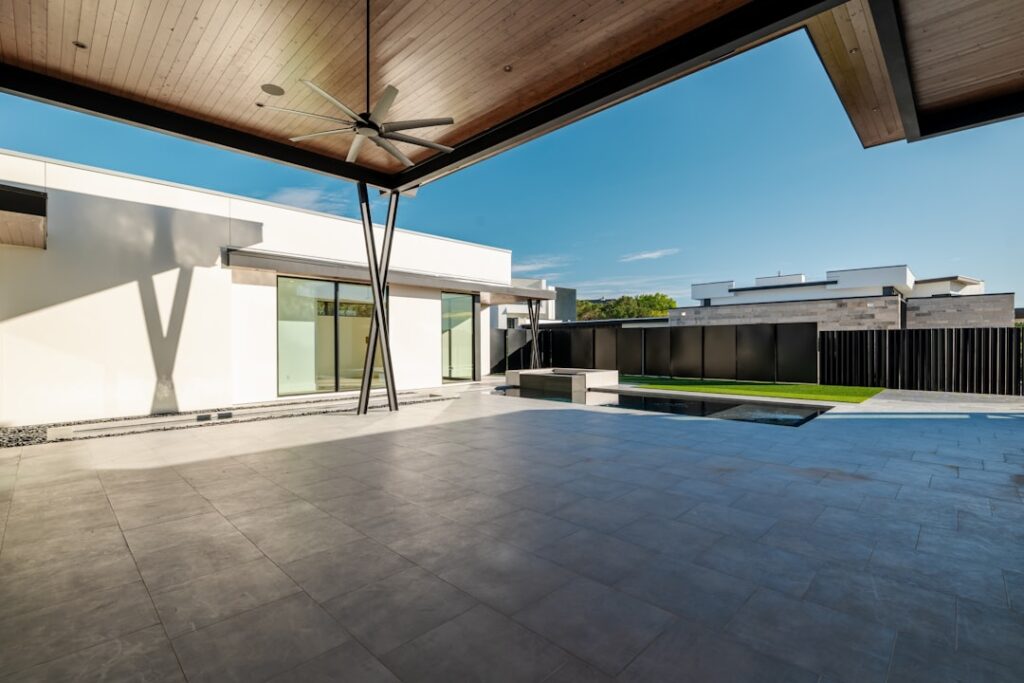
Hang the wrong fan outside and the weather will find it: rusted hardware inside a season, warped blades, a motor that dies the first time wind drives rain sideways across the porch. Wet rated outdoor ceiling fans exist for exactly these exposures — they’re built to take direct rain, snow, and washdowns without flinching. But “outdoor” on a box doesn’t automatically mean wet-rated, and plenty of homeowners pay for protection they don’t need or, worse, skip protection they do. This guide explains the rating system, maps which spaces demand which rating, covers the materials that survive outside, and names the picks worth your money.
Part of our Windows & Doors guide — explore the full guide →
Wet vs. Damp vs. Dry: What the Ratings Mean
UL (and ETL) listings sort fans into three exposure classes:
| Rating | Built for | Water contact | Typical locations |
|---|---|---|---|
| Dry | Interior only | None — humidity is a problem | Bedrooms, living rooms |
| Damp | Covered outdoor humidity | Moist air, condensation; no direct rain | Deep covered porches, screened rooms, garages |
| Wet | Direct weather | Rain, snow, salt air, hose-down cleaning | Open pergolas, gazebos, exposed patios, coastal anything |
The engineering differences are real, not marketing: wet-rated fans use sealed, moisture-proofed motor housings and wiring, stainless or coated hardware, and all-weather blades (ABS plastic or treated composite, never raw MDF — the material inside many indoor fan blades, which literally swells apart when soaked). A wet-rated fan can be used anywhere a damp or dry fan can; the reverse voids warranties and eventually kills the fan.
Where Wet-Rated Is Actually Required
The test isn’t “is it outside?” — it’s “can weather reach the fan?” Be honest about these situations:
- Pergolas. Slatted roofs pour rain straight onto the fan. Pergola = wet-rated, no exceptions, and check that the mounting kit suits an open beam.
- Gazebos and open pavilions. Roofed but open-sided; wind-blown rain reaches everything. Wet-rated.
- Shallow porches. If the fan hangs within a few feet of the roof edge, storms will wet it. A deep wraparound porch with the fan 10+ feet from any opening can justify damp-rated; a 6-foot-deep porch cannot.
- Coastal locations — even covered ones. Salt air corrodes from the inside out. Within a mile or two of saltwater, buy wet-rated (ideally with marine-grade 316 stainless hardware) even under a deep roof. Salt is why “damp” fails at the beach.
- Anywhere you’ll hose down. Barns, outdoor kitchens with grease film, pool cabanas — if cleaning means a spray nozzle, that’s direct water.
- Uncovered patios. Rare (there’s nothing to mount to without a structure) but categorically wet.
Screened porches and enclosed sunrooms are the classic damp-rated territory — humid, but rain can’t drive in. If your project is really an indoor-outdoor kitchen zone, the considerations shift toward grease and airflow, which our kitchen ceiling fans guide covers.
Materials That Survive Outside
- Blades: ABS/polycarbonate composite is the workhorse — dimensionally stable wet or dry. “All-weather” treated wood-composite exists on premium fans. Never raw wood or MDF outdoors.
- Motor housing: powder-coated die-cast aluminum or galvanized steel body with sealed switch housing. Coastal buyers should look for explicit salt-air or marine-grade language and stainless fasteners.
- Finish: textured powder coats (matte black, weathered bronze, galvanized looks) outlast smooth painted finishes in sun. Expect some fade on any dark finish in full southern exposure.
- Motor type: DC motors dominate the premium tier — silent, 6+ speeds, 60–70% less power draw, and better sealed as a rule. Worth the premium on a porch where you’ll run the fan all day.
Sizing and Mounting Outside
Outdoor spaces run bigger than rooms, and there are no walls to bounce airflow back — so size up and prioritize CFM:
- Standard porches and gazebos to ~200 sq ft: 52–56″, targeting 4,000–6,000 CFM.
- Large patios and pavilions: 60–72″, 6,000–10,000+ CFM. Big slow blades beat small fast ones for the breadth of breeze outdoors.
- Compact balconies and tight gazebo peaks: 42–48″ works; the sizing logic from our 42 inch ceiling fan guide applies, with the wet rating layered on top.
- Keep blades at 8–9 feet above the deck, minimum 7. High gazebo peaks and pergola beams usually need a downrod — sized per our ceiling fan downrod guide — and outdoor downrods should be the fan brand’s own, with the rubberized wobble bushings in place.
- Structure check: pergola beams and gazebo ridge blocks must take a fan-rated box or approved beam mount. A 20-lb fan oscillating in wind loads its mount harder than any indoor install.
- Wiring must be in outdoor-rated boxes with weatherproof covers, on a GFCI-protected circuit where required — this is the one part worth an electrician if you’re unsure.
Top Picks
- Best overall — Minka-Aire Xtreme H2O 52″–65″ ($400–550). The category benchmark: DC motor, 8,000+ CFM on the 65″, nine blades of molded composite, fully wet-rated. Moves more air than fans costing twice as much.
- Best value — Hunter Cassius 52″ ($150–200). Wet-rated, painted galvanized looks, ~5,000 CFM AC motor, pull chain with remote option. The porch default.
- Budget — Harbor Breeze Merrimack II 52″ ($120–150). Wet-rated farmhouse caged look at a Lowe’s price; modest CFM but honest weather sealing.
- Coastal duty — Emerson/kathy ireland Weatherman or Matthews Atlas Irene-H ($350–700). Marine-influenced builds with stainless hardware; the Matthews line’s aluminum blades shrug off salt.
- Statement piece — Fanimation Odyn 84″ wet-rated ($800+). For big pavilions and outdoor living rooms where one enormous slow fan cools the whole zone.
- With light: most of the above offer sealed LED kits; outdoors, insist on wet-location-rated light kits too — a damp-rated kit under a wet-rated fan is the classic mismatched failure.
Maintenance That Keeps Them Alive
- Wipe blades monthly in season — outdoor dust plus dew forms grime that unbalances blades.
- Hose or wipe the housing each spring; check and snug visible hardware, since wind vibration loosens screws indoors never see.
- Coastal: rinse salt film off quarterly with fresh water; it’s the difference between a 5-year and 15-year fan.
- In snow country, run wet-rated fans in winter reverse or shut them down cleanly; ice on blades is a balance (not a damage) problem — let it melt, don’t chip.
Controls and Accessories for Outdoor Fans
Outdoor installs raise control questions indoor fans never face:
- Remotes: handy, but outdoor remotes wander off and weather in drawer-less spaces. The robust setup is a wall control inside a weatherproof in-use cover, or mounting the remote’s cradle just inside the nearest door. Battery remotes also sulk in freezing temperatures — a wired wall control never does.
- Smart control: Wi-Fi reaches most porches, and smart wet-rated fans (Modern Forms, Fanimation, Minka’s Smart line) allow scheduling — a real feature outdoors, where fans get left running overnight far more often than indoors. A simple countdown timer switch ($20) achieves the same discipline without an app.
- Speed controls: never put a standard dimmer on a fan; use only fan-rated speed controls, and note many DC fans require their own controller exclusively.
- Misting rings: clip-on evaporative mist kits ($30–60) pair with wet-rated fans in dry climates for a genuine 5–10°F drop over a patio — pointless in humid states, borderline magic in Arizona.
- Blade spans and slopes: gazebo peaks over roughly 18° pitch need an angled-canopy adapter — confirm the fan supports one before buying, as some outdoor models cap at shallow slopes.
Finally, register the warranty. Outdoor fans carry shorter coverage than indoor lines from the same brands (often 1–5 years versus lifetime motor warranties indoors), and claims usually require proof the fan was wet-rated for its location — one more reason the rating on the box needs to match the exposure on your porch.
Indoor Outdoor Fans for Rooms That Open to the Weather
Indoor outdoor fans are wet or damp rated models styled to look at home inside a living space, and they solve a problem that pure porch fans and pure bedroom fans both miss: rooms that are partly indoors and partly outdoors depending on the day. A great room with a folding glass wall, a three season room, a covered lanai connected to the kitchen, or a garage converted into a workshop all see humidity swings, open doors and the occasional blast of wind driven rain. A fan that suits both conditions protects the investment and keeps the design consistent from inside to out.
Spaces That Benefit Most
Rooms with large sliding, folding or garage style doors are the clearest case. When those doors stay open for hours, the ceiling near the opening behaves like a porch ceiling, so a dry rated fan there faces moisture it was never built for. Three season rooms and unheated sunrooms are similar, with condensation on cold mornings and heat buildup in the afternoon. Bathrooms with steam showers, mudrooms, laundry rooms and pool houses also suit these fans, because the sealed motor and moisture resistant blades handle daily humidity that slowly ruins standard indoor models.
Matching the Look Across an Open Wall
When an interior room and a covered patio share one long sightline, two different fans can look disjointed. Many homeowners choose the same indoor outdoor model for both sides, using the same finish, blade count and blade color, so the ceiling reads as one continuous space when the doors are open. Light wood look composite blades and matte black or bronze housings work well here because they suit both furniture and exterior trim. Pay attention to scale: an interior room with an eight foot ceiling may need a smaller diameter or flush mount version of the fan that hangs from a downrod on the taller porch beyond.
Comfort Features Indoors
Fans built for outdoor use are sometimes tuned for maximum airflow, which can feel like too much breeze over a dining table or sofa. Look for multiple speed settings, a quiet low speed and a reversible motor so the same fan can push warm air down gently in cooler months. A dimmable light kit with a warm color temperature keeps the fan from making a living area feel like a patio at night.
Wiring Safety for Transitional Rooms
Before replacing any existing fixture, turn off the breaker that feeds it and confirm the power is off with a non contact voltage tester at the wires themselves. Rooms that open to the outdoors, along with bathrooms and laundry areas, generally call for GFCI protection, so check whether the circuit already has it. Use a fan rated ceiling box anchored to framing, and choose weather resistant boxes and covers on any side exposed to rain. Running a new circuit, adding a switch leg or extending wiring into a new space is work for a licensed electrician, who will also know what local rules require for damp and wet locations.
FAQ
What’s the difference between wet rated and damp rated ceiling fans?
Damp-rated handles humid air under full cover; wet-rated handles direct rain, snow, salt air, and hose-downs thanks to sealed motors and all-weather blades. When in doubt, wet-rated is never the wrong answer outdoors.
Can I use a wet rated fan indoors?
Yes — ratings nest downward. Wet-rated fans are popular indoors in bathrooms, barns, and industrial-style rooms precisely because they tolerate humidity and cleaning.
Do wet rated fans cost more?
Typically $30–100 over comparable damp-rated models at the value tier, more at the premium end. Against replacing a ruined fan and re-doing the install, the delta is cheap insurance.
Are wet rated fans safe in rain while running?
Yes — that’s the design condition, assuming proper outdoor-rated boxes and wiring. What the rating doesn’t cover is structural: in genuinely violent storms, shut the fan off to spare the mount, not the motor.
Match the rating to the real exposure, buy composite blades and sealed motors, and size up for open air — do that once, and the porch fan becomes the appliance you forget about for a decade.


