A wet crawl space is not just a nuisance underneath the house — it is the starting point for rotted joists, buckled hardwood floors, mold spores in your HVAC return, and utility bills that climb every winter. Moisture under a house migrates upward through something called the stack effect, meaning what happens down there shows up in every room above. Understanding how water gets in, how to get it out, and how to keep it out is one of the highest-return maintenance projects any homeowner can tackle.
Where the Water Is Coming From
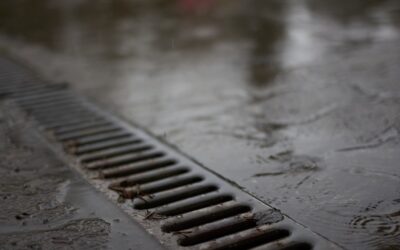
Every wet crawl space has one or more of four sources. Surface water running off the yard and pooling against the foundation. Ground water rising from a high water table. Plumbing leaks from supply or drain lines overhead. Humid outside air condensing on cool surfaces during summer months.
Figuring out which source dominates tells you which fix to prioritize. Surface water shows up after rain and dries between storms. Ground water is present year-round. Plumbing leaks concentrate under fixtures. Condensation worsens in humid summer weather even when it has not rained in weeks.
First Steps: Grading and Gutters
Before you spend a dollar inside the crawl space, walk the perimeter. Soil should slope away from the foundation at 6 inches of fall over the first 10 feet — roughly a 5% grade. Downspouts should dump at least 6 feet from the house, ideally tied into a buried drain pipe that daylights downhill.
Correcting grading alone resolves 40 to 60% of wet crawl space issues in homes built on clay or poorly compacted fill. A yard of topsoil runs $35 to $50 delivered; downspout extensions cost $15 each at any hardware store. Total DIY cost to regrade and extend downspouts on an average lot runs $200 to $500.
The Vapor Barrier
Bare dirt in a crawl space releases 15 to 20 gallons of water vapor per 1,000 square feet every day. A vapor barrier is a continuous sheet of polyethylene laid over the soil to block that evaporation. Code minimum is 6-mil poly; performance barriers run 10 to 20 mil and include reinforcement against tearing.
Overlap seams 12 inches and tape them with a rated vapor barrier tape. Extend the barrier 6 inches up the foundation walls and mechanically fasten with termination bars. A basic 6-mil installation in a 1,000 sq ft crawl space runs $400 to $700 in materials. Upgraded 12-mil reinforced poly with proper fasteners and sealant runs $900 to $1,400.
Sump Pumps for Active Water
If water actually enters your crawl space during storms, you need a sump. That means digging a pit at the low point, setting a plastic or concrete basin, and installing a submersible pump that discharges the water through a 1-1/2 inch pipe to daylight.
- Zoeller M53 1/3 HP — $160, handles 43 gallons per minute
- Wayne CDU980E 3/4 HP — $250, handles 66 GPM for high-flow situations
- Liberty 257 1/3 HP — $210, commercial grade with cast iron housing
Add $150 to $250 for a battery backup pump if your area loses power during storms. Full professional sump installation runs $1,200 to $2,500 including pit excavation and discharge piping.
Encapsulation: The Complete Solution
Full encapsulation goes beyond a vapor barrier by sealing the crawl space from outside air entirely. Vents are closed, walls are insulated with rigid foam, the vapor barrier is upgraded to 20-mil reinforced poly that covers floor and walls, and a dehumidifier maintains humidity below 55%.
Encapsulation turns a wet, moldy crawl space into conditioned storage-grade space. It also reduces heating and cooling costs by 15 to 20% because ducts and pipes running through it operate in a stable environment. Professional encapsulation runs $6,000 to $15,000 depending on size and site conditions.
Dehumidifiers That Work in Crawl Spaces
Regular household dehumidifiers fail quickly in crawl space service. They are not rated for condensate pumping against head, they clog with spider webs, and they corrode in high humidity. Purpose-built crawl space dehumidifiers from Aprilaire, Santa Fe, and Ebac are the right tools.
The Santa Fe Compact 70 runs around $1,600 and pulls 70 pints per day, sized for most 1,200 to 1,800 sq ft crawl spaces. Plan on $200 to $400 annual electricity cost if you run one year-round.
Mold and Wood Damage Assessment
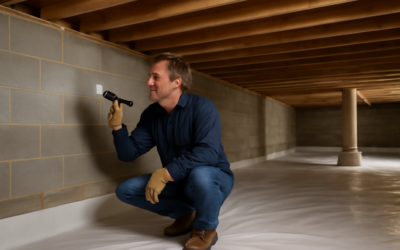
Before any encapsulation, inspect for active mold and wood rot. Push a screwdriver into the bottom edge of every joist and sill plate along the exterior walls. Soft wood means rot and requires sistering or replacement. Dark staining with fuzzy growth means mold.
Mold remediation runs $2 to $6 per sq ft of affected area. Joist sistering runs $80 to $200 per joist installed. These fixes must happen before you close up the space, or you trap active decay inside a new envelope.
DIY vs. Hiring Out
Homeowners with a tolerance for tight spaces can handle grading, downspout extensions, and basic 6-mil vapor barriers. Sump pump installation is doable if you are comfortable with small excavation and plumbing. Full encapsulation is usually worth hiring out — the materials are specialized, the detail work around penetrations is unforgiving, and most reputable contractors offer transferable warranties that add resale value.
Get three quotes for encapsulation and verify each contractor uses at least 12-mil poly, not the 6-mil minimum. Warranty terms matter more than price — a 25-year transferable warranty from a bonded company justifies a $2,000 price premium.
Preventing Future Problems
Once the space is dry, keep it that way with seasonal checks. Inspect vapor barrier seams every spring, confirm the sump pump cycles with a bucket of water every six months, clear gutters twice a year, and watch the dehumidifier humidity reading monthly. Catching a failed sump switch or lifted barrier seam early keeps a minor issue from turning into a $10,000 repair.
Final Thoughts
A wet crawl space will not fix itself, and the damage compounds. Start with the cheap fixes outside — grading and gutters — then work inward with a vapor barrier, sump pump if needed, and encapsulation for long-term control. Every dollar spent on crawl space moisture prevents $3 to $10 in future structural and air quality repairs. This is one home improvement project where procrastination costs real money.