
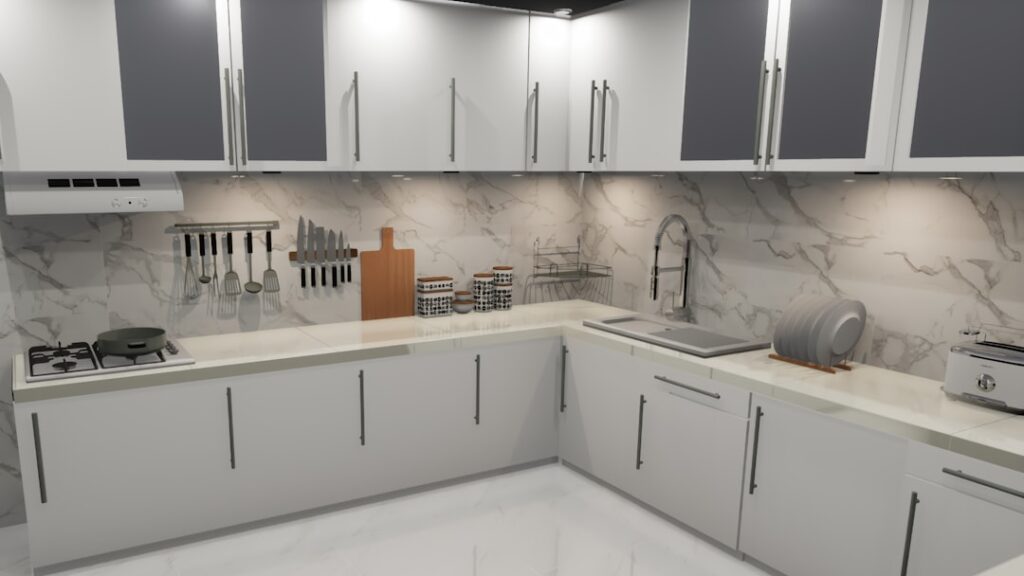
Plugging a toaster, kettle, and air fryer into the same outlet without tripping a breaker depends on having the right circuits behind the wall. The short answer to what amp GFCI for kitchen countertop outlets is 20 amps: the small-appliance circuits that serve your counters must be 20-amp circuits with GFCI protection. This matters because kitchens draw heavy loads and sit near water, two conditions that demand both adequate capacity and shock protection. Any actual wiring work should be done by a licensed electrician, and you should always turn off the breaker before touching a circuit.
Part of our Kitchen Remodeling guide — explore the full guide →
The Quick Answer: 20-Amp GFCI
Kitchen countertop outlets are required to be on 20-amp circuits and to have GFCI (ground-fault circuit interrupter) protection. The two requirements work together: 20 amps provides enough capacity for power-hungry small appliances, and GFCI protection guards against electric shock in an area with sinks and water.
GFCI protection can be provided either by GFCI receptacles at the outlets or by a GFCI breaker in the panel that protects the whole circuit. Either approach satisfies the protection requirement; the amperage of the circuit and devices still needs to match.
Why 20 Amps and Not 15
Kitchens are unusually demanding electrically. Countertop appliances like microwaves, toasters, coffee makers, and griddles each draw significant current, and running several at once on a 15-amp circuit would constantly trip the breaker. The electrical code addresses this by requiring dedicated small-appliance circuits rated at 20 amps to serve the countertop receptacles.
A 20-amp circuit gives the extra headroom needed so your counters can power multiple appliances without nuisance trips. This is why kitchen counter circuits are held to a higher standard than general-purpose room outlets.
At Least Two Small-Appliance Circuits
One 20-amp circuit is not enough for a kitchen. Code requires a minimum of two 20-amp small-appliance branch circuits to serve the countertop and related receptacles. Spreading the load across two circuits means you can run appliances on opposite ends of the counter without overloading a single circuit.
- Minimum two: at least two 20-amp small-appliance circuits for the kitchen counters.
- More is better: larger kitchens often benefit from additional circuits.
- Dedicated circuits: built-in appliances like dishwashers and disposals typically get their own separate circuits.
The Right Wire and Receptacles
A 20-amp circuit must be wired with the correct gauge conductor. That means 12-gauge wire (often labeled #12), which is rated to safely carry 20 amps. Using lighter 14-gauge wire, which is sized for 15-amp circuits, on a 20-amp breaker is a serious fire hazard and a code violation.
Receptacles matter too. On a 20-amp circuit you install 20-amp-rated GFCI receptacles, and in kitchens the code also requires tamper-resistant receptacles. The breaker, wire, and devices all have to be matched: a 20-amp breaker, 12-gauge wire, and 20-amp-rated GFCI-protected, tamper-resistant outlets.
GFCI Receptacle vs. GFCI Breaker
You have two ways to deliver the required GFCI protection, and both are valid. A GFCI receptacle installed at the first outlet can protect itself and the outlets downstream of it on the same circuit. Alternatively, a GFCI breaker in the panel protects everything on that circuit.
GFCI receptacles are common because they are easy to access for the monthly test-and-reset, while GFCI breakers protect the entire circuit from the panel. Whichever method is used, every kitchen countertop receptacle ends up with ground-fault protection, which is the safety goal.
Safety First: This Is Electrician Work
Kitchen wiring sits at the intersection of high loads and water, so getting it right is a safety issue, not just a code formality. Mismatched wire and breakers, missing GFCI protection, or overloaded circuits create real fire and shock risks.
For any actual installation or modification, hire a licensed electrician who knows your local code and can pull the necessary permit. Before anyone works on a circuit, the breaker must be turned off and the wires verified dead with a tester. If you are unsure whether your kitchen meets these requirements, an electrician can inspect and bring it up to code safely.
Other Kitchen Circuits to Know
The 20-amp small-appliance circuits cover your countertop outlets, but a kitchen has other electrical needs that follow their own rules. Large built-in appliances are typically given dedicated circuits so they do not compete with your counter outlets for power, which keeps everything running reliably.
- Dishwasher: usually on its own dedicated circuit, often GFCI protected.
- Garbage disposal: commonly on a dedicated circuit as well.
- Refrigerator: frequently placed on its own circuit so it is not affected by counter appliances.
- Electric range or oven: requires a heavy dedicated 240-volt circuit sized to the appliance.
Understanding that these appliances are separate from the counter circuits helps explain why a kitchen has so many breakers, and why an electrician maps the whole load before wiring.
Check Your Local Code
The requirements described here reflect widely adopted national electrical code provisions, but local jurisdictions can adopt different code editions or add their own amendments. Newer code editions have also expanded requirements over the years, so an older kitchen may not match what is required for new work today.
Always confirm the specifics with your local building department or a licensed electrician before planning a kitchen electrical project. They will tell you exactly which rules apply where you live and what an inspection will look for.
The Bottom Line
For kitchen countertop outlets, the answer is consistent: 20-amp circuits with GFCI protection, a minimum of two such small-appliance circuits, 12-gauge wire, and 20-amp-rated, GFCI-protected, tamper-resistant receptacles. This combination gives your kitchen the capacity to run multiple appliances and the shock protection a wet area demands.
If you are buying or renovating an older home, it is worth having an electrician evaluate whether the kitchen already meets these standards, since homes wired decades ago may lack GFCI protection or the required number of 20-amp circuits. Bringing an outdated kitchen up to current code is a common and worthwhile upgrade.
Treat this as a job for a licensed professional, always kill the breaker before any work, and verify your local code, and your kitchen’s electrical will be both convenient and safe.


