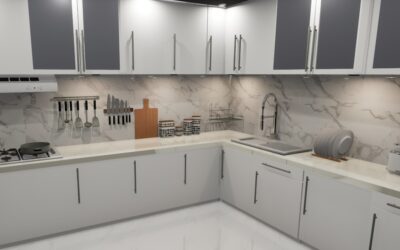
Roughly 78 percent of food spatter from a sauté pan lands on the wall within 18 inches of the cooktop, and water from a standard kitchen faucet splashes 6 to 14 inches above the sink during dish washing. So what is a backsplash? It is the protective wall surface, usually 4 to 18 inches tall (sometimes ceiling-height), installed behind sinks, stoves, and counters to keep moisture, grease, and food off the drywall. The right backsplash also doubles as a major design statement — it is one of the most-photographed surfaces in any kitchen remodel.
Part of our Kitchen Remodeling guide — explore the full guide →
The Functional Job
Drywall and painted surfaces fail when exposed to repeated moisture. Within 12 to 18 months of unprotected use behind a kitchen sink, you see staining, peeling paint, and eventually mold growth in the gypsum core. Behind a cooktop, grease bonds to flat or eggshell paint and never fully cleans off. A backsplash made of glazed tile, glass, stone, or stainless steel solves both problems with surfaces that wipe clean and resist permanent staining.
In bathrooms, the same logic applies behind vanity sinks. A 4-inch backsplash is standard but a 12 to 18-inch backsplash protects more wall during teeth brushing and shaving.
Standard Heights
Backsplash height varies by location and design intent:
- 4 inches: Minimum standard, often matching the countertop material
- 18 inches: Standard “between counter and upper cabinet” height in kitchens
- 24 to 30 inches: Behind cooktops without upper cabinets above
- Floor to ceiling: Modern statement design, runs entire wall
- Slab backsplash: Same stone as countertop run up to upper cabinets
The 18-inch range exists because that is the standard distance from countertop to the bottom of upper cabinets in US kitchens.
Common Materials and What Each Costs
Material choice drives both budget and look. Pricing per square foot installed in 2026:
- Ceramic subway tile: $10 to $25 — classic, easy DIY
- Porcelain large format: $20 to $50 — fewer grout lines, modern
- Glass tile: $25 to $50 — reflective, color-rich
- Natural stone (travertine, marble): $35 to $100 — high-end
- Quartz slab: $80 to $200 — seamless luxury
- Stainless steel sheet: $35 to $90 — pro kitchen look
- Peel-and-stick vinyl: $4 to $12 — renter-friendly temporary
- Beadboard or shiplap (sealed): $8 to $20 — farmhouse style
Subway Tile: Why It Refuses to Die
The 3×6-inch white ceramic subway tile has held the top spot in remodel surveys for 15 straight years. It pairs with any cabinet color, costs roughly $1.20 per sq ft for the tile itself, and any DIYer can install it in a weekend. Variations like 4×12 stretched, hexagon, and herringbone refresh the look without abandoning the durability. Grout color drives the look more than tile color — a charcoal grout against white subway reads as modern, while matching white grout reads as classic.
Slab Backsplash for a Seamless Look
Running the same quartz, granite, or marble from the counter up to the upper cabinets eliminates grout lines entirely. The look is monolithic and easy to clean — no joints to scrub. Cost runs 2 to 3 times higher than a tile installation because of slab cost ($60 to $150 per sq ft material) and the labor to template, cut openings for outlets, and scribe to walls. Worth it for primary counters and wet bars where the visual continuity matters most.
Where the Backsplash Stops
Three common stopping points decide the visual rhythm of the wall:
- Under upper cabinets: Standard. Hides the top edge with a Schluter trim or bullnose
- To the ceiling above the range hood: Most dramatic in modern kitchens
- Wrapping the window above the sink: Treats the window as a frame
End the backsplash at a logical architectural boundary — the side of a cabinet, the edge of a window casing, or a clean inside corner. Avoid floating ends that just stop mid-wall.
Grout Choices Matter
Standard cementitious grout stains over time, especially in light colors near a stove. Two upgrades worth the cost:
- Epoxy grout: Stain-proof, never needs sealing. Costs $80 to $120 per kitchen vs $25 for cement grout. Trickier to install
- Pre-mixed urethane grout: Mid-tier between epoxy and cement. Stain-resistant, easier to work
Seal cement grout with a penetrating silicone-based sealer at 30 days post-install and reseal every 2 years.
Outlets and Code Requirements
US electrical code requires GFCI outlets within 24 inches of any sink and within 48 inches along countertop runs. The backsplash material must accommodate these outlets with clean cuts and matching plates. Buy oversized outlet covers (Decora style, $4 each) if your tile installer made imperfect cuts — they hide minor errors. For tile that has heavy texture or pattern, switch box extenders ($3 each) push the receptacle face flush with the new tile surface.
Trim and Edge Treatments
Tile edges look unfinished without proper transition. Three options:
- Bullnose tile: Rounded factory edge in matching tile
- Schluter Jolly or Rondec: Metal edge profile in 30+ colors and finishes
- Pencil liner: Decorative pencil-shaped tile that caps the edge
Schluter has become the default for modern installations because it tolerates wall imperfections better than bullnose tile.
DIY vs Hiring Out
A 30 sq ft backsplash takes a competent DIYer 8 to 14 hours: layout, cutting, setting, grouting, sealing. Tile saw rental runs $50 a day; thinset, grout, spacers, and sponges add up to $80 to $130. Total DIY cost on a basic ceramic backsplash: $400 to $700.
Pro installation runs $1,400 to $2,800 for the same work. Hire out for natural stone, glass mosaic, and herringbone or chevron patterns — those are unforgiving of beginner errors. The choice of what is a backsplash worth doing yourself comes down to material complexity and how much you value a mistake-free finish.