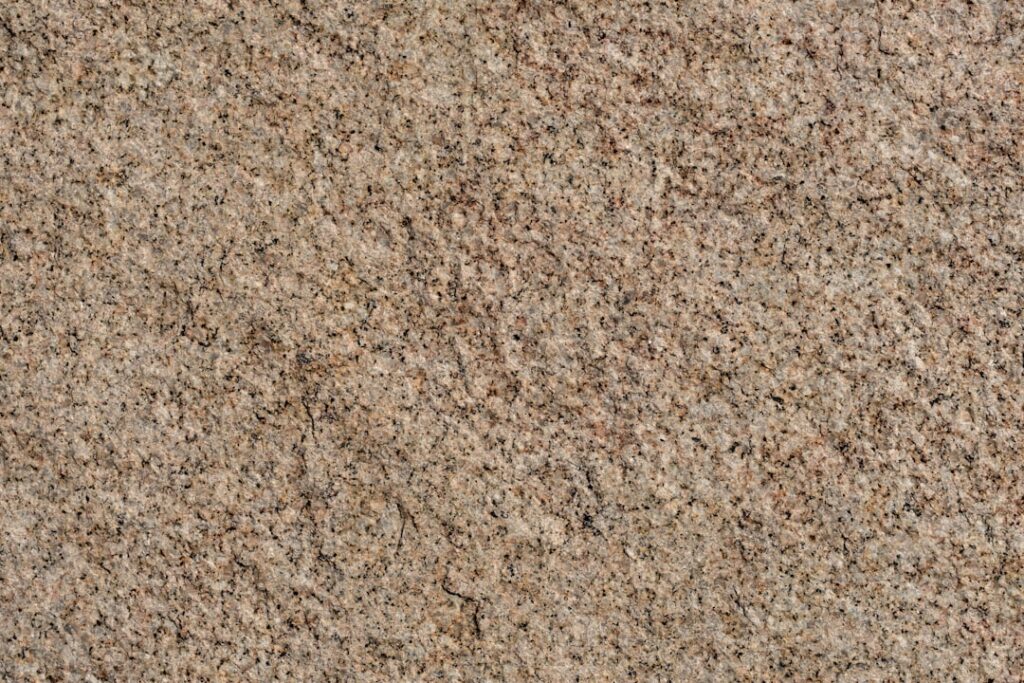
If you have ever walked a garden path that crunched softly underfoot with a warm, sandy-gold color, you have likely walked on decomposed granite. So what is decomposed granite, exactly? It is granite rock that has naturally weathered and broken down over thousands of years into a mix of fine gravel, sand, and silt. Landscapers love it as an affordable, natural-looking material for pathways, patios, driveways, and garden beds. This guide explains what it is, the different types, what it costs, how it is installed, and whether it is the right surface for your yard.
Part of our Countertops guide — explore the full guide →
What Decomposed Granite Actually Is
Decomposed granite, often shortened to DG, is the result of solid granite eroding over millennia through weather, water, and temperature changes. As the rock breaks apart, it crumbles into small particles ranging from pea-sized gravel down to fine, powdery sand. The material retains the natural color of the parent granite, typically tan, gold, brown, gray, or reddish tones.
Because it is a natural product rather than a manufactured one, DG looks organic and blends beautifully into landscapes. It compacts into a firm, permeable surface that drains water while still feeling soft and natural, which is why it has been a staple of public parks, gardens, and trails for generations.
The Three Main Types of DG
Not all decomposed granite is the same, and choosing the right type depends entirely on how you plan to use it.
Loose (Natural) DG
The most basic form, simply spread and lightly compacted. It has a soft, crunchy feel and a casual look, ideal for garden beds, mulch alternatives, and informal paths. The downside is that it can shift, track onto shoes, and erode in heavy rain.
Stabilized DG
Loose DG mixed with a natural binder before installation, then compacted into a firmer surface. It resists erosion and tracking much better while keeping the natural look, making it a great middle ground for walkways and patios.
Resin-Coated DG
DG bound with a polymer resin to create the hardest, most durable surface, almost like a flexible pavement. It handles foot and light vehicle traffic, sheds water cleanly, and resists weeds, though it costs the most.
Common Uses Around the Home
DG is one of the most versatile landscape materials available, which is a big part of its appeal.
- Garden and walking paths: The classic use, soft and natural underfoot.
- Patios and seating areas: Stabilized DG creates a firm, rustic patio surface.
- Driveways: Resin-coated DG handles light vehicle traffic affordably.
- Xeriscaping and mulch replacement: A water-wise ground cover in dry climates.
- Around trees and plants: Permeable, so water and air still reach roots.
What It Costs
One of the biggest draws of DG is its low price compared to pavers, concrete, or stone. Costs vary by region and type, but here are realistic ranges:
- Loose DG: roughly $40 to $80 per cubic yard, or about $30 to $60 per ton
- Stabilized DG: $3 to $6 per square foot installed
- Resin-coated DG: $5 to $10 per square foot installed
- Delivery: often $50 to $150 depending on distance and quantity
For a simple DIY path, the loose material is remarkably cheap, often the least expensive way to surface a walkway. Stabilized and resin versions cost more but reward you with durability and far less maintenance.
How DG Is Installed
Installation is straightforward enough for many homeowners to tackle, especially for a basic path. The general process looks like this:
- Excavate the area 3 to 4 inches deep and define the edges with steel, stone, or wood borders.
- Lay a base of crushed gravel for drainage and stability, then compact it.
- Add landscape fabric to suppress weeds if using loose DG.
- Spread the DG in 2-inch layers, dampening and compacting each layer with a plate compactor.
- For stabilized DG, mix in the binder per the manufacturer’s instructions before compacting; for resin DG, apply per spec.
- Compact the final surface firmly and let it set.
Proper edging and compaction are critical. Without borders, DG migrates outward, and without good compaction it stays loose and erodes quickly.
Pros and Cons to Weigh
DG is excellent for the right project, but it has real drawbacks worth understanding before you commit.
- Pros: Affordable, natural-looking, permeable for good drainage, easy to install, and eco-friendly.
- Cons: Loose DG tracks indoors and erodes in heavy rain, needs occasional replenishing, can get muddy or dusty, and is harder on furniture and wheelchairs than a solid surface.
Stabilized and resin-coated versions solve most of the downsides at a higher price. Match the type to your use: loose for casual garden areas, stabilized for paths and patios, and resin-coated where you need maximum durability.
The Bottom Line
So, what is decomposed granite at the end of the day? It is naturally weathered granite that gives you an affordable, attractive, permeable surface for paths, patios, and water-wise landscaping. Choose loose DG for budget garden areas, stabilized DG for firmer walkways, and resin-coated DG for durability where it counts. Edge it well, compact it properly, and refresh it as needed, and decomposed granite delivers a warm, natural landscape surface that fits almost any yard and budget.
Maintaining a DG Surface
DG is low maintenance, but it is not no maintenance, and the type you chose determines how much attention it needs. Loose DG requires the most: it compacts and erodes over time, so plan to add a fresh layer and re-compact every couple of years, especially on paths that see rain runoff. Raking the surface smooth occasionally keeps it tidy.
Stabilized and resin-coated DG hold up far better and may go many years before needing a refresh. For all types, pulling the occasional weed and topping up low spots keeps the surface looking sharp. Good edging is your best defense, since it contains the material and prevents the slow migration that otherwise spreads DG into lawns and flower beds.
Is DG Right for Your Climate and Yard?
Decomposed granite performs differently depending on where you live and how you will use the space. In dry, warm regions it is a star, which is why it dominates landscaping across the Southwest; it drains well, looks natural in arid settings, and supports water-wise xeriscaping. In wet or freeze-thaw climates, loose DG can wash out or turn muddy, so stabilized or resin-coated versions are the safer choice.
Think about traffic and accessibility too. A casual garden path is a perfect job for loose DG, but if you need a surface for a wheelchair, a stroller, or patio furniture, the firmer stabilized or resin-coated options provide the stability those uses demand. Match the type to your climate, traffic, and budget, and decomposed granite rewards you with a handsome, natural surface that costs a fraction of pavers or poured concrete while blending beautifully into the landscape.