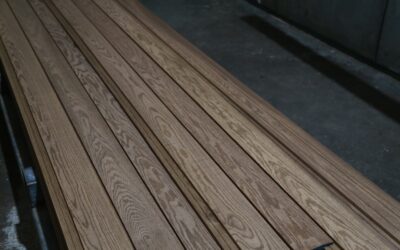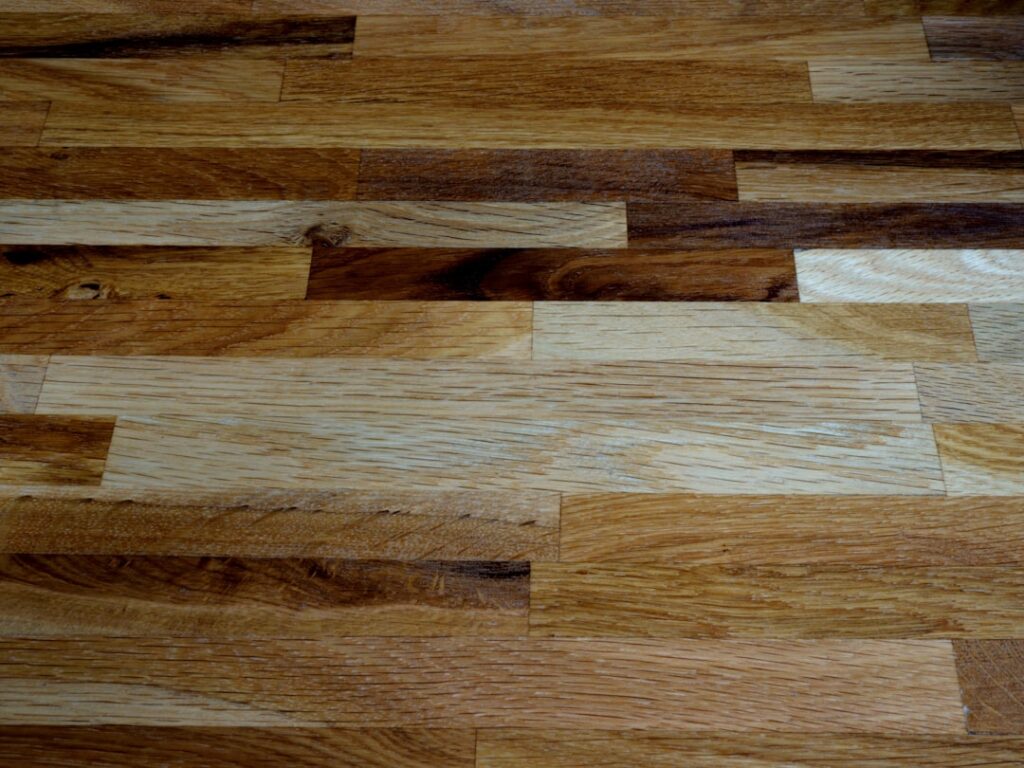
Engineered hardwood is one of the most popular flooring products on the market, but many homeowners still confuse it with laminate, solid hardwood, or even luxury vinyl. Understanding what engineered hardwood actually is — how it is made, where it excels, and where it falls short — helps you decide if it is the right flooring for your home. This guide explains everything from construction to cost.
- What Is Engineered Hardwood Made Of?
- How Is Engineered Hardwood Different from Solid Hardwood?
- How Is Engineered Hardwood Different from Laminate?
- Benefits of Engineered Hardwood
- Drawbacks of Engineered Hardwood
- Engineered Hardwood Costs
- Best Applications for Engineered Hardwood
- How to Choose Quality Engineered Hardwood
- Engineered Hardwood vs. LVP
- Final Thoughts
What Is Engineered Hardwood Made Of?
Engineered hardwood flooring consists of a real hardwood wear layer bonded to a core of multiple plywood or high-density fiberboard (HDF) layers. Think of it as a layered sandwich where the top slice is genuine wood and the base provides structural stability.
The Wear Layer
The top layer is a thin slice of real hardwood — oak, walnut, maple, hickory, or any other species you would find in solid hardwood flooring. Wear layer thickness ranges from 0.6 mm (rotary-peeled) on budget products to 6 mm (sawn) on premium products. This is the surface you see and walk on, and it looks, feels, and refinishes like solid wood because it is solid wood.
The Core
Beneath the wear layer, multiple layers of plywood, HDF, or softwood are stacked with the grain of each layer running perpendicular to the one above and below it. This cross-grain construction — similar to how plywood achieves its strength — is what gives engineered hardwood its dimensional stability.
The Backing
A bottom layer balances the construction and prevents warping. On plywood-core products, this is the final ply layer. On HDF-core products, it may be a separate balancing material.
How Is Engineered Hardwood Different from Solid Hardwood?
This is the most common question homeowners ask. The differences are meaningful.
Construction
Solid hardwood flooring is milled from a single piece of wood, typically 3/4 inch thick. Every layer from top to bottom is the same species. Engineered hardwood has the real wood only on top, with a composite core beneath.
Stability
This is engineered hardwood’s primary advantage. The cross-grain core resists the expansion and contraction that plagues solid hardwood when humidity changes. Solid hardwood can gap in winter (low humidity) and cup in summer (high humidity). Engineered hardwood remains stable across a wider range of conditions.
Where You Can Install It
Solid hardwood is limited to above-grade installations over plywood subfloors. Engineered hardwood can be installed over concrete slabs, below grade (basements), and over radiant heating systems. This versatility is a major reason for its popularity.
Installation Methods
Solid hardwood is typically nail-down only. Engineered hardwood offers three options: nail-down, glue-down, and floating (click-lock). The floating method is especially popular because it is faster, does not require adhesive, and is more DIY-friendly.
Refinishing
Solid hardwood can be sanded and refinished 6 to 10 times over its lifetime. Engineered hardwood’s refinishing ability depends on wear layer thickness. A 4 mm or thicker wear layer can typically be sanded 2 to 3 times. Thin wear layers (under 2 mm) cannot be safely sanded at all.
Appearance
From the surface, solid and engineered hardwood look identical. The wear layer on engineered hardwood is real wood with the same grain, color, and character as solid hardwood. You cannot tell the difference by looking at an installed floor.
How Is Engineered Hardwood Different from Laminate?
This distinction is equally important because the products are often shelved next to each other.
Laminate flooring has no real wood at all. Its surface is a photographic image of wood printed on paper, covered with a protective wear layer. Engineered hardwood has actual hardwood on top. This difference matters for appearance (wood looks and feels different under light), refinishing (laminate cannot be sanded), and resale value (real wood adds more value than laminate).
Benefits of Engineered Hardwood
Real Wood Beauty
The surface is genuine hardwood with authentic grain, color variation, and character. It develops a natural patina over time, just like solid hardwood.
Dimensional Stability
Performs well in environments with moderate humidity fluctuations. Suitable for climates and seasons where solid hardwood would be problematic.
Installation Versatility
Can be installed over concrete, below grade, above grade, and over radiant heat. No other real-wood product offers this range.
Multiple Installation Methods
Nail-down, glue-down, or floating. Choose the method that suits your subfloor and skill level.
Wide Range of Options
Available in every species, color, width, texture, and finish that solid hardwood offers. Engineered wood flooring has become the default format for wire-brushed, wide-plank, and European oak products.
Eco-Friendly Potential
Engineered hardwood uses less premium wood per square foot than solid hardwood. A single log can produce significantly more engineered flooring (thin sliced wear layers) than solid planks. This makes better use of slow-growing hardwood trees.
Drawbacks of Engineered Hardwood
Limited Refinishing
Thin wear layers limit or eliminate refinishing options. Once the wear layer is worn through, the floor must be replaced. Budget products with very thin wear layers may only last 15 to 20 years before showing wear.
Vulnerable to Moisture Extremes
While more stable than solid hardwood, engineered hardwood is not waterproof. Flooding, plumbing leaks, or prolonged moisture exposure will damage the core. For truly wet environments, waterproof flooring like LVP or tile is a better choice.
Quality Varies Dramatically
Not all engineered hardwood is created equal. Cheap products use thin rotary-peeled wear layers that look papery, low-quality plywood cores that delaminate, and high-formaldehyde adhesives. Premium products use thick sawn wear layers, Baltic birch plywood cores, and low-emission adhesives. The difference in longevity and appearance is enormous.
Cost Can Match Solid Hardwood
While budget engineered hardwood is less expensive than solid, premium engineered products (wide plank, thick wear layer, European oak) can cost as much or more than solid hardwood.
Engineered Hardwood Costs
- Budget (thin wear layer, 3-5″ width): $3 to $5 per square foot
- Mid-range (2-3 mm wear layer, 5-7″ width): $5 to $9 per square foot
- Premium (4-6 mm wear layer, 7″+ width, European oak): $8 to $16 per square foot
- Installation: $2 to $6 per square foot depending on method
For a 1,000-square-foot project, total installed cost ranges from $5,000 for budget products to $22,000 for premium wide-plank European oak.
Best Applications for Engineered Hardwood
Over Concrete Slabs
Engineered hardwood’s ability to be glued down or floated directly over concrete makes it the go-to wood flooring for slab-on-grade homes, condos, and loft conversions.
Basements
Below-grade installations are possible with engineered hardwood (using proper moisture barriers) but not with solid hardwood. This makes it the only real-wood option for finished basements.
Over Radiant Heat
The dimensional stability of engineered hardwood makes it compatible with radiant heating systems. Solid hardwood can gap and crack as radiant heat reduces the wood’s moisture content.
Whole-Home Installations
Engineered hardwood can flow seamlessly from the main level to the basement, something solid hardwood cannot do. This makes it ideal for homeowners who want consistent flooring throughout the house.
High-Rise Condos
Many condo buildings require floating floors with sound-dampening underlayment for noise control. Engineered hardwood with click-lock installation meets these requirements.
How to Choose Quality Engineered Hardwood
Follow these guidelines to ensure you get a product that will perform well for years.
Wear Layer Thickness
Minimum 2 mm for any floor you plan to keep for more than 10 years. Ideally 3 to 4 mm for residential use. 5 to 6 mm for commercial or very long-term applications. Avoid anything under 1.5 mm — it cannot be refinished and shows wear quickly.
Core Quality
Look for multi-ply plywood cores (birch plywood is the best) rather than HDF. Plywood cores resist moisture better and provide superior structural integrity. Check that the plies are uniform with no voids or gaps.
Finish Quality
Factory-applied aluminum oxide finishes with 7 to 9 coats provide the best durability. Ask about the finish warranty — 25-year or lifetime residential finish warranties indicate a quality product.
Certification
Look for FloorScore, GREENGUARD, or CARB Phase 2 certification to ensure low formaldehyde emissions. This is especially important for homes with children, pets, or anyone with chemical sensitivities.
Engineered Hardwood vs. LVP
LVP flooring (luxury vinyl plank) is engineered hardwood’s main competitor for wood-look flooring.
- Appearance: Engineered hardwood wins — real wood looks and feels different from printed vinyl
- Water resistance: LVP wins — 100% waterproof vs. engineered hardwood’s moisture sensitivity
- Durability: Close match — both handle residential traffic well
- Resale value: Engineered hardwood wins — real wood adds more property value
- Cost: LVP wins for budget-conscious buyers; premium engineered hardwood costs more
- Comfort: Similar — both are comfortable underfoot with proper underlayment
Final Thoughts
So, what is engineered hardwood? It is real wood flooring built for modern living — offering the beauty and character of solid hardwood with the stability and versatility to install virtually anywhere in your home. Choose products with thick wear layers, quality plywood cores, and reputable manufacturing, and your engineered hardwood floor will look stunning for decades. For more details, visit our engineered wood flooring guide, or compare with solid hardwood flooring to decide which type is best for your project.
Prefer to explore on your own?
See how new flooring looks in your actual room in seconds — free, no signup.
Try the free Floor Studio →