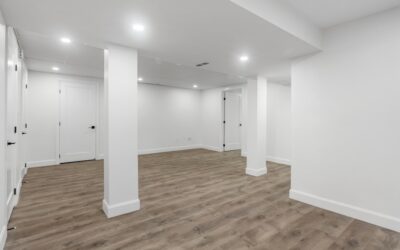
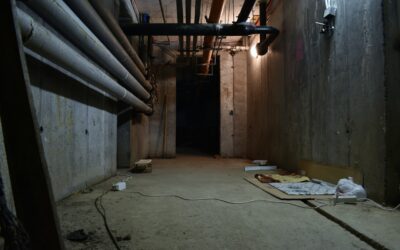
A musty smell when you open the basement door is rarely about ventilation alone — it’s usually a humidity problem creeping past 60%. So what should basement humidity be in a healthy home? The short answer is 30% to 50% relative humidity, measured year-round with a simple hygrometer. Hit that range and you keep mold spores dormant, joists dry, and stored boxes free of that damp paper smell that signals trouble underway.
- The Ideal Range: 30 to 50 Percent
- How to Measure Basement Humidity Accurately
- Why Basements Trap Moisture
- Signs Your Humidity Is Too High
- Signs Humidity Is Too Low
- How to Control Basement Humidity
- Seasonal Adjustments You Should Make
- Vapor Barriers and Encapsulation
- Why Air Sealing the Rim Joist Matters
- When to Call a Professional
The Ideal Range: 30 to 50 Percent
Most building science researchers, including the EPA and ASHRAE, agree that 30-50% RH is the sweet spot for any conditioned space, basements included. Drop below 30% in winter and wood subflooring can shrink, leaving gaps. Push above 60% in summer and mold colonies can establish in 24-48 hours on porous surfaces like cardboard, drywall paper, and untreated lumber.
For finished basements with carpet or laminate, aim closer to 40-45%. For unfinished utility basements, 50% is acceptable as long as you’re not seeing condensation on cold pipes or foundation walls.
How to Measure Basement Humidity Accurately
Skip the guesswork. A digital hygrometer like the ThermoPro TP50 ($12) or the AcuRite 00613 reads RH to within 2-3% accuracy and gives you instant numbers. Place it three to four feet off the floor in the center of the room — not near a window, dryer vent, or sump pump where readings skew.
Take readings at three different times: morning, mid-afternoon, and late evening. Basement RH swings 10-15 points across a single day, especially in spring and fall when outdoor dew points fluctuate.
Why Basements Trap Moisture
Concrete foundations are porous. Even sealed walls wick a small amount of ground moisture year-round, and poured slabs can release one to two gallons of water per day during the first decade after construction. Add poorly insulated rim joists, dryer vents leaking into the space, and humid summer air condensing on cool walls, and you have a recipe for chronic dampness.
Older homes with stone or block foundations leak more. Newer homes with vapor barriers under the slab leak less but can still trap interior humidity if the HVAC doesn’t reach the basement.
Signs Your Humidity Is Too High
- Condensation pooling on cold-water pipes or windows
- A musty or earthy odor that doesn’t disappear after airing
- Rust spots on tools, the water heater base, or HVAC ductwork
- Cardboard boxes that feel slightly damp or warp at the corners
- Visible black or green mold along the bottom edge of drywall
- Wood floors above the basement cupping or warping
Any one of these warrants pulling out a hygrometer the same day. Two or more, and you’re already past the safe threshold.
Signs Humidity Is Too Low
Less common, but real in winter when furnaces run hard. Look for static shocks every time you touch the railing, gaps between hardwood planks upstairs, and dry skin or sinus irritation when you spend time in the basement. RH below 25% can also crack leather furniture and split wooden picture frames if you store either down there.
How to Control Basement Humidity
For high humidity, a dehumidifier is the workhorse solution. Size it by basement square footage and how wet the space gets:
- Up to 1,500 sq ft, slightly damp: 30-pint unit (Frigidaire FFAD3033R1, around $230)
- 1,500-2,500 sq ft, moderately damp: 50-pint unit (hOmeLabs 4,500 sq ft, around $290)
- Wet basement, frequent puddles: 70-pint unit with a built-in pump (Honeywell TP70PWKN, around $360)
Set the target to 45% and let the unit run on auto. Empty the bucket daily or run a continuous drain hose to a floor drain or sump pit. Whole-house dehumidifiers tied into the HVAC system run $1,200-$2,000 installed and pay off in homes with ongoing moisture issues.
For low humidity, a basic console humidifier or a whole-house unit on the furnace bumps levels back into range during heating season.
Seasonal Adjustments You Should Make
Basement humidity doesn’t sit still. In summer, outdoor air carries 60-80% RH in most of the country, and any of that air infiltrating through rim joists or window wells will spike basement levels. Run the dehumidifier from May through September in humid climates like the Midwest, Southeast, and Mid-Atlantic.
In winter, the opposite happens — heated indoor air can drop to 20-25% RH. Check readings monthly and adjust. Spring and fall are transition periods where you may switch the dehumidifier on and off weekly based on outdoor dew points.
Vapor Barriers and Encapsulation
If your basement floor is bare concrete or your crawl space underneath has exposed soil, a vapor barrier is the single biggest improvement you can make. A 6-mil polyethylene sheet (or 12-mil reinforced for crawl spaces) over the soil and up the walls cuts ground moisture infiltration by 70-90%. Material runs 15-25 cents per square foot; full crawl space encapsulation by a contractor costs $3,000-$8,000 depending on size.
For finished basements, paint the inside of foundation walls with Drylok or Sherwin-Williams Loxon before installing studs and drywall. The masonry waterproofer doesn’t stop active leaks, but it dramatically reduces the small constant moisture push from concrete that compounds into year-round dampness.
Why Air Sealing the Rim Joist Matters
The rim joist — where the basement walls meet the floor framing above — is one of the leakiest spots in the entire house envelope. Hot humid summer air infiltrates through gaps, condenses on the cool basement side, and adds gallons of moisture per week to your air. Spray foam sealing the rim joist with closed-cell foam (Great Stuff Pro Wall + Floor) cuts infiltration by 60-80% and pays for itself in dehumidifier savings within 2-3 summers.
When to Call a Professional
If a 50-pint dehumidifier running 24/7 still leaves your basement above 60%, the problem isn’t the air — it’s water entry. Call a foundation specialist to inspect for hydrostatic pressure, missing drain tile, or grading issues that direct rainwater toward the foundation. Interior drainage systems with a sump pump run $3,000-$8,000 and resolve persistent flooding that no dehumidifier can manage.
Other warning signs to call a pro: efflorescence (white powder) on foundation walls suggesting water moving through the masonry, cracks wider than 1/8 inch with moisture stains, and any standing water during heavy rain. These are foundation-level issues that no dehumidifier will resolve.
Knowing what should basement humidity be is the easy part. Maintaining it takes a hygrometer, the right-sized dehumidifier, and a willingness to watch the readings shift across the seasons. Get those three things right and your basement stays dry, your stored items stay clean, and your air upstairs feels noticeably better. Track the readings monthly, address moisture sources at the foundation level when needed, and the basement transitions from a problem zone to genuinely usable square footage in your home.