That musty smell and clammy feeling in your basement is not just unpleasant, it is a warning sign. Maintaining the proper humidity for basement spaces protects your home from mold, wood rot, pests, and damaged stored belongings. The generally recommended indoor relative humidity range is 30 to 50 percent, and basements tend to drift toward the high end because they sit partly underground where moisture naturally collects. This guide explains the ideal levels, how to measure them, and practical ways to keep your basement dry and healthy year-round.
What Humidity Level Should a Basement Be?
For most homes, the target is a relative humidity between 30 and 50 percent, the same range recommended for indoor living spaces generally. Many experts suggest aiming for the middle of that band, around 40 to 50 percent, in basements. Staying under 50 percent is the critical threshold, because mold, mildew, and dust mites thrive once humidity climbs above 60 percent.
Seasonal adjustment matters too. In humid summer months, basements absorb moisture from warm outdoor air, so dehumidification is usually needed. In cold winters, the air is naturally drier, and you generally want to avoid letting levels fall well below 30 percent, which can dry out wood and cause static and discomfort. The goal is a stable range, not a single fixed number.
Why Basement Humidity Runs High
Basements are uniquely prone to dampness because of where they sit. Surrounded by soil, the walls and floor stay cool, and when warm, moist air contacts those cool surfaces, condensation forms, the same way a cold glass sweats on a summer day. Concrete is also porous, so groundwater moisture can wick through walls and floors even without an obvious leak.
Other common sources add to the problem: poor exterior drainage that directs rainwater toward the foundation, plumbing leaks, unvented dryers, and the simple lack of airflow in a closed-off space. Together these factors make the basement the dampest room in most homes, which is why active humidity control is usually necessary rather than optional.
How to Measure Basement Humidity
You cannot manage what you do not measure. A digital hygrometer, an inexpensive device that reads relative humidity and temperature, is the essential first tool. They cost $10 to $25 and many also log high and low readings over time. Place one or two in different areas of the basement, since humidity can vary near walls, windows, and sump pits.
Watch for these warning signs that humidity is too high, even before you check the meter:
- Musty, earthy odor that lingers despite cleaning
- Condensation on windows, pipes, or walls
- Visible mold or mildew spots on walls, ceilings, or stored items
- Peeling paint or efflorescence (white powdery residue) on concrete
- Damp or buckling flooring and warped wood
- Rust on metal tools, appliances, or fixtures
How to Lower High Humidity
A dehumidifier is the single most effective tool for most basements. Choose a unit sized for your square footage, look for one rated for the cooler temperatures basements often run. Set it to maintain around 45 to 50 percent, and route the drain to a floor drain or sump so you are not constantly emptying a tank. Energy-efficient models with a built-in humidistat cycle on and off automatically to hold your target level.
Address the moisture sources alongside dehumidifying. Direct downspouts at least 4 to 6 feet from the foundation and grade the soil to slope away from the house. Seal foundation cracks and apply a waterproof masonry sealer to bare concrete walls. Insulate cold water pipes to stop condensation, vent your dryer and bathroom fans outside, and run a sump pump if groundwater is an issue. Improving airflow with a fan or by occasionally opening up the space also helps.
What If Humidity Is Too Low?
While high humidity is the usual basement problem, finished basements with heating can occasionally swing too dry in winter, dropping below 30 percent. Overly dry air can crack wood furniture and trim, worsen static electricity, and irritate skin and sinuses. If your hygrometer reads consistently low, run a small humidifier or simply ease off the dehumidifier during the coldest, driest months.
This is mostly a concern in finished, conditioned basements. Unfinished or chronically damp basements almost never face this issue, their challenge is keeping moisture down, not adding it. Let your hygrometer guide you rather than running equipment on autopilot year-round.
How Humidity Affects Basement Flooring
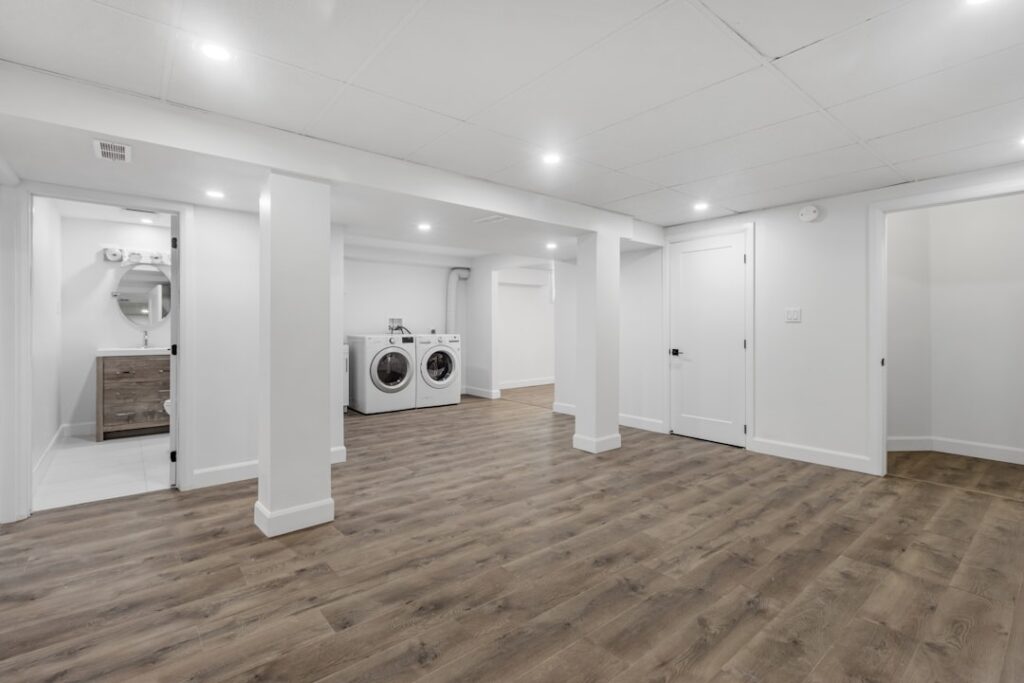
If you have finished, or plan to finish, your basement, humidity directly determines which flooring will survive down there. Excess moisture is the enemy of most floors: it causes solid hardwood to cup and warp, laminate to swell at the seams, and carpet padding to trap dampness and grow mold. That is why solid hardwood and standard laminate are generally poor choices for below-grade spaces unless humidity is tightly controlled.
The smarter picks for basements are moisture-tolerant materials. Luxury vinyl plank (LVP), tile, and engineered flooring rated for below-grade installation handle the damper environment far better. Even with these, keeping relative humidity in the 30 to 50 percent range protects the subfloor, prevents mold beneath the flooring, and extends its lifespan. Pair any basement floor with a vapor barrier over bare concrete, and run your dehumidifier consistently so moisture never gets the chance to attack the floor from below.
Preventing Problems Long-Term
Consistency is what protects your basement over the years. Keep a hygrometer running so you catch upward trends before mold takes hold. Service your dehumidifier by cleaning the filter and coils each season so it works efficiently. Store boxes and belongings on shelves or pallets rather than directly on the concrete floor, where they wick up ground moisture.
Maintaining the proper humidity for basement spaces, staying within that 30 to 50 percent range, is one of the most important and overlooked parts of home maintenance. Do it well and you prevent mold remediation bills that can run into the thousands, protect your foundation and stored items, and keep the air in your whole home healthier. A $20 hygrometer and a quality dehumidifier are a small investment for that peace of mind.