Basement window blinds have to solve problems other windows do not: tiny or oddly shaped openings, damp air, privacy at ground level, and egress safety rules. This guide covers moisture-resistant materials, sizing small hopper windows, privacy, egress considerations, costs, and installation for a below-grade space. Because basement windows differ so much from the rest of the house, choosing the right covering takes a little extra planning to get right.
Part of our Windows & Doors guide — explore the full guide →
- Why Basements Are Different
- Moisture-Resistant Materials
- Fitting Small Hopper and Awning Windows
- Privacy at Ground Level
- Egress Window Considerations
- How to Choose the Right Blinds
- Measuring for a Proper Fit
- What They Cost
- Installation Step by Step
- Maintenance and Care
- Troubleshooting and Mistakes to Avoid
- Blending Blinds Into a Finished Basement
- Final Verdict
Why Basements Are Different
Basement windows are usually small, set high on the wall near the ceiling, and often shaped as short horizontal hoppers or awnings that tilt inward or outward. The environment tends to be cooler and more humid than the floors above, and the windows frequently sit at or below ground level next to a window well. These combined factors push you toward compact, moisture-resistant blinds that can fit unusual dimensions and mount securely onto concrete or block walls rather than the wood trim you find upstairs.
Moisture-Resistant Materials
Because basements run humid, you should avoid natural wood, which absorbs moisture, warps, and grows mildew in the damp air. Faux wood blinds made of PVC or a wood-vinyl composite resist that moisture while still mimicking the warm look of real wood. Vinyl and aluminum blinds are fully waterproof and inexpensive, which makes them perfect for damp utility and storage areas. For a finished basement being used as living space, faux wood delivers a warmer, more residential look while still standing up to the higher humidity.
Fitting Small Hopper and Awning Windows
Hopper windows tilt inward from the top, and awning windows tilt outward from the bottom, so any blind must clear the moving sash as it opens. An outside mount that covers the whole opening usually works best, letting the window operate freely behind the blind without collision. If you prefer a cleaner inside mount, first confirm that the sash swing does not strike the blind when opened. Measure the small opening carefully, since basement windows are very often nonstandard sizes that stock blinds do not fit without customization.
Privacy at Ground Level
Basement windows sit right at foot-traffic level outside, so privacy matters even though the windows are small. Choose blinds with routeless slats that lack the light-leaking cord holes, or pair standard blinds with a frosted window film for constant privacy. Because these windows often serve bedrooms or bathrooms in a finished basement, room-darkening cellular shades or tightly closing faux wood blinds give the best combination of privacy and light control. Consider how visible the window is from a sidewalk or driveway when deciding how much coverage you need.
Egress Window Considerations
If your basement has a bedroom, building code typically requires an egress window large enough to climb through and quick to open for escape in a fire. Do not install any covering that blocks, jams, or complicates the operation of an egress window. Choose a lightweight, easily raised or removed treatment, and never permanently fix a shade over an egress opening. Cordless blinds that lift fully clear of the window, or a simple tension shade that pops out in a second, are the safest choices for these life-safety windows.
How to Choose the Right Blinds
Match the material to the use: vinyl or aluminum for damp utility areas, and faux wood or cellular shades for finished living spaces. Favor an outside mount to clear tilting sashes and cover the small opening fully. Prioritize privacy features for ground-level windows exposed to passersby, respect egress requirements in any basement bedroom, and pick a cordless lift for safety. Finally, confirm you can properly anchor the brackets into concrete, block, or the window frame, since a loose mount on masonry will not hold.
Measuring for a Proper Fit
Basement windows rarely match standard sizes, so measure precisely rather than assuming. For an outside mount, measure the full opening and add 2 to 3 inches on each side and at the top to block light and clear the sash swing. For an inside mount, measure the width at three points and use the narrowest, then confirm the frame depth can accommodate the headrail. Always note the sash type and how it opens so your chosen blind does not interfere with the window’s operation once it is installed.
What They Cost
Basement window blinds are inexpensive thanks to their small size, which keeps costs down across the board. Vinyl and aluminum blinds run $15 to $40 per window. Faux wood blinds cost $25 to $70 depending on size and finish. Cellular shades run $30 to $90 per window and add both privacy and a bit of insulation. Custom sizes for nonstandard openings add a modest premium. Professional installation, which is rarely necessary, adds $40 to $80 per window, but these small windows are genuinely easy DIY projects.
Installation Step by Step
Installation usually takes about 15 minutes per window. On a concrete or block wall, mark the bracket positions, drill the holes with a masonry bit, and insert plastic anchors before driving the mounting screws so they grip solidly. On a wood or vinyl window frame, standard screws work without anchors. Level the brackets carefully, snap the headrail into place, and attach the valance. Test the tilt and lift, and confirm the blind clears the tilting sash fully through its entire range of motion before you finish.
Maintenance and Care
Wipe faux wood, vinyl, and aluminum blinds with a damp cloth to clear the dust and any dampness that settles on surfaces in a basement. Watch for mildew in the humid environment and clean any spots promptly with a diluted cleaning solution on waterproof materials. Run a dehumidifier to keep basement relative humidity below about 50 percent, which protects not only your blinds but the framing, stored items, and air quality of the whole level. Dust the blinds regularly to prevent the grimy buildup that damp air encourages.
Troubleshooting and Mistakes to Avoid
If the blind interferes with a tilting sash, switch to an outside mount that clears the window’s full swing. Warped or swollen slats are a clear sign that natural wood was used where a waterproof material belonged. Do not block or permanently fix any covering over an egress window, do not skip masonry anchors when mounting to concrete or block walls, and avoid ignoring basement humidity, which shortens the life of any window treatment and can damage the whole space over time.
Blending Blinds Into a Finished Basement
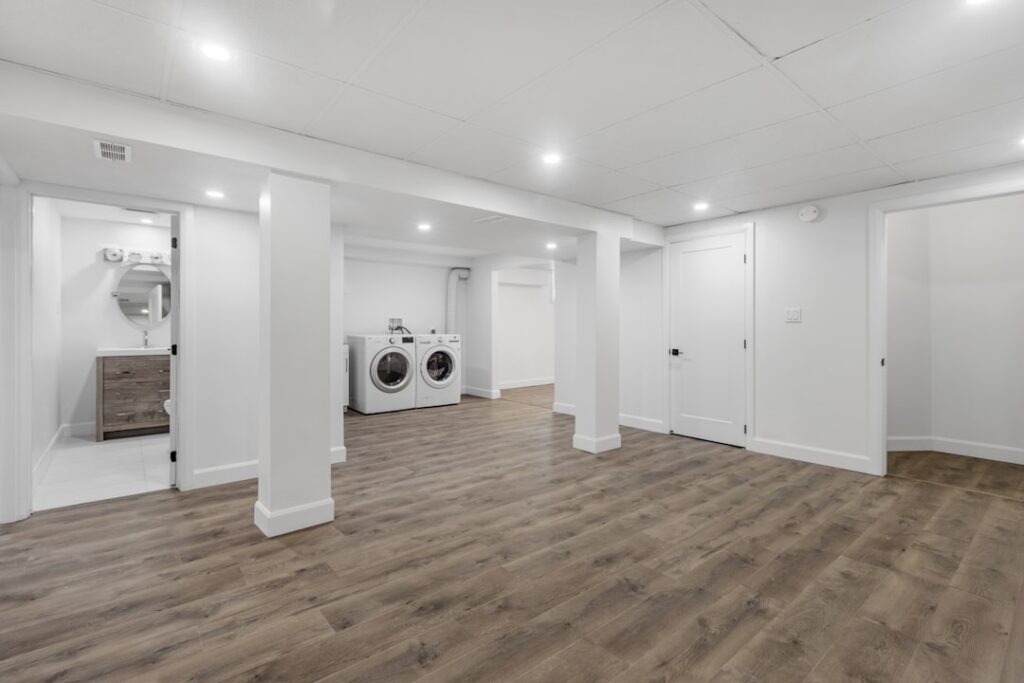
When a basement becomes finished living space, its window treatments should look intentional rather than like utility afterthoughts. Because basement windows are small and set high, matching the blind color to the wall or trim helps them recede visually and keeps the room feeling larger and less choppy. Coordinating the blinds with the treatments used elsewhere in the home creates a sense of continuity, so a basement family room reads as part of the house rather than a disconnected cave. For a warmer, more residential feel, faux wood blinds or fabric cellular shades soften the hard edges that concrete and drywall create below grade. Adding a valance or a simple cornice above a small window can dress up an otherwise plain opening and hide the mounting hardware. In a basement bar, gym, or media area, consider the mood you want: darker room-darkening shades suit a theater, while lighter filtering fabrics keep a home office or playroom bright. Thoughtful color and style choices turn small, awkward basement windows into finished details that elevate the whole lower level rather than detract from it.
Final Verdict
The right basement window blinds combine genuine moisture resistance, a proper fit for small tilting windows, and ground-level privacy, all while respecting egress safety in any bedroom. Choose waterproof materials, mount outside to clear the sash, keep egress windows easy to open, and control humidity with a dehumidifier. Handle those four points and your blinds will look good and last for years in even a damp below-grade space.