A whole house solar generator promises silent, fume-free backup power you recharge from the sun, with no gasoline, no carbon monoxide, and no engine noise. The appeal is obvious. But the marketing outruns the physics, and understanding the real capacity limits before you spend $3,000 to $20,000 will save you from a very expensive disappointment. Let’s separate what these systems genuinely do from what the ads imply.
The short version: a “solar generator” is a big battery with an inverter and solar-charging capability. It’s excellent for essentials and terrible at pretending to be a gas standby generator for a whole home. Here’s the honest breakdown.
- What a Solar Generator Actually Is
- The Two Numbers That Define It
- The Capacity Reality
- What a Solar Generator Realistically Powers
- The Solar Recharge Catch
- Solar Generator vs. Standby Gas Generator
- Where a Solar Generator Genuinely Wins
- Battery Chemistry and Lifespan
- Expandable Systems and Add-On Batteries
- Indoor Use: The Safety Advantage
- Sizing One Honestly
- The Bottom Line
What a Solar Generator Actually Is
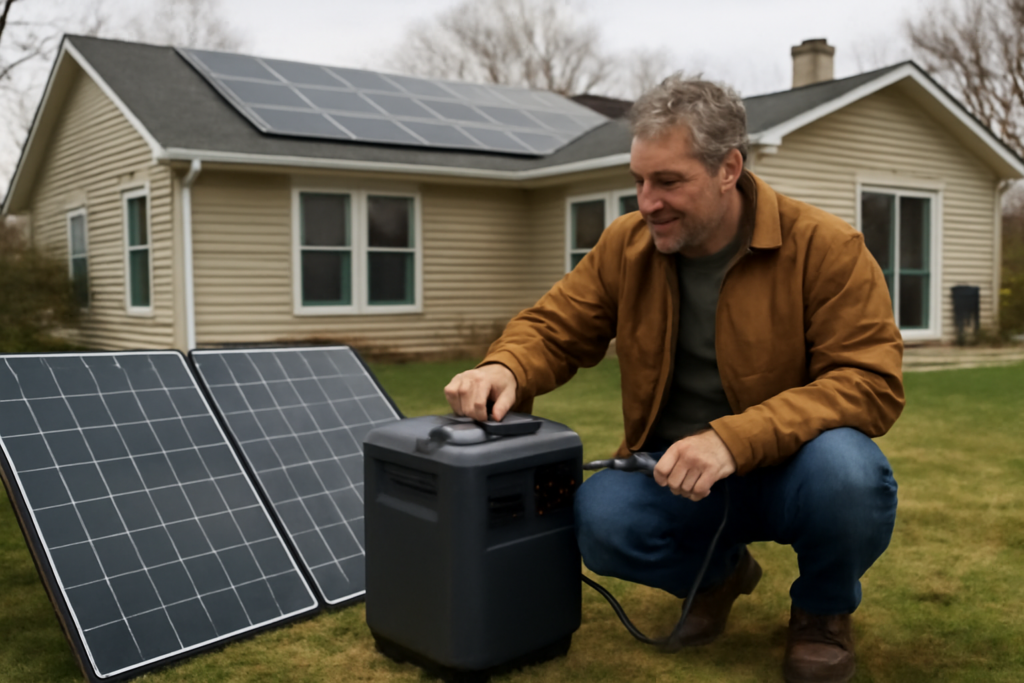
Despite the name, a solar generator doesn’t generate power continuously. It’s a large lithium battery pack (a power station) with a built-in inverter to produce AC power and inputs to recharge from solar panels, a wall outlet, or a car. It stores a fixed amount of energy, measured in watt-hours (Wh), and delivers it until empty, then it needs to recharge. That storage limit is the entire story.
The Two Numbers That Define It
Every solar generator has two specs that matter, and confusing them is where people go wrong:
- Output (watts): how much power it can deliver at once, like 1,800W, 3,600W, or 7,200W. This determines what you can run simultaneously.
- Capacity (watt-hours): how much total energy it stores, like 1,000Wh, 3,600Wh, or 10,000Wh. This determines how long it lasts.
A unit rated 3,600W output and 3,600Wh capacity can deliver 3,600 watts, but only for about one hour at that draw before it’s empty. That distinction is everything when you’re imagining powering a house.
The Capacity Reality
Here’s where the “whole house” claim collapses. Consider what a home uses in a day. An average US home consumes about 30,000 watt-hours (30 kWh) per day. A large solar generator stores maybe 3,600 to 10,000 Wh. Even a top-tier 10 kWh system holds roughly a third of a normal day’s usage, and that’s before you run an air conditioner or electric heat.
To truly back up a whole house the way a gas standby generator does, you’d need a massive battery bank, 20 to 40 kWh or more, plus enough solar panels to recharge it daily, a system that costs $20,000 to $40,000-plus and starts to resemble a permanent home solar-plus-storage installation, not a portable “generator.”
What a Solar Generator Realistically Powers
Used sensibly for essentials, a good solar generator is genuinely useful:
- 1,000 to 2,000 Wh unit: phones, laptops, lights, a CPAP overnight, router, and a few hours of a small fridge.
- 3,000 to 4,000 Wh unit: runs a refrigerator, lights, electronics, and a furnace blower for the better part of a day if you’re careful.
- 6,000 to 10,000 Wh expandable systems: can cover essential circuits (fridge, some lights, internet, a well pump intermittently) for a day or two, especially if the sun is out to recharge.
What they don’t do well: run central air conditioning, electric water heaters, electric ranges, or electric heat for any meaningful time. Those loads drain even large batteries in minutes to an hour.
The Solar Recharge Catch
The “solar” part has its own limits. Recharging depends entirely on sun and panel wattage. A power station with 400 watts of attached panels might take 8 to 12 hours of good sun to refill a 3,600 Wh battery, and far longer on a cloudy winter day, exactly when outages from storms tend to happen. Solar recharging stretches your runtime, but it’s slow and weather-dependent, so you can’t count on it to keep pace with heavy use.
Solar Generator vs. Standby Gas Generator
Comparing the two honestly, side by side:
- Runtime: a gas standby generator runs indefinitely as long as it has natural gas or propane; a solar generator runs until its battery empties, then needs hours to recharge.
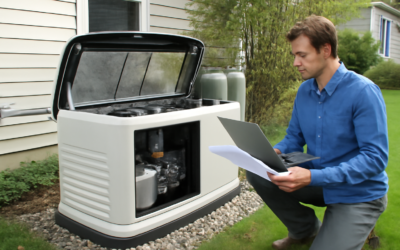
- Capacity: a 22 kW gas unit powers a whole home continuously; a solar generator handles essentials for hours to a day or two.
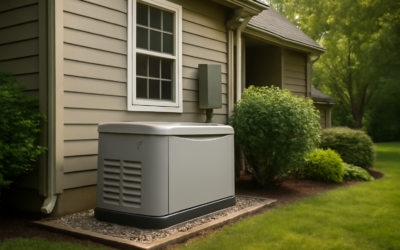
- Noise and fumes: solar wins decisively, silent and zero emissions, safe to use indoors; gas is loud and produces carbon monoxide that must vent outdoors.
- Maintenance: solar has no oil changes or fuel to store; gas needs regular service and fuel management.
- Cost: a large solar system rivals or exceeds a standby gas generator’s $5,000 to $15,000 installed cost while delivering far less sustained power.
- Best use: solar for quiet essential backup, apartments, and indoor safety; gas for true whole-home, multi-day outage coverage.
Where a Solar Generator Genuinely Wins
Don’t dismiss them, because for the right job they’re excellent. A solar generator is the better choice when you need silent operation, zero fumes for indoor use (a huge safety advantage over any fuel generator), backup for essentials rather than the whole home, or a system with no maintenance and nothing to refuel. For apartment dwellers, RVers, and anyone who mainly wants to keep the fridge, medical devices, lights, and internet running through outages, a 3,000 to 6,000 Wh unit is a smart, safe buy.
Battery Chemistry and Lifespan
The battery inside determines how long the unit lasts and how safe it is, so it’s worth knowing what you’re buying. Most quality solar generators now use lithium iron phosphate (LiFePO4) cells, which last 3,000 to 6,000-plus charge cycles, roughly 10 years of regular use, and are far more thermally stable than the older lithium-ion (NMC) chemistry. Cheaper or older units use NMC, which is lighter but wears out faster, around 500 to 1,000 cycles, and is less tolerant of heat. For a backup unit you want to trust for a decade, LiFePO4 is worth the premium. Check the rated cycle life and the warranty, since a battery that only holds 60 percent of its capacity after a few years quietly shrinks your backup power over time.
Expandable Systems and Add-On Batteries
The better way to approach whole-home ambitions is a modular system. Several brands now sell a main power station that accepts add-on battery packs, letting you start with, say, 3,600 Wh and expand to 10,000 or even 25,000 Wh as budget allows. Paired with a transfer switch or a smart panel, these larger stacks can genuinely back up essential circuits for a day or more and recharge from a rooftop solar array. This is where “whole house solar generator” starts to become real, but note the cost: a 20,000 Wh expandable system with panels and an electrician-installed transfer switch can run $15,000 to $30,000, at which point you’re building a home energy-storage system, not buying a portable appliance.
Indoor Use: The Safety Advantage
The single biggest reason to choose a solar generator over any fuel-burning unit is safety indoors. A battery power station produces no exhaust and no carbon monoxide, so it can run safely inside your home, apartment, or RV, something you must never do with a gas or propane generator. For anyone in an apartment, a condo, or a home without a safe outdoor spot to run a fuel generator 20 feet from windows, a solar generator isn’t just convenient, it’s the only responsible option for indoor backup. That safety, plus silent operation, is what these units genuinely deliver even when their capacity can’t match a standby generator.
Sizing One Honestly
If you go this route, size it to essentials, not fantasy:
- List only the critical loads you must keep running: fridge, lights, medical devices, internet, phone charging.
- Estimate their daily watt-hours (fridge roughly 1,000 to 2,000 Wh/day, for example).
- Buy capacity that covers at least a day of those loads, with expandable batteries if you want longer.
- Add enough solar panel wattage to meaningfully recharge, and set realistic expectations for cloudy days.
The Bottom Line
A whole house solar generator that silently runs your entire home for days is largely a marketing fantasy at consumer price points, because battery capacity simply can’t match a home’s daily energy appetite without a $20,000-plus solar-plus-storage buildout. What these units do brilliantly is provide quiet, fume-free, maintenance-free backup for essential circuits, which for many households is exactly what they need. Match the tool to the job: solar for safe essential backup, a standby gas generator for true whole-home, multi-day power, and know the difference before you spend.