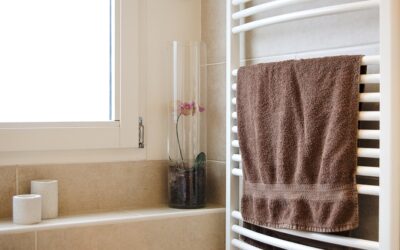
If you have been searching for a wirecutter towel warmer recommendation, you are probably trying to cut through dozens of look-alike racks before spending $150 to $900 on one. A wirecutter towel warmer roundup from a respected independent review site can point you toward tested options, but understanding the underlying specs matters far more than any single ranking. This guide walks you through every decision so you can buy once and skip the returns.
Why Heated Towel Racks Are Worth It
A warm towel after a shower is the obvious draw, but the practical payoff is moisture control. A heated rack dries a damp towel in roughly 45 to 90 minutes instead of leaving it musty for hours. That reduced dwell time discourages mildew and the sour smell that comes with it, which matters in small windowless bathrooms.
Most units draw between 60 and 150 watts, comparable to a couple of incandescent bulbs. Running one a few hours a day typically adds $2 to $6 per month to your electric bill at the U.S. average of about 16 cents per kilowatt-hour. That is a modest line item for the comfort and the laundry-freshness benefit combined.
The Three Main Types
Before comparing finishes or bar counts, settle on a power and plumbing approach. The three categories below differ sharply in cost and installation effort.
Plug-In (Freestanding or Wall-Mounted)
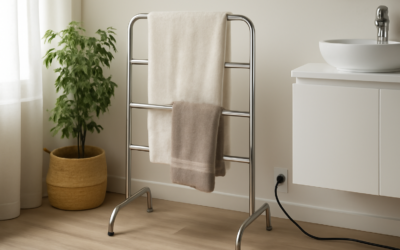
Plug-in models are the easiest entry point. You mount the rack or stand it on the floor, then run the cord to a nearby GFCI outlet. Expect to pay $80 to $300. The trade-off is a visible cord, and code generally wants that outlet at least 36 inches from the tub or shower. These are the right pick for renters and anyone avoiding an electrician.
Hardwired (Electric)
Hardwired racks wire directly into the wall, leaving no cord and a cleaner look. Hardware runs $200 to $700, plus $150 to $400 for a licensed electrician if you do not already have a junction box behind the wall. This is the option most people picture when they imagine a built-in spa feel, and it is the cleanest install for new construction or a full remodel.
Hydronic (Water-Heated)
Hydronic units tie into your home’s hot-water or hydronic heating loop instead of using electricity. They are the most efficient over time and pair naturally with radiant floor systems, but they demand plumbing work and rarely make sense as a retrofit. Installed costs often reach $600 to $1,500. Consider these only during a gut renovation.
How Many Bars Do You Need?
Bar count drives both capacity and price. Match it to your household and your towel size.
- 6 to 8 bars: Fits a single bath towel plus a hand towel. Good for a powder room or solo user.
- 10 to 12 bars: The most popular range, holding two full-size bath towels comfortably.
- 15 or more bars (ladder or wall panel): For couples, families, or anyone who likes oversized bath sheets.
Measure your wall space first. A typical 12-bar wall unit spans about 21 inches wide and 31 inches tall, so confirm you have clearance from the vanity and door swing before you order.
Wattage, Heat Output, and Surface Temperature
Wattage tells you how aggressively a rack heats. Compact six-bar units sit near 60 watts, while large ladder racks reach 120 to 150 watts. Higher wattage dries thicker towels faster but costs slightly more to run.
Surface temperatures usually land between 95°F and 150°F, warm to the touch but not scalding. If a home includes young children, look for models that stay under about 120°F or that mount high enough to be out of reach. Aluminum cores heat up fastest, reaching working temperature in 10 to 20 minutes, whereas heavier stainless steel takes longer but holds heat better once warm.
Timers, Switches, and Smart Controls
A built-in timer is the single feature most worth paying for. Without one, you either leave the rack running continuously or remember to flip a switch twice a day. Common control options include:
- Simple on/off switch: Cheapest, but relies on you to manage it.
- Mechanical or digital countdown timer: Runs for a set window such as two or four hours, then shuts off automatically.
- Programmable 7-day timer: Heats before your morning and evening showers and idles the rest of the day.
- Wi-Fi or app control: Lets you warm the rack from bed or tie it into a smart-home routine.
A timer typically trims energy use by 50 percent or more compared with leaving a unit on around the clock, so it often pays for the price bump within a year or two.
Finishes and Materials
Finish is mostly about matching your existing fixtures, but it affects durability too. Polished chrome is the most common and the most affordable, though it shows water spots. Brushed nickel hides fingerprints and spots better. Matte black and brushed gold cost more and read more modern. For coastal or high-humidity homes, choose 304-grade stainless steel, which resists corrosion far better than carbon steel with a plated coating.
Avoid the cheapest no-name racks with thin plating; the coating can pit and flake within a year or two in a steamy bathroom. Spending an extra $40 to $80 on a quality finish usually buys years of additional life.
Installation Tips and Safety
For plug-in units, plan the cord route before drilling so the cable does not dangle across a mirror or backsplash. Always use a GFCI-protected outlet, and never run the cord through a wall to hide it unless the unit is rated and labeled for that. For hardwired models, hire a licensed electrician unless you are genuinely comfortable with junction-box wiring and local code; bathrooms are damp-rated environments with strict requirements.
Mount the rack into studs or use heavy-duty anchors rated well above the unit’s weight, since a wet towel adds several pounds of leverage. Leave at least three to four inches of clearance behind the bars so air can circulate and dry the fabric evenly.
What to Compare Before You Buy
When you read a wirecutter towel warmer guide or any independent review, translate the ranking into the specs that fit your space. Confirm the power type matches your install ability, the bar count fits your towels and wall, the wattage suits your towel thickness, and a timer is included or available. Then check the warranty: better brands back the heating element for 5 to 10 years, while budget units may offer only one.
Set a realistic budget. A solid plug-in unit lands around $150 to $250, a quality hardwired rack with a timer runs $300 to $600 installed, and a hydronic system is a remodel-scale expense. Buy for the bathroom you actually use rather than the showroom photo, and a good towel warmer will quietly improve your routine every single morning.