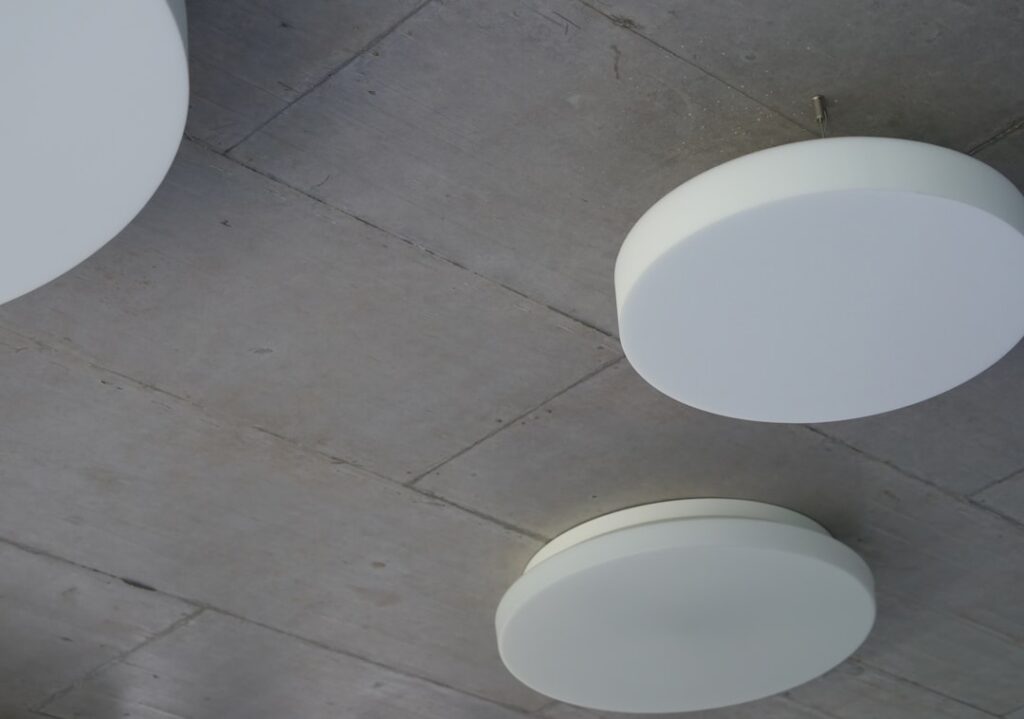
There are places in every house electricity never reached: the closet under the stairs, the shed, the attic crawl, the pantry that swallows canned goods into darkness. Running a circuit to each costs $150–500 in electrician time. A wireless ceiling light — a battery-powered LED that sticks or screws to the ceiling — costs $10–40 and installs in five minutes. The catch is that the category is flooded with optimistic lumen claims and vague battery promises, so this guide covers what these lights realistically deliver, which types fit which problems, and how to pick one that won’t disappoint.
What Counts as a Wireless Ceiling Light
We’re talking about fully self-contained battery LED fixtures: puck lights, faux flush-mounts, motion-sensor discs, and remote-controlled “chandelier-look” units that need no wiring whatsoever. Mounting is 3M adhesive, magnets, or two screws into the ceiling. This is a different animal from smart bulbs (which need a powered socket) and from low-voltage plug-in fixtures. If what you actually want is a proper wired fixture for a living space, a battery puck is the wrong tool — a real flush or semi-flush fixture like the ones in our semi-flush ceiling lights guide delivers ten times the light without battery babysitting.
Brightness Reality: Reading Lumen Claims
This is where buyers get burned. A wired 60W-equivalent LED fixture produces about 800 lumens continuously. Battery physics can’t sustain that for long, so battery lights either produce less, or produce it briefly.
| Light type | Honest output | What it actually lights |
|---|---|---|
| Stick-on puck light | 30–80 lm | A shelf, a lock, the inside of a cabinet |
| Motion-sensor disc/ceiling puck | 100–300 lm | A closet, pantry, or hallway pass-through |
| Large battery “flush mount” (8–12″) | 300–600 lm | A shed, walk-in closet, or small utility room |
| Remote-control faux fixture | 200–500 lm | Ambient light in a gazebo or camper |
Treat any Amazon listing claiming 1,000+ lumens from AAs with suspicion — those numbers are usually a burst-mode peak or simply fiction. As a rule of thumb, divide bold claims by two, and remember that even a genuine 500-lumen unit reads dimmer than you expect because ceiling height spreads the light. For task zones, aim the purchase at 20+ lumens per square foot of the area you care about: a 4×6 closet (24 sq ft) is genuinely served by a real 300–500 lumen unit; a 12×12 room is not served well by any battery fixture.
The Motion-Sensor Sweet Spot
Motion-activated models are the best products in the category, for a simple reason: the sensor solves the battery problem. A PIR sensor that fires the light for 20–60 seconds per entry means a closet light might activate a few minutes per day total — stretching batteries from weeks to a year-plus. They also solve the switch problem: hands full of laundry, the light just comes on.
What to check on the spec sheet:
- Sensor range and cone: 10 feet / 120° covers a closet; hallway units want more.
- Daylight sensor (photocell): stops the unit burning battery every time you walk past in daylight. Worth insisting on.
- Timeout setting: adjustable 20s/60s/90s beats fixed. Long timeouts eat batteries.
- Dusk-only mode for hallways used at night.
Good picks in the class: Mr. Beams MB980/MB990 ceiling units (300 lumens, D cells, roughly $25–35 and the reliability benchmark), LEPOTEC and Lightbiz multi-mode discs for closets, and rechargeable USB-C pucks for anywhere you can reach easily.
Battery Life: The Honest Math
Battery life claims assume sensor mode with brief activations. Real-world expectations:
- Motion-sensor closet duty: 6–12 months on alkaline D cells or AAs. The happy case.
- Continuous use: a 300-lumen unit on 3 D cells runs roughly 20–30 hours of total on-time. If a light will burn for hours nightly, batteries become a subscription — figure the annual cost before buying.
- Rechargeables: USB-C units with 1,500–3,000 mAh cells typically give 3–10 hours of continuous light per charge, months in sensor mode. Best where the fixture is reachable without a ladder; recharging a shed ceiling unit monthly gets old fast.
- Cold: alkaline output sags badly below freezing — for unheated sheds in northern winters, lithium primaries (Energizer Ultimate) keep working where alkalines quit.
Where Wireless Lights Genuinely Solve Problems
- Closets — the killer app. Code (NEC 410.16) restricts bare fixtures near shelving anyway, and a motion puck sidesteps wiring entirely. This is the single best use case.
- Sheds and detached storage. Trenching power to a shed runs $500+; a $30 D-cell fixture answers the actual need, which is finding the rake.
- Pantries, attics, crawl spaces, under-stair storage. Brief-visit spaces are exactly what sensor-plus-battery is built for.
- Rentals and dorms, where you can’t touch the wiring — adhesive mounting leaves no trace.
- Power-outage backup: a remote-control unit stuck in the hallway beats hunting flashlights.
- Gazebos, camper vans, and covered patios for ambient (not task) light.
And where they don’t: living rooms, kitchens, bedrooms — any space where you want real, hours-long illumination. There a wired fixture is not just brighter but cheaper per year. A bedroom deserves proper fixture selection (our bedroom ceiling light guide covers sizing and dimming), and even style-driven choices like a rattan ceiling light exist in wired form for a reason: 120V doesn’t run out on a Tuesday night.
Mounting and Placement Tips
- Adhesive pads hold light pucks fine on smooth ceilings but fail on popcorn texture — screw-mount there, or mount to the underside of a shelf.
- Many units use a twist-lock bracket: screw the bracket, twist the light on, twist off to change batteries. Screw the bracket even if adhesive is offered; ladders and dropped fixtures are a bad combo.
- Center the light over the working zone, not the room’s geometric center — over the closet rod, over the workbench.
- In deep closets, two 200-lumen pucks at thirds beat one 400-lumen center unit; battery lights don’t have the punch to throw light into corners.
- Pick color temperature deliberately: 4000–5000K for task/storage clarity, 2700–3000K for gazebo ambience.
Beyond Batteries: The In-Between Options
Before committing to battery power, check whether your dark zone qualifies for one of the half-step solutions that beat batteries on brightness:
- Rechargeable pucks with detachable heads. Units where the light pops off its mounted base for USB-C charging solve the ladder problem — charge it at the kitchen counter, click it back up. The best current compromise for reachable ceilings.
- Plug-in pendant kits ($20–40). If there’s an outlet in the room, a swag pendant — cord, inline switch, hook to the ceiling — delivers unlimited 800+ lumen light with zero batteries and zero wiring. Sheds with a single outlet, craft corners, and rentals are prime candidates.
- Solar shed lights ($25–60). A small panel screws to the roof, a cord feeds an interior LED with a pull switch or remote. For detached sheds this beats every battery option: 300–1,000 lumens, self-charging, works all winter if the panel faces south.
- Wireless-switch wired lights. If a circuit exists but a switch doesn’t, a $25 kit (RF button plus relay) gives real 120V light with a stick-anywhere switch — often the right fix for attics with a bare keyless fixture.
The decision rule: battery lights win where visits are brief and infrequent; anything you’ll illuminate for more than 15 minutes a day deserves one of these higher-output routes, or real wiring.
FAQ
How bright are battery-operated ceiling lights?
Realistically 100–600 lumens depending on size — enough for closets, pantries, and sheds, nowhere near enough to serve as a room’s main light. Discount inflated listings claiming four digits.
How long do batteries last in a wireless ceiling light?
In motion-sensor mode with brief daily use, 6–12 months is typical. Used continuously, expect only 20–30 hours of total on-time from a set of alkalines.
Do wireless ceiling lights work on popcorn ceilings?
Adhesive mounts don’t hold on texture. Use the screw-mount bracket that most quality units include, or mount on a nearby flat surface like a shelf underside or joist.
Are there wireless lights with remote controls?
Yes — many 8–12″ faux flush-mounts include remotes with dimming, timers, and color-temperature switching. They’re best for ambient use; remotes don’t change the battery math.
Buy motion-sensor models with a photocell, believe half the lumen claim, and deploy them in the brief-visit dark zones of your house — used that way, wireless ceiling lights are one of the highest-satisfaction $25 purchases in home improvement.