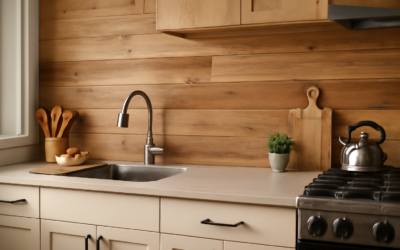
A wood-paneled kitchen wall behind the range was unthinkable in 1995 because grease, water, and tomato sauce destroyed exposed wood within months. Modern marine sealants, polyurethane finishes, and engineered wood products have changed that calculation entirely. A properly sealed wood backsplash kitchen can survive 15 to 20 years of daily cooking with normal wipe-down maintenance, and the warmth it adds to a kitchen rivals any other backsplash material.
Part of our Kitchen Remodeling guide — explore the full guide →
Why Wood Backsplashes Are Trending
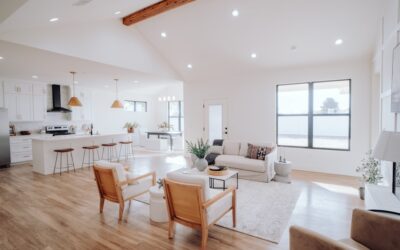
Open-concept kitchens often share visual real estate with living and dining spaces, which makes a hard tile backsplash feel cold and disconnected from the rest of the home. Wood bridges that gap. Reclaimed barn wood, shiplap, and stained tongue-and-groove planks all read as continuations of furniture and millwork rather than utilitarian surfaces.
The look pairs especially well with shaker cabinets, butcher block counters, and farmhouse sinks. It also helps soften the visual weight of dark cabinets in small kitchens by adding a natural texture that bounces light.
Best Wood Species for Kitchen Backsplashes
Not all woods handle kitchen conditions equally. The species you choose affects durability, sealing requirements, and visual character.
- White oak: hard, tight grain, resists water once sealed, $5 to $9 per board foot
- Walnut: rich color, moderately hard, premium look, $10 to $14 per board foot
- Maple: very hard, light tone, takes stain well, $4 to $7 per board foot
- Reclaimed barn wood: character-rich, varies wildly in stability, $8 to $18 per square foot
- Cedar tongue-and-groove: aromatic, water-resistant naturally, $3 to $6 per square foot
Avoid soft woods like pine and basswood for areas behind the range or sink. They dent easily and absorb water faster than the sealant can repel it.
Engineered and Veneer Alternatives
Solid wood is not the only option. Engineered wood panels and quality veneers solve some of the moisture concerns at lower cost. PrimaPlank, Stikwood, and StuckOnWoods all sell peel-and-stick wood plank backsplashes that install in an afternoon and run $5 to $12 per square foot. The thin profile is fine for backsplashes since they take no structural load.
Marine-grade plywood with a wood veneer face is another option. Use 3/4 inch baltic birch or cabinet-grade plywood with a finished hardwood veneer, sealed with marine spar varnish. The total cost runs $4 to $8 per square foot in materials and the panels can be precut to fit standard 18-inch backsplash heights with no waste.
Sealing for Kitchen Conditions
Sealing makes or breaks a wood backsplash. Three sealant systems handle kitchen conditions reliably:
Marine spar varnish like Epifanes or Pettit Captain’s Varnish offers the highest moisture resistance and survives splashes, steam, and grease. Apply 4 to 6 thin coats with sanding between for a glass-smooth finish. Expect 10 to 15 years before recoating.
Polyurethane in satin or semi-gloss like Minwax Helmsman or General Finishes Outdoor Oil-Based Topcoat is the homeowner-friendly option. Three coats give good water resistance and the application is forgiving. Recoat every 6 to 8 years.
Epoxy resin coatings deliver a glossy, nearly waterproof surface but the look is plastic and not what most homeowners want behind their range. Use only for high-traffic restaurant or commercial situations.
Skip oil and wax finishes like tung oil or paste wax for kitchen backsplashes. They look beautiful but require monthly reapplication to maintain water resistance.
Heat Considerations Behind the Range
The wall behind a gas or induction range can hit 200 degrees Fahrenheit during heavy cooking, which exceeds the safe long-term temperature for most wood species. Three approaches solve the heat problem:
Install a tempered glass or stainless steel sheet directly behind the range, with the wood backsplash flanking on both sides. Glass and stainless block heat and grease while the wood handles the rest of the wall.
Use the range hood to create a clear separation. The hood vent column can be the heat-resistant material like steel or stone, with wood resuming on either side at countertop level.
Pull the wood backsplash itself back from the cooking zone with a 24 by 30 inch tile or stone insert directly behind the range. Many designers use a marble or quartzite slab insert that doubles as a design feature.
Installation Methods
For solid wood planks, install over 1/2 inch plywood substrate to keep the wall flat and provide a nailing surface. Use construction adhesive plus 18-gauge brad nails every 16 inches into studs or substrate. Acclimate planks in the kitchen for 5 to 7 days before installing to allow moisture content to stabilize.
For peel-and-stick alternatives, the wall must be smooth, clean, and primed. Skim-coat textured walls with joint compound and sand smooth before applying. The surface preparation takes longer than the install itself for most homeowners.
Cost Breakdown
For a typical 30 square foot kitchen backsplash, total project costs run:
- Peel-and-stick wood planks DIY: $200 to $400
- Reclaimed shiplap DIY: $300 to $600
- Solid white oak DIY: $400 to $800
- Solid walnut DIY: $700 to $1,200
- Professional installation adds: $400 to $900
Compare to a tile backsplash, which typically runs $800 to $2,500 installed. Wood is often the cheaper option, especially for DIY-capable homeowners.
Daily Maintenance and Care
Wipe spills and splatters within an hour of cooking. Use a soft damp cloth and mild dish soap, never abrasive cleansers or vinegar-based sprays which can degrade the sealant. Once a year, inspect the finish for dull spots, scratches, or moisture marks. Touch up failing areas with the original sealant before damage spreads to the wood underneath.
Avoid mounting heavy items directly to the wood. Magnetic strips, hanging utensil rails, and mounted shelves should anchor into studs through the wood, not into the wood alone.
Resale Value Considerations
Wood backsplashes show up positively in design publications but mixed reviews from real estate appraisers. Buyers either love the look or want to replace it. If you plan to sell within 5 years and are in a buyer market, a neutral subway tile backsplash is the safer financial choice. If you plan to live in the home long-term or are in a strong seller market, a well-installed wood backsplash kitchen reads as a premium designer touch and rarely hurts resale value.