Plank flooring gets all the attention, but sheet vinyl quietly solves problems planks can’t: a fully waterproof, nearly seamless surface for the lowest price per square foot in the whole category. A wood look vinyl flooring roll is sheet vinyl printed and textured to mimic hardwood planks, sold in wide rolls (usually 6 or 12 feet) that you cut to fit a room in one or two pieces. For bathrooms, laundry rooms, kitchens, and rentals, it delivers the warm look of wood with no seams for water to sneak through and a bottom-line cost that’s tough to beat. Here’s the honest rundown of where it shines, where it falls short, and how to buy a roll that looks good and lasts.
- What a Wood Look Vinyl Roll Actually Is
- Pros of a Wood Look Vinyl Flooring Roll
- Cons to Know Before You Buy
- How Much Does It Cost
- Felt-Backed vs. Fiberglass-Backed
- What to Look For When Buying
- Installation Basics
- Best Rooms for a Wood Look Vinyl Roll
- Wood Look Roll vs. Luxury Vinyl Plank
- Care and Maintenance
- The Bottom Line
What a Wood Look Vinyl Roll Actually Is
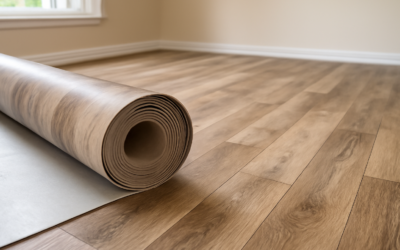
Sheet vinyl is a continuous, flexible flooring material built in layers: a backing, a printed design layer showing wood grain and plank lines, and a clear wear layer on top. Because it comes off a roll in one wide piece, a typical bathroom or small kitchen installs with zero or one seam, unlike the dozens of joints in a plank floor. The wood look is photographic, so you can get oak, walnut, pine, gray-washed, or hand-scraped styles, complete with printed plank edges and embossed grain texture underfoot.
Pros of a Wood Look Vinyl Flooring Roll
- Lowest cost in vinyl: often $0.70 to $2.50 per sq ft, cheaper than most LVP.
- Truly waterproof and nearly seamless: few or no seams means water can’t reach the subfloor, ideal for baths and laundry rooms.
- Fast installation: one big piece covers a small room in a couple hours; loose-lay and glue-down options both exist.
- Soft and warm underfoot: the flexible backing is easier on your feet and warmer than tile.
- Low maintenance: sweep and damp-mop; no grout, no refinishing.
- Comfortable and quiet: absorbs sound and gives slightly, unlike hard rigid floors.
Cons to Know Before You Buy
- Less realistic than LVP: the flat surface and lack of beveled plank edges make the wood look read as printed up close.
- Can dent and tear: heavy appliances and dragged furniture can gouge it; it won’t take abuse like rigid SPC.
- Shows subfloor flaws: because it’s thin and flexible, bumps, nail heads, and seams telegraph through.
- Hard to patch invisibly: a damaged section usually means replacing the whole sheet in that room.
- Lower resale appeal: buyers see sheet vinyl as more budget than plank.
- Seam risk in big rooms: rooms wider than the roll need a seam, which must be sealed properly to stay waterproof.
How Much Does It Cost
Sheet vinyl is the value leader. Here’s what to budget in 2025:
- Basic felt-backed rolls: $0.70 to $1.50 per sq ft.
- Mid-range fiberglass-backed rolls: $1.50 to $2.50 per sq ft. More durable, lays flatter, resists dents.
- Premium thick or luxury sheet vinyl: $2.50 to $4.00 per sq ft.
Professional installation adds $1.00 to $3.00 per sq ft. A 120 sq ft bathroom or laundry room runs roughly $85 to $300 in materials, or about $200 to $600 installed. That’s often half the cost of comparable LVP, which is why sheet vinyl remains a landlord and budget-remodel favorite.
Felt-Backed vs. Fiberglass-Backed
The backing is the biggest quality dividing line, so know which you’re buying.
Felt-Backed
Cheaper and thinner, felt-backed rolls must be fully glued down and are more prone to denting, tearing, and showing subfloor imperfections. Fine for a low-traffic guest bath or a short-term rental.
Fiberglass-Backed
These lay flatter, resist dents and curling, and can often be loose-laid or perimeter-glued, which makes DIY easier and removal cleaner. For most homeowners, fiberglass-backed is worth the extra dollar per square foot.
What to Look For When Buying
- Wear layer thickness: a thicker clear top (measured in mils) resists scuffs; aim higher for kitchens and entries.
- Embossed texture: texture that follows the printed grain looks and feels more like wood than a flat, glossy sheet.
- Roll width: match it to your room. A 12-foot roll covers most bathrooms and small kitchens seam-free.
- Realistic print: matte or low-sheen finish and varied plank tones read more authentically; skip high-gloss.
- Backing type: fiberglass for durability and easier installs.
Installation Basics
- Prep the subfloor. It must be clean, dry, and smooth; even small bumps or seams telegraph through. Skim-coat or add an underlayment over rough plywood.
- Make a template from builder’s paper for rooms with lots of obstacles, then transfer it to the vinyl for an accurate cut.
- Acclimate the roll flat in the room for 24 hours at 65 to 85 degrees F so it relaxes and lies flat.
- Cut with a sharp utility knife and a straightedge; leave a slight overlap at walls, then trim to the edge.
- Glue or loose-lay per the product. Full-spread adhesive for felt-backed; perimeter adhesive or loose-lay for many fiberglass-backed rolls.
- Roll it flat with a floor roller to remove air, and seal any seam with the manufacturer’s seam sealer to keep it waterproof.
Best Rooms for a Wood Look Vinyl Roll
This material is at its best where water and budget matter most: full and half baths, laundry and mud rooms, small kitchens, basements, and rental units. The seamless, waterproof surface is a genuine advantage over plank in wet rooms. For large, high-traffic living areas where realism and resale value matter, rigid LVP or SPC is usually the better spend, since it looks more like real wood and takes harder use.
Wood Look Roll vs. Luxury Vinyl Plank
Homeowners cross-shopping wood-look floors usually land between a sheet vinyl roll and luxury vinyl plank, so it helps to see them side by side. Sheet vinyl wins on price, on being nearly seamless, and on speed of installation in small wet rooms. LVP wins on realism, thanks to beveled plank edges and thicker embossed textures, and on durability, since rigid SPC cores resist dents and hide subfloor flaws that telegraph through thin sheet goods.
The practical dividing line is the room. In a 40 to 120 sq ft bathroom or laundry, a single seamless sheet is cheaper, faster, and more waterproof than piecing together dozens of planks, and the modest realism gap barely matters in a small space. In a 300 sq ft living room or an open kitchen where people spend real time and resale value is on the table, LVP’s superior look and toughness justify the higher price. Buy the roll for the wet, small, and budget rooms; buy plank for the showcase spaces.
Care and Maintenance
Upkeep is simple. Sweep or vacuum for grit, damp-mop with a pH-neutral cleaner, and wipe spills promptly. Put felt pads under furniture and use a plywood square when moving appliances so casters don’t gouge the surface. Skip abrasive scrubbers and harsh solvents. With basic care, a fiberglass-backed roll holds up well for 10 to 15 years.
The Bottom Line
A wood look vinyl flooring roll is the smart pick when you want waterproof, seamless wood style for the lowest possible price, especially in bathrooms, laundry rooms, and rentals. Choose a fiberglass-backed roll with a thick wear layer and embossed texture, prep the subfloor smooth, and seal any seams, and you’ll get a warm, easy-clean floor for a fraction of plank cost. Just know the trade-off: it won’t match rigid LVP for realism or durability in a busy living room. Match the material to the room and it delivers real value.
Prefer to explore on your own?
See how new flooring looks in your actual room in seconds — free, no signup.
Try the free Floor Studio →