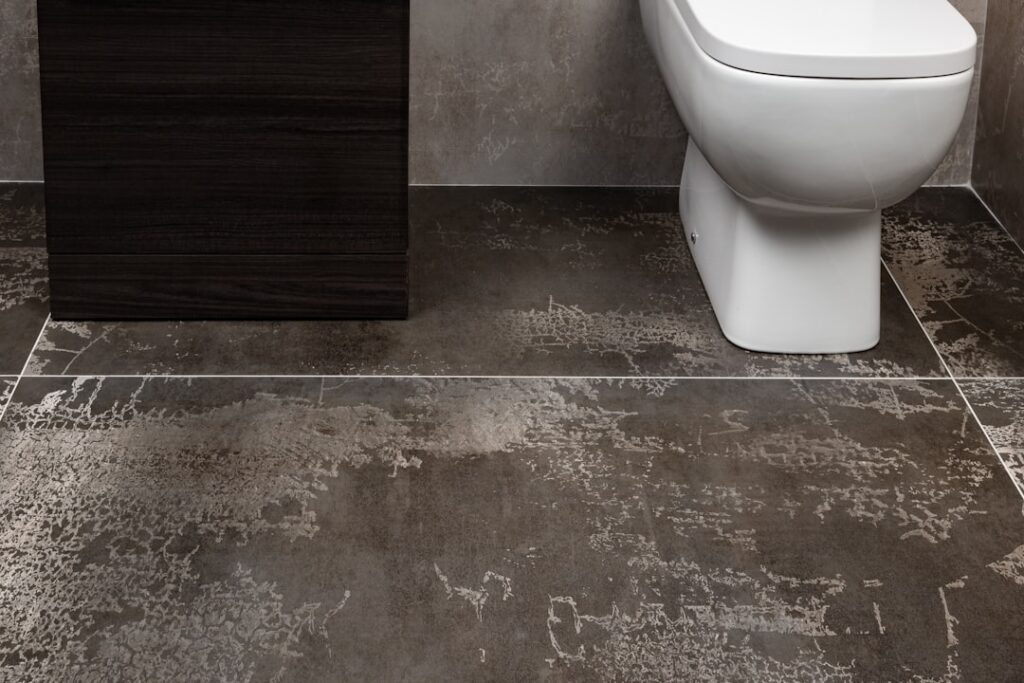
Everyone talks about luxury vinyl plank, but its wide-format cousin quietly solves problems planks cannot. A luxury vinyl flooring roll, also called sheet vinyl, covers a room in one or two continuous pieces with almost no seams, which makes it the go-to for bathrooms, laundry rooms, and anywhere you want a truly watertight floor for the lowest possible cost. But rolls come with real tradeoffs in installation and repair that planks avoid. This guide lays out the honest pros and cons so you know when a roll beats planks and when it does not.
What a Luxury Vinyl Roll Actually Is
A luxury vinyl roll is sheet vinyl sold in wide continuous rolls, commonly 6, 12, or 13.2 feet wide, cut to the length of your room. Like plank vinyl, it is built in layers: a backing, a flexible PVC core, a printed design layer reproducing wood, tile, or stone, and a clear wear layer with a protective topcoat. The “luxury” designation signals a thicker product with a more realistic print and a heavier wear layer than old-school bargain sheet vinyl. Because it comes in a single wide sheet, a small or medium room is often covered in one piece with no seams at all.
The Pros
Rolls have specific strengths that planks cannot match:
- Nearly seamless water resistance: with few or no seams, water has almost nowhere to penetrate, making rolls the most watertight vinyl option for bathrooms and laundry rooms.
- Low cost: sheet vinyl is typically the cheapest vinyl format at $0.50 to $2 per sq ft for standard products and $2 to $4 for premium luxury sheet.
- Fast coverage: a whole room rolls out in minutes rather than clicking together plank by plank.
- Soft and quiet underfoot: the flexible sheet feels warmer and quieter than rigid planks or tile.
- Fewer places for dirt to hide: a continuous surface has no plank seams to trap grime.
The Cons
The same format creates real drawbacks:
- Hard to install well: handling a heavy, unwieldy 12-foot-wide sheet and template-cutting it around toilets, cabinets, and doorways is genuinely difficult for a DIYer. Mistakes waste an expensive sheet.
- Difficult to repair: damage one spot and you often cannot patch it invisibly; you may have to replace the whole sheet, whereas a single plank pops out and swaps easily.
- Shows subfloor flaws: thin flexible sheet telegraphs bumps, seams, and debris under it, so subfloor prep must be near-perfect.
- Less premium look and feel: even luxury sheet rarely matches the realism and dimensional depth of a good rigid plank.
- Can dent and tear: being thinner and softer, it is more prone to gouges and tears from dropped objects and heavy furniture.
Thickness and Wear Layer
Roll vinyl quality is read the same way as plank: overall thickness and, more importantly, the wear layer. Luxury sheet vinyl runs thicker than bargain sheet, and a heavier wear layer, look for products marketed with a strong wear rating, resists scratches and scuffs far better. For a busy kitchen or entry, choose the thickest luxury sheet with the heaviest wear layer you can afford. For a low-traffic laundry room, a mid-grade sheet is plenty.
How It Installs
Sheet vinyl is installed one of three ways. Full-spread glue-down bonds the entire sheet to the subfloor with adhesive, the most permanent method, best for wet rooms. Perimeter-glue or loose-lay holds only the edges or relies on the sheet’s weight, which is easier but less watertight. Modern luxury sheet also comes in a felt-backed loose-lay that many homeowners find more forgiving. Whatever the method, the subfloor must be flat and spotless, and you should make a paper or felt template of the room first so you cut the sheet accurately the first time. There is little room for error with an expensive wide sheet.
Roll vs Plank: Which to Choose
Choose a luxury vinyl roll when your priority is maximum water resistance at minimum cost, especially in a bathroom or laundry room, and you either have a pro install it or a simple rectangular space you can template accurately. Choose luxury vinyl plank when you want the most realistic look, easy DIY click installation, simple single-plank repairs, and a more premium underfoot feel, and you can accept the seams (which quality planks make waterproof anyway). For most living areas, planks win; for tight, wet, budget-driven rooms, rolls still make sense.
Making an Accurate Template
The single biggest predictor of a successful roll installation is a good template, because you only get one shot at cutting an expensive sheet. Rather than measuring and transferring numbers, lay red rosin paper or a template kit across the entire floor, taping pieces together, and trace the exact outline of every wall, cabinet toe-kick, doorway, and the base of the toilet flange. Cut the paper to fit precisely, then unroll the vinyl in a larger space like a garage, lay the template on top, and trace and cut the sheet to match. This method captures the room’s real, out-of-square geometry that tape-measure math always misses, and it turns a nerve-wracking cut into a confident one.
Handling Seams in Larger Rooms
Rooms wider than the roll, generally beyond 12 or 13 feet, require a seam where two sheets meet, and how you handle it separates a clean job from an obvious one. Pattern-match the design across the seam so the wood or tile print lines up, plan the seam to fall in a low-traffic, low-visibility spot, and away from doorways where it takes the most abuse. Bond both sheets fully at the seam with adhesive, then apply a seam sealer, a liquid that chemically welds the two edges into a watertight joint. A properly sealed seam keeps the floor’s waterproof advantage intact; an unsealed one becomes the weak point where water and dirt work in.
Best Rooms for a Vinyl Roll
Roll vinyl earns its place in specific rooms. Bathrooms and laundry rooms are the classic fit, small enough to cover in one seamless sheet and wet enough that the near-total water resistance pays off. Mudrooms, powder rooms, and small kitchens also suit rolls well. It is less ideal for large open living areas, where seams become unavoidable and plank’s easier repairs and premium feel win out. Match the format to the room: tight, wet, budget-driven spaces favor a roll, while big showcase rooms favor plank.
Frequently Asked Questions
Is luxury vinyl roll the same as sheet vinyl?
Yes. A luxury vinyl roll is sheet vinyl, sold in wide continuous rolls rather than individual planks. The “luxury” label means a thicker product with a more realistic print and heavier wear layer than basic bargain sheet vinyl.
Is a vinyl roll or vinyl plank better for bathrooms?
A vinyl roll is the more watertight choice for bathrooms because it has few or no seams for water to penetrate. Quality plank is also waterproof and easier to install and repair, so the decision comes down to whether you prioritize a seamless surface or DIY convenience.
How much does luxury vinyl roll flooring cost?
Standard sheet vinyl runs $0.50 to $2 per square foot, while premium luxury sheet costs $2 to $4. That makes rolls generally the cheapest vinyl format, though professional installation adds to the total because wide sheets are difficult to handle.
Can you install vinyl roll flooring yourself?
You can, but it is harder than clicking planks together. Handling a heavy, wide sheet and template-cutting it around fixtures is challenging, and a cutting mistake wastes the whole sheet. Making an accurate paper template first and starting with a simple rectangular room greatly improves your odds.
Can you repair a damaged vinyl roll floor?
Repairs are difficult. Because the floor is a continuous sheet, a damaged spot usually cannot be patched invisibly, and you may need to replace the entire sheet. This is a key advantage of plank vinyl, where a single damaged plank can be swapped out.
Prefer to explore on your own?
See how new flooring looks in your actual room in seconds — free, no signup.
Try the free Floor Studio →