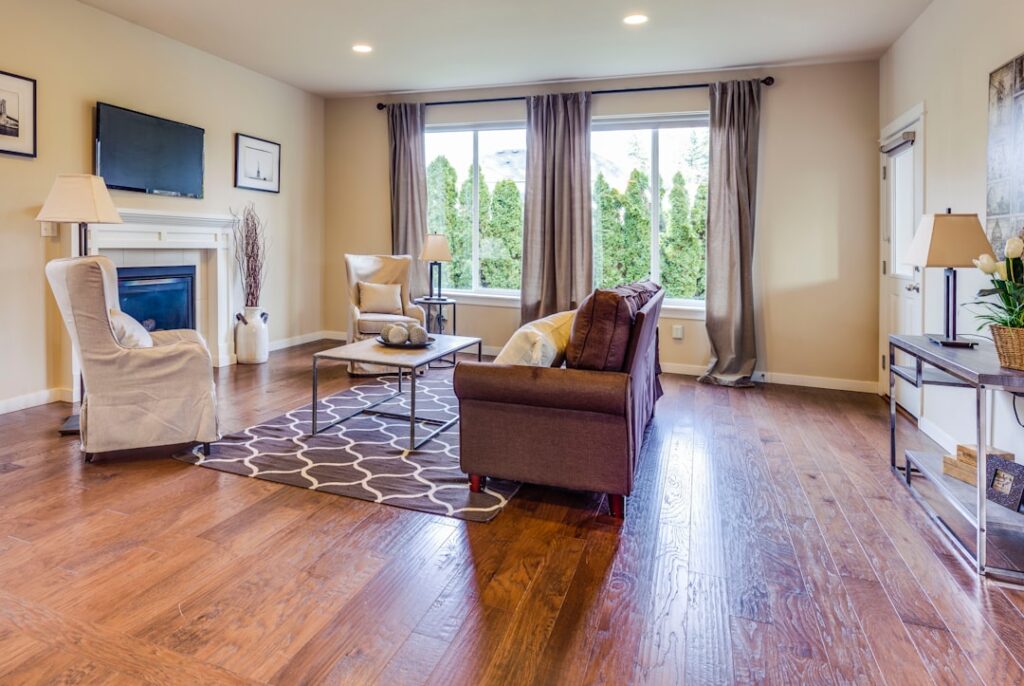
Wood-look vinyl tiles started as cheap peel-and-stick squares in the 1970s and have since evolved into a category that includes everything from $0.79 self-adhesive squares to $9 per sq ft glue-down planks indistinguishable from real hardwood at conversational distance. Sorting wood vinyl tiles by format, wear layer, and install method prevents the most common mistake homeowners make: buying a budget product for a high-traffic application that needed something purpose-built. Two decades of installs have taught me which tiers earn their price tags.
Part of our Tile & Grout guide — explore the full guide →
- The Four Wood Vinyl Tile Formats
- Peel-and-Stick: Skip Unless Truly Temporary
- Glue-Down LVT: The Commercial Standard
- Click-Lock Floating: The Residential Favorite
- Loose-Lay: The Best-Kept Secret
- Wear Layer: The One Spec That Matters Most
- Realistic Wood Appearance Factors
- Pros and Cons Summary
- Installation Cost Snapshot
- Where to Buy and What to Ask
The Four Wood Vinyl Tile Formats
Modern wood vinyl tiles come in four distinct formats, each with its own use case:
- Peel-and-stick squares: 12 inch tiles with pre-applied adhesive, $0.79 to $2 per sq ft
- Glue-down LVT planks: 2 to 3 mm flexible planks installed with manufacturer adhesive, $2 to $9 per sq ft
- Click-lock floating planks: Rigid SPC or WPC core with click joints, $2.50 to $7 per sq ft
- Loose-lay planks: Heavyweight LVP that grips by friction with subfloor, $3 to $6 per sq ft
The right format depends on the substrate condition, expected traffic, and how long the floor needs to last. Cheap peel-and-stick lasts 3 to 5 years in light use. Premium glue-down lasts 20 to 30.
Peel-and-Stick: Skip Unless Truly Temporary
Peel-and-stick wood vinyl tiles from brands like Achim, FloorPops, and TrafficMaster cost almost nothing and install in an afternoon. They are designed for renters, weekend projects, and very low-traffic spaces. The adhesive releases within 2 to 4 years, the tiles curl at the edges, and any moisture exposure destroys the install.
Where they work: temporary apartment kitchens, craft rooms, closet floors. Where they fail: anywhere with kids, pets, water exposure, or expectations beyond two years of service. The $20 you save per 100 sq ft costs $200 in headaches by year three.
Glue-Down LVT: The Commercial Standard
Flexible 2 to 3 millimeter thick planks glued directly to a prepared subfloor are the workhorse of commercial flooring installations. Brands like Karndean Designflooring, Amtico, Mannington Commercial, and Armstrong commercial dominate this tier at $4 to $9 per sq ft installed. Wear layers run 12 to 30 mil, with 20 mil plus rated for commercial light traffic and 30 mil for commercial heavy traffic.
The catch is substrate prep. Glue-down LVT requires a substrate flat within 3/16 inch over 10 feet, smooth, primed, and moisture-tested. Any imperfection telegraphs through within months. Most subfloor failures with glue-down LVT trace to skipped prep work, not bad product.
Click-Lock Floating: The Residential Favorite
Rigid core SPC and WPC planks with click-lock joints dominate the residential market. The substrate forgiveness, fast install, and waterproof construction make them the right call for kitchens, bathrooms, basements, and main living areas. Brands like Coretec Pro Plus, Pergo Extreme, Shaw Floorte Pro, and Mohawk SolidTech all use click-lock floating construction.
Click-lock installs require an expansion gap of 1/4 to 3/8 inch around the perimeter, covered by quarter-round or baseboard. Transitions between rooms need T-moldings if the run exceeds 30 feet in either direction. Skip these and the floor buckles the first hot day.
Loose-Lay: The Best-Kept Secret
Loose-lay heavyweight LVP from Karndean LooseLay, Mannington Adura Rigid, and a few other brands installs without glue and without click joints. The planks weigh roughly 50 percent more than standard LVP, and the rubberized backing creates enough friction with the subfloor to prevent shifting under traffic.
Advantages: zero gap required at room perimeter, easy spot replacement, and can be lifted and reinstalled. Cost runs $4 to $6.50 per sq ft material. Best fit: kitchens, basements, sunrooms, and any space where future plumbing access or seasonal removal might be needed.
Wear Layer: The One Spec That Matters Most
Wear layer thickness determines lifespan more than any other spec. Industry standards correlate roughly to expected service life:
- 6 mil: 3 to 5 years light residential
- 12 mil: 10 to 12 years moderate residential
- 20 mil: 15 to 20 years heavy residential or light commercial
- 30 mil: 20+ years commercial heavy traffic
For main living areas in family homes, aim for 20 mil minimum. Basements and secondary spaces work fine with 12 mil. Anything below 12 mil belongs in low-traffic applications only.
Realistic Wood Appearance Factors
Three details separate convincing wood vinyl tiles from obvious fakes. Print variation matters: premium products use 30 to 60 unique decor images per SKU, so patterns rarely repeat. Embossed-in-register texture matters: the surface grain feel should match the printed grain pattern when you run a fingernail across the plank. Beveled edges matter: micro-beveled or hand-scraped edge profiles cast the small shadow lines that real hardwood planks have.
Test samples under your home’s actual lighting before committing. Showroom lighting is engineered to flatter samples. A plank that looks great under fluorescent showroom lights can read as plastic under afternoon sun coming through your dining room window.
Pros and Cons Summary
Pros across the wood vinyl tile category: waterproof, easy to clean, scratch-resistant within reason, and 40 to 70 percent cheaper than comparable hardwood. Excellent option for kitchens, bathrooms, basements, and rental properties. Modern visual quality at the premium tier rivals engineered hardwood at conversational distance.
Cons: resale value lags real hardwood in higher-end markets. Refinishing is impossible. Wear layer eventually scratches through to the decor layer, requiring plank replacement. Dimensional stability varies dramatically by brand and core type, with cheap products gapping or buckling in temperature swings.
Installation Cost Snapshot
For a 1,200 sq ft install, expect these total costs:
- DIY click-lock SPC: $1,800 to $5,500 in materials, weekend install
- Professional click-lock SPC: $4,200 to $9,000 total
- Professional glue-down LVT: $5,500 to $12,000 total
- Professional premium glue-down (Karndean, Amtico): $9,000 to $16,000 total
Subfloor prep can add $0.50 to $2 per sq ft depending on existing slab or wood condition. Demolition of existing flooring adds another $0.75 to $1.50. Plan for these line items in your budget rather than discovering them mid-project.
Where to Buy and What to Ask
Big-box retailers (Home Depot, Lowes, Floor and Decor) carry the volume brands. Independent dealers carry premium brands like Karndean and Amtico with installation services. Online retailers like LL Flooring and BuildDirect ship nationally with limited returns. Always order samples first, verify the wear layer on the carton matches the spec sheet, and get written quotes with SKUs listed before signing any purchase order.
Prefer to explore on your own?
See how new flooring looks in your actual room in seconds — free, no signup.
Try the free Floor Studio →