WPC decking — wood-plastic composite — is the material behind almost every “composite deck” built in America over the last two decades. The boards blend wood flour with recycled polyethylene into a plank that never needs staining, doesn’t splinter, and shrugs off rot. Trex, TimberTech’s composite lines, Fiberon, and MoistureShield are all WPC products. This guide covers how the boards are actually made, why capping changed everything, real pricing per square foot, and where WPC beats — and loses to — PVC and wood.
Part of our Decks & Outdoor guide — explore the full guide →
What’s Actually in a WPC Board
A typical wood-plastic composite deck board is roughly 50-60% wood flour (fine sawdust, often reclaimed hardwood and pine mill waste) and 35-45% plastic — usually recycled high-density or low-density polyethylene from sources like grocery bags and milk jugs — plus a few percent of pigments, UV stabilizers, and lubricants. The mix is heated and extruded through a die into board profiles, then embossed with a wood-grain texture.
The wood content matters: it gives the board stiffness and a natural feel underfoot, and it keeps raw material cost down. It’s also the historical weak point, because exposed wood fibers can absorb water. Which brings us to capping.
Capped vs Uncapped: The Line That Matters
First-generation composites (roughly 1995-2010) were uncapped — the wood-plastic blend ran bare to the surface. Those boards faded badly, stained from grease and tannins, and in worst cases grew mold in the surface fibers. The class-action lawsuits of that era all involved uncapped boards.
Modern WPC decking is capped: during extrusion, a 1-2 mm shell of harder polymer is co-extruded over the composite core on three or four sides. The cap carries the color, the realistic grain streaking, and the stain/fade warranty. Buy nothing uncapped in 2026 — the $1/sq ft you save is not worth reliving 2008.
- 3-side capped: the underside is bare core. Fine for most decks; slightly cheaper.
- 4-side capped: fully wrapped. Better for docks, hot tubs surrounds, and anywhere with standing moisture underneath.
WPC Decking Prices
| Tier | Example lines | Material $/sq ft | Installed $/sq ft |
|---|---|---|---|
| Entry capped WPC | Trex Enhance, Fiberon Good Life | $2.50-$4.50 | $18-$28 |
| Mid-tier | Trex Select/Enhance Naturals, TimberTech Prime+ | $4.50-$6.50 | $25-$38 |
| Premium WPC | Trex Transcend (Lineage), TimberTech Reserve, MoistureShield Meridian | $6.50-$10 | $35-$55 |
Add roughly 10-15% to material budgets for hidden fasteners, fascia, and breaker boards. For comparison, pressure-treated pine installs at $12-$20/sq ft and cedar at $20-$30 — see our cedar decking guide for that math. WPC costs more upfront and less every year after: no stain, no sealer, just soap-and-water washing.
WPC vs PVC vs Wood
Against PVC
PVC (cellular polyvinyl chloride) boards contain no wood at all. They’re lighter, fully waterproof through the core, and the best choice for docks, pool surrounds, and rooftop decks. But PVC costs 20-40% more than comparable WPC, feels hotter and slightly hollower underfoot, and expands/contracts more with temperature, demanding fussier gapping. WPC’s wood content gives it better stiffness per dollar and a more convincing timber feel. Full breakdown in our PVC decking guide.
Against wood
Wood wins on upfront price, repairability, and — for some people, decisively — authenticity; even the best embossed cap reads as composite from two feet away. Wood loses on maintenance: figure $2-$4/sq ft every 2-3 years to clean and re-stain, forever. Over a 15-year span, a WPC deck typically closes most of the cost gap while returning every summer weekend you’d have spent sanding.
Brands Worth Shortlisting
- Trex: the market leader, ~95% recycled content, wide availability, 25-50 year fade/stain warranties by line. Enhance’s scalloped-bottom boards save money but flex more — keep joists at 16 inches or tighter.
- TimberTech (AZEK company): sells both WPC (Prime+, Reserve) and PVC (Vintage, Harvest) so one dealer can quote the crossover honestly. Composite caps are among the most realistic. Our TimberTech decking review covers the full line.
- Fiberon: strong value tier, good multi-tonal streaking, solid 25-40 year warranties.
- MoistureShield: unique “Solid Core” process encapsulates every wood fiber in plastic; the only composite routinely warrantied for ground contact and underwater installation.
- Deckorators: its “Voyage” mineral-based composite (MBC) technically swaps wood flour for minerals — stiffer and near-zero thermal movement, worth a look for full-sun decks.
Installation Notes That Save Grief
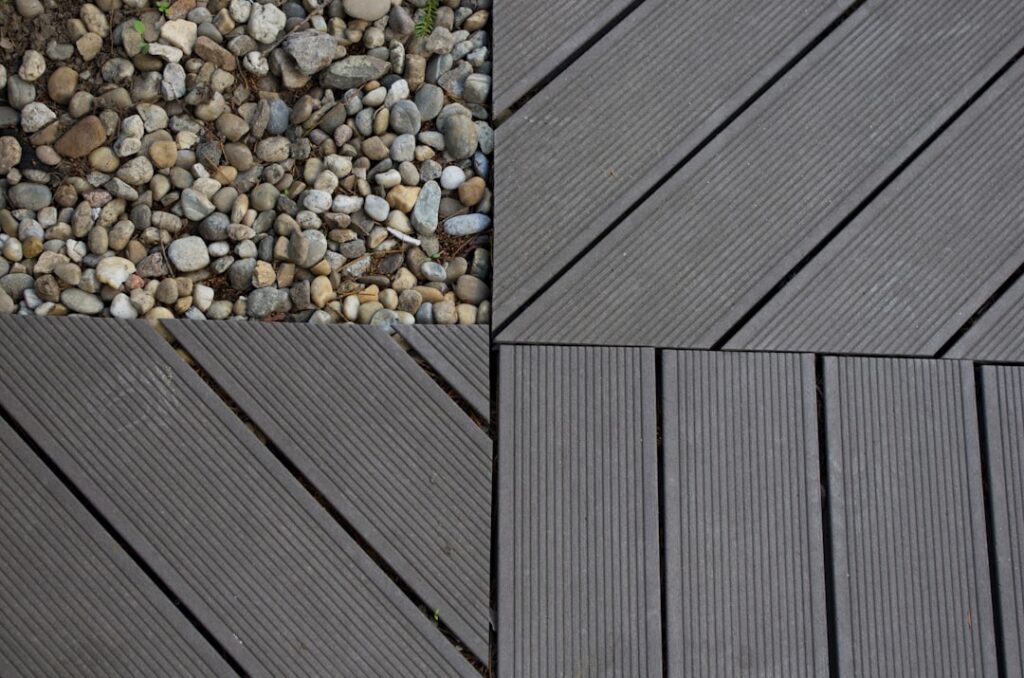
- Joist spacing: 16 inches on-center for perpendicular decking, 12 inches for diagonals — tighter than wood conventions. Scalloped economy boards feel bouncy at 16; consider 12.
- Gapping: WPC moves mostly with moisture along its width and modestly with heat along its length. Follow the brand chart: typically 3/16-inch side gaps and 1/8- to 1/4-inch end gaps depending on install temperature.
- Fasteners: hidden clip systems ($1-$2/sq ft extra) give a screw-free surface on grooved boards; face-screwing with color-matched composite screws and plugs is stronger at stairs and perimeters.
- Ventilation: capped boards still want airflow beneath. Keep at least 3.5 inches of joist-to-grade clearance and open ventilation; sealed skirting with damp ground under it voids some warranties.
- Never sand or paint a capped board. The cap is the finish; abrading it exposes raw core and ends the warranty.
Honest Downsides
- Heat. Dark WPC in full sun hits 35-60°F above air temperature — genuinely too hot for bare feet on a 95°F day. Choose light colors for exposed southern decks or plan shade.
- Weight. Boards run 50-70% heavier than pine. Two-person carries, and check framing on old decks before re-decking over existing joists.
- Scratches don’t sand out. A dragged grill gouge in the cap is permanent; you replace the board. Keep a few spares from your original lot for color match.
- Span limits. WPC is a decking surface, not structure. Framing stays wood or steel; composite never replaces joists or beams.
- Mold on the surface film. Caps resist staining, but pollen and dirt films can host mildew in damp shade. An annual wash prevents it.
Cleaning and Care
Low-maintenance is not no-maintenance. The routine that keeps a capped WPC deck looking new: sweep debris out of the gaps monthly (trapped organic matter holds moisture against board edges), and wash twice a year with warm soapy water and a soft-bristle brush, scrubbing with the grain. Rinse thoroughly — dried soap film dulls the cap. For grease, act within the warranty’s stated window (often a week): dish soap and hot water immediately, degreaser for stubborn spots. Pressure washing is allowed by most brands only below 1,500-3,100 psi with a fan tip held 8-12 inches off the surface; closer or harder etches the embossing permanently. Ice management in winter: calcium chloride and rock salt are generally approved on capped boards (check your brand), but skip metal shovels and metal-edged blades. Rust stains from cheap furniture glides and planters wipe off caps far easier than they ever did off uncapped composite — one more argument for the shell.
FAQ
How long does WPC decking last?
Capped boards realistically deliver 25-30+ years of service. Warranties back this: 25 years is now the floor for name brands, with premium lines at 50 years on fade and stain performance.
Does WPC decking get slippery?
Textured caps rate well wet — generally better than sealed smooth wood, worse than broom-finished concrete. Algae film in shaded, damp spots is the real slip hazard on any surface; wash it off seasonally.
Can WPC touch the ground or get submerged?
Standard capped WPC shouldn’t sit in ground contact or underwater — the exposed core edges wick moisture. MoistureShield’s solid-core boards are the notable exception, warrantied for both.
Is WPC decking the same as WPC flooring?
No. Interior “WPC” luxury vinyl flooring shares the acronym only; it’s a different product built around a foamed PVC core for indoor floating floors. Deck boards and interior planks are not interchangeable in either direction.
Bottom Line
WPC decking is the default answer for most rebuilt decks in 2026: cheaper than PVC, dramatically less maintenance than wood, and mature enough that the early failure modes are engineered out — provided you buy capped boards from an established brand and frame to composite spacing. Budget $25-$40/sq ft installed for the mid-tier, keep a light color if your deck bakes in the sun, and put the stain brush away for good.