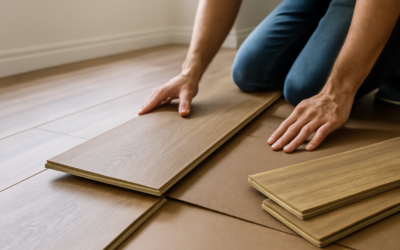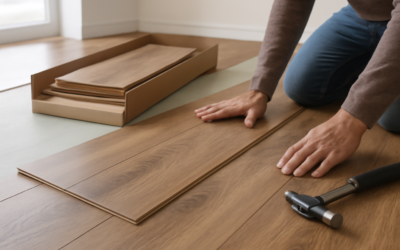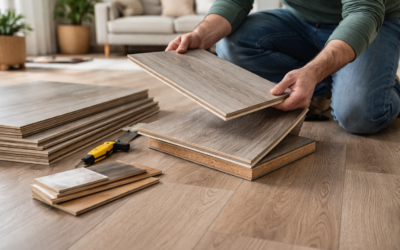
Walk on a 7mm laminate plank and a 12mm plank back-to-back, and the difference is unmistakable: more solid, less hollow drum sound, more like real hardwood underfoot. 12mm laminate represents the upper end of residential laminate flooring thickness and brings several real benefits — better sound, better subfloor forgiveness, deeper embossing, longer warranty — at a price still well below most engineered hardwood. Some brands earn the price, while others charge for thickness without delivering the substance.
What the 12mm Number Actually Includes
Laminate thickness measures the total plank including the HDF core, the decorative paper, the wear layer (melamine resin), and any attached underlayment pad. A 12mm plank with a 2mm pad has 10mm of HDF core; a 12mm plank without pad has the full 12mm of HDF. The HDF core determines stiffness, sound, and dent resistance — so when comparing brands, ask whether the 12mm includes pad or is core-only.
Pros That Justify the Price Bump
- Quieter underfoot: The thicker core dampens hollow drum sound that plagues 7mm and 8mm.
- Hides minor subfloor imperfections: 12mm bridges divots and trowel marks better than thin laminate.
- Deeper embossing: Premium 12mm products use embossed-in-register (EIR) textures that mimic real wood grain.
- Tighter locking system: Bigger tongue-and-groove profile resists separation under heavy traffic.
- Longer warranties: Most 12mm products carry 30-year residential warranties; many 7mm tops out at 15.
- Better feel: Closer to engineered hardwood without the price tag.
Cons to Plan For
Thicker is not free. 12mm planks weigh roughly 2 lb per sq ft, so cartons feel like cinder blocks. Doors and floor vents may need adjustment for the added height. The locking system on 12mm requires more tapping force during install — a rubber mallet and tapping block are essential. And like all laminate, 12mm is not waterproof; some new products are water-resistant for 24 to 72 hours, but standing water still finds its way to the HDF core eventually.
AC Ratings: The Other Spec That Matters
Thickness alone does not equal durability. The AC (abrasion class) rating measures wear-layer toughness:
- AC3: Light residential. Bedrooms, guest rooms.
- AC4: Heavy residential / light commercial. Kitchens, family rooms.
- AC5: Heavy commercial. Offices, retail.
- AC6: Very heavy commercial. Airports, malls.
Most quality 12mm laminate falls into AC4 or AC5 — far above what a typical home actually needs, but a buffer that absorbs tough use without dulling.
Cost in 2026
Pricing per square foot, materials only:
- Big-box 12mm (Pergo Outlast+, Lifeproof): $2 to $3.50 per sq ft.
- Mid-range 12mm (Mohawk RevWood Plus, Shaw Repel): $2.50 to $4 per sq ft.
- Premium 12mm (Quick-Step Reclaime, Mannington Restoration): $3.50 to $5.50 per sq ft.
- Designer European 12mm (Egger, Krono Original): $4 to $7 per sq ft.
Professional install adds $1.50 to $3 per sq ft, putting installed cost between $4 and $9 per sq ft — competitive with mid-range LVP.
Top Brands by Category
For best value, Pergo Outlast+ leads with a 12mm core, attached pad, and a strong 25-year warranty. Mohawk RevWood Plus uses a tighter UNICLIC locking joint and delivers excellent water resistance. For premium looks, Quick-Step Reclaime and Mannington Restoration use deeper EIR textures that fool the eye at standing distance. European brands like Egger and Krono Original Vario offer wide planks (8 to 9 inches) with hand-scraped finishes.
Where 12mm Laminate Excels
Best installation locations:
- Family rooms, dining rooms, bedrooms — quiet, comfortable, durable.
- Stairs and hallways — thicker plank handles heel traffic without dishing.
- Above-grade installs over wood subfloors with mild flatness issues.
- Open-concept main floors where sound reflection is a concern.
Skip 12mm in full bathrooms with shower/tub use; even water-resistant laminate fails when steam pools at the threshold for years. Use waterproof LVP there instead.
Subfloor Prep and Install
12mm laminate floats over any clean, dry, flat subfloor. Flatness tolerance is typically 3/16 inch over 10 feet — sand high spots and self-level low ones. Lay 6 mil polyethylene over concrete in basements as a vapor barrier. Use the manufacturer’s underlayment pad unless the plank has one attached. Stagger end joints by at least 12 inches across rows. Maintain 3/8-inch expansion gaps at all walls and immovable objects. Use a tapping block, never a hammer directly on the plank edge.
How Long It Actually Lasts
A quality AC4-rated 12mm board in a typical residential setting lasts 20 to 30 years before the wear layer breaks down at high-traffic spots. Manufacturers warranty most 12mm products for 25 to 30 years against wear-through and stains. Real-world failures are usually water damage at appliance leaks, not surface wear.
12mm vs Engineered Hardwood
The big rivalry. Engineered hardwood at $5 to $9 per sq ft offers real wood feel and refinishability (1 to 2 light sandings on most products). 12mm laminate at $3 to $5 per sq ft cannot refinish but resists scratches better than soft species like walnut or pine. For households with kids, dogs, and a budget under $10 per sq ft installed, 12mm laminate often outperforms cheap engineered hardwood on day-to-day durability.
Maintenance Routine
Sweep or dry-mop daily. Damp-mop weekly with a microfiber and a laminate-safe cleaner like Bona Hard Surface or Quick-Step cleaner. Never use steam mops, oil-soap products, or wax — all damage laminate’s melamine surface. Lift water spills within 10 minutes; standing water at edges is the only thing that truly destroys laminate.
For families wanting hardwood looks at half the cost, with sound and dent resistance closer to real wood than thin laminate ever achieves, 12mm laminate hits the sweet spot. Pick AC4 minimum, an EIR-textured pattern, and a brand with a real US warranty network — and you will have a floor that holds up for two or three decades of family life.
Prefer to explore on your own?
See how new flooring looks in your actual room in seconds — free, no signup.
Try the free Floor Studio →