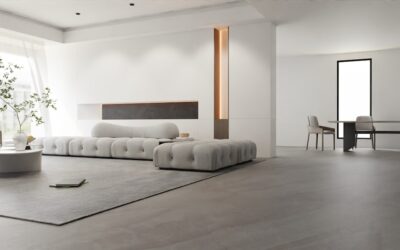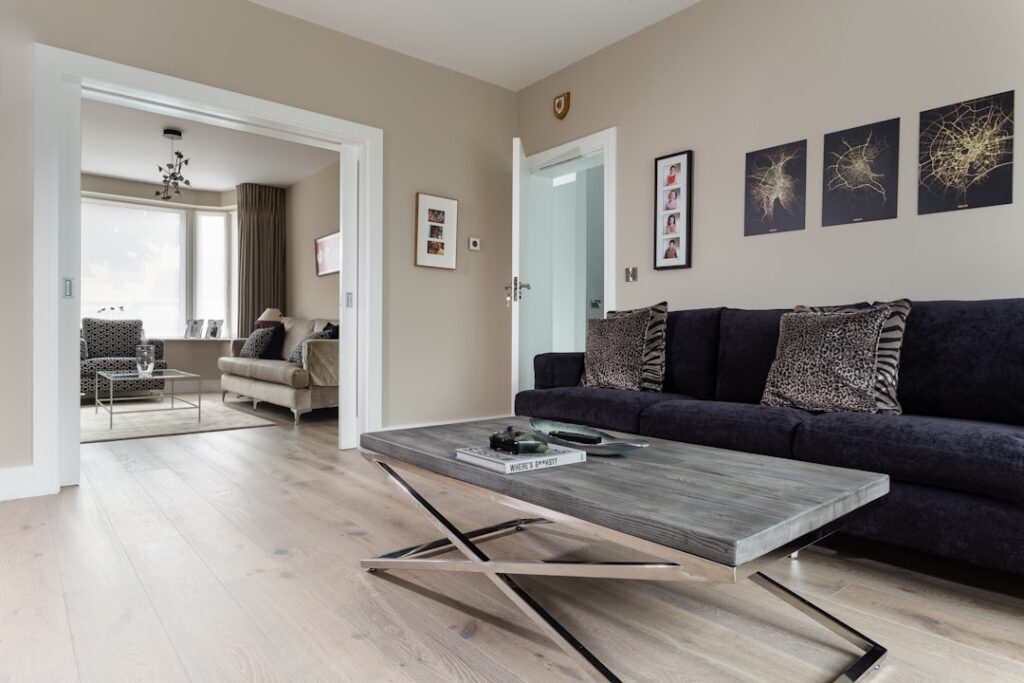
Walk down the laminate aisle at any big-box store and you will see thickness numbers slapped across every box like a horsepower rating on a sports car. Thickest laminate flooring tops out around 14mm in residential SKUs, with most premium options sitting at 12mm with an attached underlayment pad. Whether you actually need that thickness depends on subfloor condition, sound expectations, and how often heavy furniture moves across the surface. Thickness alone does not guarantee a better floor — the AC rating, core density, and HDF construction matter just as much.
What Thickness Actually Buys You
A 12mm or 14mm laminate plank with a high-density fiberboard (HDF) core delivers three real advantages over thinner alternatives. First, it spans subfloor imperfections better, masking minor cups, hollows, and trowel marks that telegraph through 7mm or 8mm products. Second, it sounds more like real hardwood underfoot — less hollow, more solid thud. Third, it resists indentations from chair legs, dropped tools, and stiletto heels.
What thickness does not guarantee is wear resistance. That comes from the aluminum oxide top layer measured by the Abrasion Class (AC) rating. A 14mm plank with an AC3 rating will scratch faster than a 10mm plank rated AC5. Always check both numbers.
Brands That Stock 12mm and 14mm Lines
- Pergo Outlast Plus: 12mm with attached pad, AC4 rated, $2.79 to $3.79 per sq ft
- Mohawk RevWood Premier: 12mm waterproof laminate, $3.29 to $4.29 per sq ft
- Quick-Step Elevae: 12mm with EIR texture, AC5, $4.49 to $5.49 per sq ft
- Mannington Restoration Collection: 12mm with attached cork pad, $3.99 to $5.29 per sq ft
- Kronotex Robusto: 12mm German-made AC5, $3.49 to $4.49 per sq ft
- Tarkett Privada: 14mm with attached pad, $4.99 to $6.49 per sq ft
Pros of Thicker Laminate
The hollow-sound issue that plagued cheap 7mm laminate in the 2000s is largely gone with 12mm and 14mm products. Walking across a thick plank feels closer to engineered hardwood, especially when paired with an attached cork or IXPE pad. That comfort matters in living rooms, dining rooms, and bedrooms where you spend hours standing or walking barefoot.
Thick laminate also hides subfloor sins. If your plywood underlayment has 1/8 inch dips, lippage at seams, or a slightly uneven trowel pattern from old vinyl removal, a 12mm plank floats over it more gracefully than a thinner option. That can save $1 to $2 per sq ft in leveling compound and labor.
Honest Drawbacks
Thicker laminate raises floor height. That sounds trivial until you try to clear an exterior door, slide a refrigerator back into place, or transition into an existing tile bathroom. Budget for door bottom trimming, transition strips, and potentially appliance feet adjustments before committing to 14mm.
Price is the other consideration. A 14mm plank can cost $1 to $2 per sq ft more than a comparable-quality 8mm version. Across a 1,000 sq ft project that is $1,000 to $2,000 in materials. Make sure the upgrade matches a real need, not just bigger numbers on the box.
AC Rating Beats Raw Thickness
The AC scale runs from AC1 (light residential) to AC6 (commercial). For active households with kids and pets, demand at least AC4. AC5 is appropriate for entryways and rental properties. AC6 belongs in commercial spaces and is rarely worth the cost premium at home.
A 10mm AC5 plank from Kronotex or Egger will outlast a 14mm AC3 import from an unbranded supplier. Wear-layer chemistry is what actually keeps your floor looking new — thickness alone determines how it feels underfoot, not how long it stays scratch-free.
When 12mm Plus Is the Right Call
- Older homes with imperfect subfloors that you do not want to level extensively
- Multi-story homes where sound transmission to lower floors matters
- Heavy-traffic rooms with frequent furniture moves and child play
- Open-concept layouts where the floor will be visible and walked on for years
- Spaces where the user wants a hardwood feel without the maintenance demands
Cost and Budget Planning
For a 600 sq ft project, expect $1,700 to $3,200 in materials for 12mm to 14mm laminate. Add $1.75 to $3.50 per sq ft for professional installation, $0.25 to $0.75 per sq ft if you need separate underlayment (most thick laminates come pre-padded), and $40 to $90 per opening for transition strips and reducers.
DIY savings are real. Click-lock 12mm laminate is one of the easiest flooring categories for first-timers. Rent a tapping block, pull bar, and miter saw for $50 to $80 a day. A motivated weekend handler can knock out 400 to 600 sq ft in two days with help unloading boxes.
Installation Notes Specific to Thick Planks
Acclimate boxes for 48 to 72 hours at install conditions. Verify subfloor flatness with a 10 foot straightedge — the standard 3/16 inch deviation rule still applies even with thicker planks. Leave a full 3/8 inch expansion gap around every wall, pipe penetration, and fixed cabinet.
Use a Bosch GTS1031 or DeWalt DWS779 miter saw with an 80 to 100 tooth finish blade. Cheaper 40 tooth blades chip the aluminum oxide top layer on every cut, leaving visible damage along plank ends. Spend the $35 to $55 on a quality blade — it pays back on the first 200 cuts.
Maintenance and Long-Term Care
Sweep or vacuum daily in high-traffic rooms. Damp-mop weekly with Bona Hard-Surface Cleaner or a 1:40 dilution of pH-neutral floor soap. Never use steam mops, wax, oil soap, or abrasive scrubbing pads — all four void most laminate warranties and can permanently dull the wear layer.
Felt pads under every furniture leg are non-negotiable. Rolling office chairs need a hard-surface mat. Entry mats inside and out catch the grit that scratches even AC5 surfaces. Done right, a quality thick laminate floor will look the same after 15 to 20 years as it did the day you installed it.
Prefer to explore on your own?
See how new flooring looks in your actual room in seconds — free, no signup.
Try the free Floor Studio →