Aluminum gutter guards hit the sweet spot between the flimsy plastic screens that warp in the sun and the premium steel-mesh systems that cost thousands installed. Aluminum won’t rust, holds its shape in heat, and most homeowners can install it in an afternoon with a ladder and a drill. This guide covers the design types, real pricing, how to install them, and where aluminum wins and loses against the competition.
- Why Aluminum in the First Place
- The Main Design Types
- What Aluminum Gutter Guards Cost
- DIY Installation Step by Step
- Pros of Aluminum
- Cons to Know
- Matching the Guard to Your Trees
- Gauge and Fasteners Matter More Than Brand
- Aluminum vs. Steel vs. Plastic
- Common Installation Mistakes to Avoid
- How Long Aluminum Guards Last
- Who Should Buy Them
Why Aluminum in the First Place
The material matters more than the marketing lets on. Aluminum doesn’t rust — unlike bare or coated steel, which can eventually corrode where the coating chips at a screw hole. It’s dimensionally stable in heat, so it won’t sag and pop out of the gutter the way vinyl and plastic guards do after a few summers of UV. And it’s light enough to handle solo on a ladder. The trade-off is that thin aluminum can dent or bend if a heavy branch drops on it, so gauge matters. Look for guards in the 0.019 to 0.032-inch range; the thicker the panel, the better it holds up.
The Main Design Types
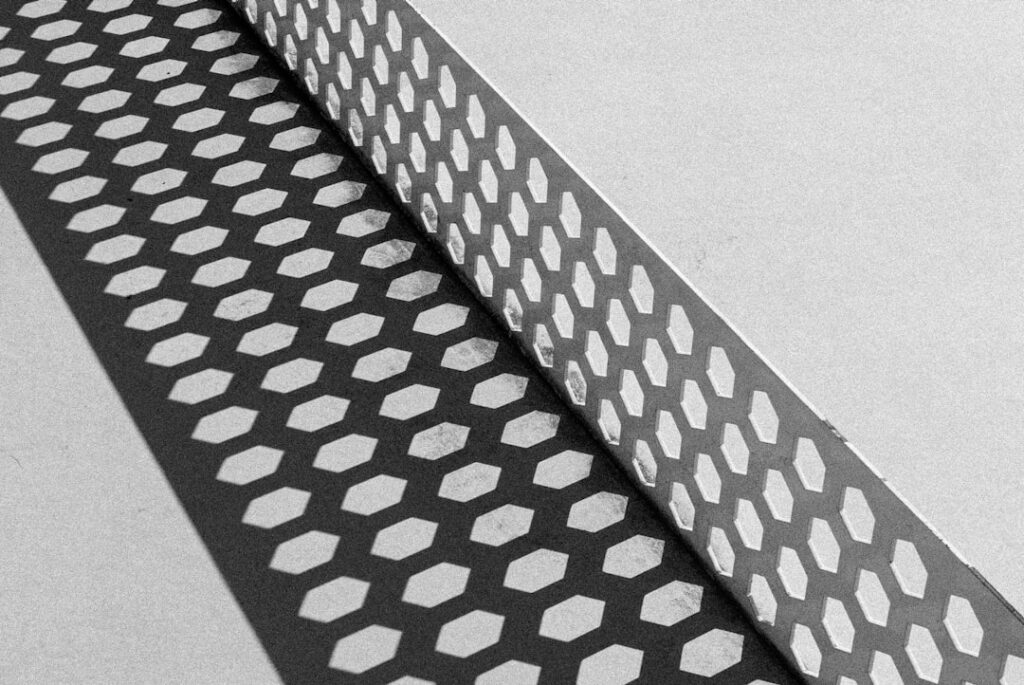
- Perforated aluminum panels. Solid aluminum sheet stamped with small holes or slots. Cheap, easy to install, and they block leaves — but fine debris and pine needles can lodge in the holes over time. Best under maples and oaks, not pines.
- Aluminum-framed micromesh. A stainless steel micromesh on an aluminum frame, or an all-aluminum micromesh. This is the top performer, blocking pine needles, shingle grit, and seed pods. It costs more but handles the debris that defeats perforated panels.
- Reverse-curve aluminum. Solid aluminum that curves over the gutter lip so water clings around it and leaves fall off. Effective but visible from the ground and pricier, and heavy rain can overshoot.
What Aluminum Gutter Guards Cost
Price swings with design and who installs it. Perforated aluminum panels run about $1.50 to $3 per linear foot in materials — a 200-foot home is $300 to $600 in guards for a DIY job. Aluminum-framed micromesh runs $3 to $6 per foot in materials. Add professional installation and you’re at $6 to $12 per foot total, so $1,200 to $2,400 for that same 200-foot home. Compare that to premium branded systems at $20 to $30 per foot installed, and aluminum’s value is obvious: you get rust-proof, heat-stable protection for a quarter of the price, especially if you install it yourself.
DIY Installation Step by Step
Most aluminum guards are genuinely DIY-friendly. Here’s the sequence:
- Clean the gutters first. Scoop debris and flush with a hose. Guards over dirty gutters trap the mess you leave behind.
- Check the pitch. Confirm gutters still drain toward the downspout; re-hang any sagging sections before covering them.
- Measure and cut. Aluminum cuts cleanly with tin snips. Cut panels to length and around downspout outlets.
- Fasten down. Most panels either snap under the front lip and rest on the back edge, or screw into the front lip with self-tapping screws. Screw-down is more secure in wind — use stainless or coated screws so you don’t introduce a rust point.
- Avoid the shingles. Prefer guards that mount to the gutter, not ones you slide under your first course of shingles, which can affect a roofing warranty.
Budget an afternoon for a single-story home. Work off a stable ladder with a spotter, and never lean the ladder against the gutter itself.
Pros of Aluminum
- Rust-proof for life. The single biggest advantage over steel — no corrosion at fastener points.
- Heat-stable. Won’t warp or sag like plastic under summer sun.
- Affordable and DIY-able. A fraction of branded-system cost, and installable by a handy homeowner.
- Paintable. Aluminum takes paint, so you can match your fascia or gutter color.
Cons to Know
- Dents. Thin-gauge panels bend under falling branches or a misplaced ladder. Buy thicker stock if you have overhanging trees.
- Perforated types clog with fine debris. Pine needles thread into the holes. If you’re under pines, spend up for micromesh.
- Not zero-maintenance. No guard is. Expect a rinse every year or two to clear film and pollen, especially on micromesh.
Matching the Guard to Your Trees
The debris around your house should drive the buying decision more than any spec sheet. Broad leaves from maples, oaks, and sycamores are large and sit on top of nearly any guard, so inexpensive perforated aluminum panels handle them fine. Pine needles, by contrast, are thin and stiff enough to thread straight into a perforated hole and lodge there — under pines, spend up for aluminum-framed micromesh with openings measured in microns. Helicopter seeds from maples and the tiny catkins from oaks and birches are the other troublemakers; they’re small enough to slip through coarse screens and collect underneath. If your yard drops a mix of everything, micromesh is the safe bet. Buying a cheap perforated panel for a pine-heavy lot just means you’ll be back on the ladder cleaning the guards you paid to avoid cleaning.
Gauge and Fasteners Matter More Than Brand
Two aluminum guards that look identical on the shelf can perform very differently based on thickness. Thin 0.019-inch stock is fine for a home with no overhanging branches, but if limbs drop onto your roof, step up to 0.025 or 0.032-inch panels that won’t crease under impact or a carelessly placed ladder. Fasteners are the other detail people get wrong: use stainless steel or coated screws, never bare steel. A bare steel screw driven through aluminum creates a spot where two dissimilar metals meet, and in wet conditions that junction corrodes — the one place a rust-proof guard can still rust. Spend the extra few dollars on the right screws and the install lasts as long as the aluminum does.
Aluminum vs. Steel vs. Plastic
Steel micromesh is slightly stronger and stiffer than aluminum and resists denting better, which is why premium brands use stainless mesh — but steel frames can rust at chips, and those systems cost several times more. Plastic and vinyl guards are the cheapest at under $1 per foot, but they yellow, crack, and warp within a few years of sun exposure, so they’re a false economy. Aluminum lands in the middle: more durable and longer-lasting than plastic, far cheaper than premium steel systems, and it never rusts. For most homeowners doing their own install, aluminum gutter guards are the best balance of cost, longevity, and performance.
Common Installation Mistakes to Avoid
A good guard installed wrong performs worse than no guard at all, so sidestep the usual errors. Don’t cover gutters you haven’t cleaned and resealed — trapped debris rots underneath and you can’t see it. Don’t skip the downspout screens; leaves that do make it in will jam the outlet, and a small cage screen at each downspout opening catches them. Don’t fasten panels so tightly they bow the gutter’s front lip inward, which pulls the gutter away from the fascia over time. Watch the pitch: if a panel bridges a low spot, water pools and overshoots. And resist the urge to install in one continuous run without expansion room — aluminum expands and contracts with temperature, so leave a small gap at long runs and around corners so panels don’t buckle in summer heat.
How Long Aluminum Guards Last
Quality aluminum gutter guards routinely last 20 years or more because the material simply doesn’t degrade the way plastic does. There’s no UV embrittlement, no rust, and no seasonal warping. The mesh on aluminum-framed micromesh is the wear point to watch, not the aluminum itself — over two decades a fine film can partially blind the mesh, and an occasional rinse keeps it flowing. Perforated panels essentially last as long as the aluminum, which outlives most roofs. That longevity is a big part of the value math: spread a $400 to $600 DIY material cost over 20 years and you’re paying pennies a foot per year for gutters that stay clear, versus repainting-and-replacing cheap plastic guards every three or four seasons.
Who Should Buy Them
If you’re comfortable on a ladder, want a rust-proof guard that outlasts plastic, and don’t want to spend five figures on a branded system, aluminum gutter guards are the smart pick. Choose perforated panels if your debris is mostly leaves, and step up to aluminum-framed micromesh if pine needles or shingle grit are your problem. Buy the thickest gauge your budget allows, use stainless fasteners, and match the guard to your trees rather than the loudest ad. Done right, a couple hundred dollars and one afternoon buys you years of clean, free-flowing gutters.