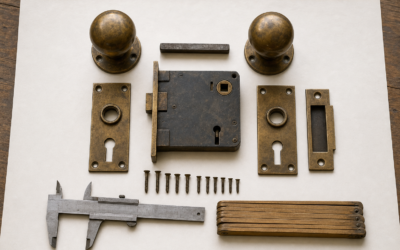
Sliding pocket doors were a hallmark of Victorian, Edwardian, and early American homes, and the hardware that ran them was often a small work of art. If you own a period home or want to recreate that character, understanding antique pocket door hardware is the key to keeping those beautiful doors working and looking right. From ornate flush pulls to hidden edge locks and the roller mechanisms above the door, each piece has a job, and knowing them helps you restore, replace, or source the correct parts.
Part of our Windows & Doors guide — explore the full guide →
- What Makes Pocket Door Hardware Unique
- The Main Hardware Components
- Recognizing Antique Finishes and Styles
- Restoring Original Hardware
- Fixing the Rollers and Track
- Sourcing Replacement and Matching Pieces
- Reproduction vs Genuine Antique
- Common Problems and How to Solve Them
- Preserving Value and Authenticity
- Preserving Your Home’s Character
What Makes Pocket Door Hardware Unique
Unlike a swinging door with its simple knob and hinges, a pocket door slides into a cavity inside the wall, which demands specialized hardware. Because the door disappears into the wall, everything must sit flush or recess so nothing catches on the pocket opening. That constraint produced a distinctive family of parts: recessed flush pulls, edge-mounted latches, and overhead roller-and-track systems, all engineered to keep the door face smooth.
In antique examples, these functional demands were met with real craftsmanship. Hardware was cast in solid bronze, brass, or iron, often decorated with Eastlake, Victorian, or Art Nouveau motifs. The result is hardware that is both mechanical and decorative, which is exactly why collectors and restorers prize it.
The Main Hardware Components
A complete pocket door setup involves several distinct pieces working together. Knowing each one helps you diagnose problems and identify what may be missing.
- Flush pulls: Recessed handles mounted on both faces of the door so it can be pulled out and pushed back without protruding hardware.
- Edge pull: A small pull on the leading edge of the door used to draw it out of the pocket when it is fully open.
- Pocket door lock or latch: A mortise mechanism, often with a turn or a m/turnpiece, that engages a strike at the door’s leading edge or in a pair of meeting doors.
- Rollers and hangers: The wheels and brackets at the top of the door that carry its weight.
- Track: The overhead rail the rollers ride on, mounted inside the wall pocket header.
On double, or “parlor,” doors that meet in the middle, you will also find astragal moldings and locking mechanisms designed for the two doors to latch together.
Recognizing Antique Finishes and Styles
Period pocket door hardware carries the stylistic fingerprints of its era. Victorian and Eastlake pieces from the late 1800s feature intricate incised geometric and floral patterns. Art Nouveau examples favor flowing organic lines, while later Craftsman-era hardware is simpler and more rectilinear. Common base metals include cast bronze, brass, and iron, often originally finished in an antique bronze, japanned black, or nickel plating.
Over more than a century, most antique hardware has developed a rich patina, a darkened, aged surface many restorers deliberately preserve because it signals authenticity. Recognizing these styles helps you match replacement pieces to the rest of the door and the home’s period, so a repair does not stick out as obviously modern.
Restoring Original Hardware
If your home still has its original hardware, restoring it is almost always better than replacing it. Genuine antique pieces are higher quality than most reproductions and preserve the home’s value and character. Restoration usually starts with careful removal, followed by cleaning off decades of paint and grime.
- Remove the hardware gently, keeping all screws and small parts together in a labeled container.
- Strip old paint by soaking pieces in a slow cooker with water and a little dish soap, or using a safe paint stripper, then scrubbing crevices with a soft brush.
- Clean and evaluate the metal, deciding whether to preserve the patina or polish it back to bare metal.
- Lubricate moving parts like locks and rollers so they operate smoothly again.
- Reinstall with the original screws where possible for an authentic look.
The slow-cooker soak is a favorite trick for stripping layers of old paint from cast hardware without harsh chemicals, revealing the original detail underneath.
Fixing the Rollers and Track
When a pocket door sticks, drags, or falls off its path, the trouble is usually up in the roller-and-track system, not the decorative pulls. Old rollers can seize, wear flat, or lose their wheels, and tracks accumulate debris or work loose. Accessing them can require removing trim or part of the wall opening, since the mechanism lives inside the pocket header.
You can often salvage original hangers by cleaning and re-lubricating them, but if the rollers are broken, you may need to replace them with reproduction or modern equivalents while keeping the antique pulls and locks visible on the door face. Matching the new roller assembly to the existing track width and door weight is essential for smooth operation.
Sourcing Replacement and Matching Pieces
Missing or damaged pieces are common, since hardware gets lost, painted over, or removed during past renovations. Several avenues exist for finding replacements:
- Architectural salvage yards stock genuine period hardware pulled from demolished homes.
- Online auction and antique marketplaces offer a wide selection if you know the style and dimensions you need.
- Specialty reproduction manufacturers cast faithful copies of Victorian and Craftsman patterns for pieces that are hard to find original.
- Restoration hardware suppliers carry both antique and reproduction pocket door sets.
When sourcing, measure carefully. Note the pull dimensions, the mortise size for locks, backset, and the door thickness. Bringing an existing piece or clear photos with measurements dramatically improves your odds of a proper match.
Reproduction vs Genuine Antique
Deciding between authentic antique hardware and quality reproductions comes down to priorities. Genuine antiques offer unmatched authenticity, superior casting, and the patina of age, and they preserve a historic home’s integrity, but they can be costly, inconsistent in condition, and hard to find in complete matching sets. Good reproductions provide consistency, availability in full sets, and working mechanisms right out of the box, at a lower and more predictable price. Many restorers blend the two: keeping and restoring original decorative pulls and locks while using reproduction rollers and track for reliable daily function.
Common Problems and How to Solve Them
Living with century-old pocket doors means occasionally troubleshooting them, and most issues trace back to a handful of causes. A door that sticks or drags usually has worn or seized rollers, debris in the track, or a door that has swelled or sagged out of alignment. A door that will not latch often has a misaligned strike or a gummed-up lock mechanism that needs cleaning and lubrication.
Missing or broken flush pulls are extremely common, since they take daily wear and are easy to damage. If a pull is simply loose, retightening or replacing the small screws often fixes it. When hardware is missing entirely, matching a replacement to the surviving pieces on the door, or to others elsewhere in the house, keeps the look consistent. For a door that has dropped in the pocket, the fix is usually at the roller hangers, which may need adjustment, cleaning, or replacement.
Preserving Value and Authenticity
For owners of historic homes, original pocket door hardware is more than decoration; it contributes to the property’s authenticity and value. Buyers and preservationists prize intact period details, so keeping and restoring original bronze pulls and locks is almost always preferable to swapping in modern replacements. Even when a mechanism must be repaired, retaining the visible decorative hardware preserves the character that makes these doors special.
If you must replace missing pieces, document what you had and seek the closest period-appropriate match, whether genuine salvage or a faithful reproduction. Avoid painting over antique hardware, which obscures the detail and reduces value; if it has been painted, careful stripping usually reveals the original casting beneath. Thoughtful stewardship of these small components pays off both in daily enjoyment and in the long-term worth of a historic home.
Preserving Your Home’s Character
Antique pocket door hardware is one of those details that quietly defines a period home. Whether you are lovingly restoring original bronze pulls, repairing worn rollers, or hunting salvage yards for a missing edge lock, the effort pays off in doors that glide smoothly and look exactly as they did a century ago. Take the time to identify each component, preserve original pieces where you can, and match any replacements to the correct style and dimensions. Done right, the hardware becomes a small but memorable expression of the craftsmanship that makes older homes so special.