Most people underestimate how much floor a 6-by-8 rug actually covers until they roll one out. An area rug 6×8 measures 72 inches by 96 inches, or a full 48 square feet, which puts it right in the sweet spot between the small 5×7 and the roomy 8×10. It is one of the most versatile sizes you can buy, but only if you match it to the right space. Get the pairing wrong and even a beautiful rug looks like a postage stamp stranded in the middle of the floor.
Exact Dimensions of an Area Rug 6×8
The nominal size is 6 feet by 8 feet. In inches that is 72 by 96, and manufacturing tolerances usually run a half inch to an inch in either direction, so do not be surprised if your rug measures 71 by 95 or 73 by 97. Hand-knotted and hand-tufted rugs vary more than machine-made ones. If you are fitting the rug into a tight alcove or between two pieces of furniture, always measure the actual piece rather than trusting the label.
At 48 square feet, a 6×8 sits comfortably in the “medium” category. For comparison, a 5×7 covers 35 square feet, a 6×9 covers 54, and an 8×10 covers 80. That means stepping up from a 5×7 to a 6×8 adds roughly 37 percent more coverage, which is often the difference between a rug that floats and one that anchors a seating group.
What Rooms Fit a 6×8 Rug Best
This size shines in small to mid-sized rooms. Think apartment living rooms, home offices, guest bedrooms, reading nooks, and finished basements. A good rule of thumb: a 6×8 works well in a room that measures roughly 9 by 11 feet up to about 11 by 13 feet, leaving an even border of bare floor around the edges.
- Small living rooms: Perfect for a loveseat-plus-chair arrangement or a compact three-seat sofa.
- Home offices: Fits neatly under a desk and chair with room for a small guest seat.
- Guest and kids’ bedrooms: Ideal beneath a full or queen bed when placed correctly.
- Entryway-adjacent spaces: Grounds a foyer bench or console without overwhelming the hall.
- Dining areas for four: Suits a small square or round table that seats four.
Living Room Placement
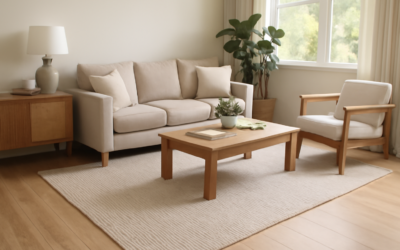
In a living room, you generally have two solid options. The first is the “front legs on” approach: pull the front legs of your sofa and chairs onto the rug while the back legs rest on bare floor. This visually ties the seating together and is the most forgiving layout for a 6×8. The second is the “all off” approach, where the rug floats in front of the sofa to define a central zone. That works when the rug functions as a coffee-table island rather than a full anchor.
Avoid the mistake of shoving a 6×8 tight against the wall behind a full-sized sofa. It rarely reaches far enough to look intentional. Instead, center it on the coffee table and let it project into the walkway. Leave at least 18 inches between the rug edge and the nearest wall for a balanced border, though 8 to 24 inches is an acceptable range in smaller rooms.
Bedroom Placement for a 6×8
Bedrooms are where the area rug 6×8 earns its keep, because it slides neatly under the lower two-thirds of a bed and still leaves soft footing where you step out in the morning. Placement depends on your bed size:
- Queen bed (60 by 80 in): Position the rug horizontally under the bed starting just below the nightstands. Expect roughly 18 to 24 inches of rug showing on each side and at the foot.
- Full bed (54 by 75 in): A 6×8 covers more of the floor and gives a generous foot-side landing pad, around 20 inches on each side.
- Twin bed (38 by 75 in): The rug can sit fully alongside the bed or extend under it for a plush, layered look.
For a king bed (76 by 80 in), a 6×8 is too small to tuck under properly. You would only get a few inches of exposed rug on each side, so step up to an 8×10 or 9×12 instead. Run runners on either side of a king if you love the smaller rug’s pattern.
Dining Room Use
A 6×8 can work under a dining table, but only a small one. The critical measurement is the 24-inch rule: your rug should extend at least 24 inches beyond every edge of the table so chairs stay on the rug when guests scoot back. For a 6×8, that limits you to a table roughly 24 by 48 inches or a round table up to about 42 inches in diameter, seating four people comfortably. Anything larger and rear chair legs will catch the rug edge, which is both annoying and a tripping hazard.
Choosing the Right Material and Pile
Because a 6×8 often lands in high-traffic living areas, material matters as much as size. Wool is the gold standard for durability and stain resistance and typically runs $200 to $800 for this size. Polypropylene and other synthetics are budget-friendly at $80 to $250, easy to clean, and fine for households with kids and pets. Natural fibers like jute and sisal cost $120 to $350 and bring texture but scratch underfoot and stain easily, so keep them out of dining zones.
Pile height changes the feel and the upkeep. Low-pile rugs under a quarter inch are easiest to vacuum and let chairs slide, making them the practical pick for offices and dining. Medium and high-pile rugs feel luxurious in bedrooms but trap crumbs and crush under heavy furniture. Always pair any 6×8 with a quality rug pad; it adds cushioning, prevents slipping, and can extend the rug’s life by years.
Shape and Layering Options
The 6×8 is a rectangular size, and that proportion (a 3:4 ratio) suits most rectangular rooms and furniture groupings. If your space is more square, consider how the extra length will read; you may want to orient the 8-foot dimension along the longer wall so the rug follows the room’s flow rather than fighting it. In a bedroom, the length almost always runs across the width of the bed.
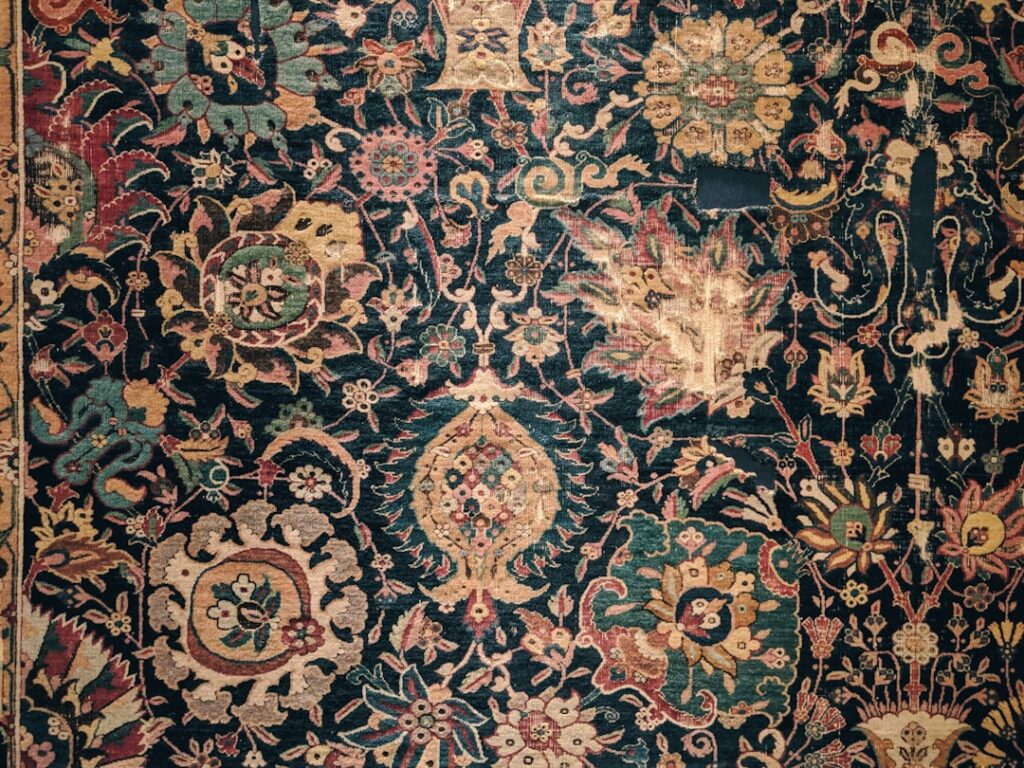
Layering is a smart trick when a 6×8 feels slightly small for a room but you love the piece. Place it over a larger natural-fiber base rug such as a 8×10 jute, angled or squared, to add depth and make the smaller rug read as intentional. This works especially well with patterned or vintage-style 6×8 rugs, letting the neutral base extend coverage while the top rug provides the color and texture you actually wanted.
Common Mistakes to Avoid
Three errors sink most 6×8 purchases. The first is buying one for a king bed, where it is simply too small to frame properly. The second is centering it in a large living room where all furniture floats off the edges, leaving the rug marooned. The third is skipping the rug pad, which lets the rug slide, wrinkle, and wear prematurely. Avoid all three and a 6×8 rarely disappoints.
Budget and Where to Buy
Expect to spend $80 to $250 for a machine-made synthetic, $150 to $500 for a quality tufted wool blend, and $400 to $1,500 for a hand-knotted wool or wool-silk rug in the 6×8 size. Big-box and online retailers frequently discount rugs 30 to 50 percent during holiday sales, so timing your purchase around a major sale event can cut the price substantially. Check the return policy before you buy, since online rug colors often photograph lighter than they arrive.
Final Thoughts
An area rug 6×8 is a genuine workhorse: big enough to anchor a small living room or ground a queen bed, compact enough to fit apartments and home offices where an 8×10 would swallow the space. Measure your room, respect the 18-inch border and the 24-inch dining rule, and choose a material that matches your traffic. Do that, and this mid-sized rug will look intentional and hold up for years rather than floating awkwardly in the middle of the floor.