Dented, rusted, or yellowed heater housings drag down an otherwise clean room, and replacing them is one of the easiest upgrades in the house. Baseboard covers are the metal enclosures that wrap hydronic (hot water) and electric baseboard heaters, protecting the heating element while directing warm air up into the room. Over the years they get kicked, painted over, bent, and corroded. The good news is that you can swap most covers in an afternoon for $20 to $60 per section without touching the plumbing or wiring underneath.
What Baseboard Covers Do
Behind the front panel sits either a finned copper or aluminum tube fed by hot water, or an electric heating element. The cover does more than hide that hardware. Its shape creates a chimney effect: cool air enters at the bottom, passes over the hot fins, and rises out through the top damper as warm air. A crushed or missing cover disrupts that airflow and the heater loses output, so a good enclosure is part of how the system actually heats.
Most covers come in three pieces: the back plate mounted to the wall, the removable front panel, and the end caps that close off each side. Many sets also include a hinged damper at the top that you can open or close to tune airflow.
Common Types and Sizes
Baseboard heating covers fall into a few standard formats, and matching yours is the most important step before you buy.
- Hydronic (hot water) covers: Taller profile, usually about 7 to 8 inches high, with a top damper. The most common residential type.
- Electric baseboard covers: Often a lower, simpler profile sized to a specific manufacturer’s element. These are frequently brand-specific.
- Replacement front panels only: If the back plate is sound, you can often buy just the front and end caps to save money.
Standard lengths run 2, 3, 4, 5, 6, 7, and 8 feet, and many covers can be trimmed with tin snips for a custom fit. Always measure the existing run, the height of the heater, and how far it projects from the wall before ordering.
Materials and Finishes
Steel is the standard, sold with a baked-on white enamel finish that resists yellowing better than older covers. Some premium lines offer aluminum, which will not rust and suits damp areas like bathrooms or basements. Finishes range from the familiar bright white to almond, bronze, and brushed metal looks for a more deliberate design choice.
If you plan to paint the cover, use a paint rated for radiators and heat. Standard wall paint can yellow, bubble, or release odors when the element heats up.
How to Replace Baseboard Covers
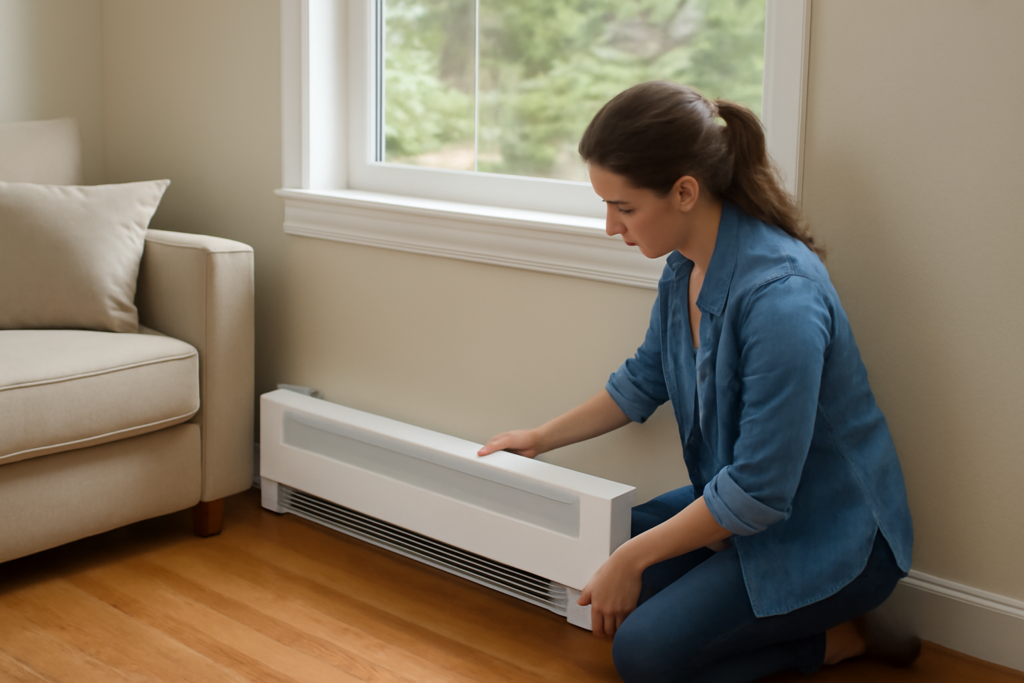
This is a confidence-building DIY job. For electric units, shut off power at the breaker first and confirm it is dead before touching anything.
- Remove the old front panel, which usually unhooks from the back plate or releases with a few screws at the ends.
- Inspect the fins. Straighten any bent aluminum fins on hydronic units with a fin comb so airflow is restored.
- Check or replace the back plate only if it is badly rusted; otherwise leave it mounted.
- Measure and cut the new cover to length with tin snips if needed, filing the edge smooth.
- Snap on the new front panel and end caps, then test the damper opens and closes freely.
Restore power or open the boiler valve and confirm the heater warms up normally.
Buying Tips and Cost
Expect to spend roughly $20 to $40 for a basic steel front panel and end caps in standard lengths, and $40 to $80 for full kits or longer aluminum runs. Brand-specific electric covers can cost more and may need to be ordered from the heater manufacturer. Bring a photo and your measurements to the store, and note whether your damper is integral to the front panel or part of the back plate, since that affects which kit fits.
Buy a length that meets or exceeds your run so you can trim down rather than splice. Hairline gaps at corners look unfinished, so confirm the end caps match the panel profile.
Hydronic vs Electric Covers
Knowing which heating system you have changes what you buy and how careful you need to be. Hydronic baseboard heaters circulate hot water through a finned copper tube, and their covers are largely interchangeable across many residential systems because the industry settled on a fairly standard profile and height. That makes hydronic covers the easiest to source, with universal replacement panels available at most home centers.
Electric baseboard heaters generate heat directly from an element inside the unit, and their covers are more often tied to a specific manufacturer and model. The element sits at a particular height and depth, and the cover must align with the unit’s electrical connections and any built-in thermostat. For that reason, electric covers are frequently ordered from the original maker or a matching replacement line, and substituting a random cover can interfere with airflow or wiring. When in doubt, find the model number on the heater’s label before shopping.
Painting and Finishing Tips
Many homeowners would rather refresh a sound cover than replace it, and painting is a reasonable option if the metal is not rusted through. Start by cleaning the cover thoroughly to remove dust and grease, then lightly sand glossy enamel so new paint will grip. Use a primer made for metal, followed by a paint specifically rated for radiators and high heat. Standard latex wall paint tends to yellow, blister, or give off an odor when the element warms up, so the heat-rated product is worth the small premium. Apply thin coats and let the heater stay off until the paint fully cures, which prevents that first-use smell from baking into the room.
Maintenance and Safety
Vacuum the fins and inside of the cover at least once a heating season; dust on the fins is a real efficiency killer and a faint burning smell at startup is often just that dust. Keep furniture, drapes, and rugs a few inches clear of the cover so airflow is not blocked and fabric stays away from the heat. For electric units, never run wiring or cords across the element.
The Bottom Line
New baseboard covers are a small investment that sharpens a room’s look and can quietly restore lost heating performance. Measure carefully, match the type and profile to your existing heater, choose a rust-resistant finish for damp spaces, and you can handle the swap yourself in an afternoon. It is one of the highest-payoff, lowest-risk improvements a homeowner can take on.