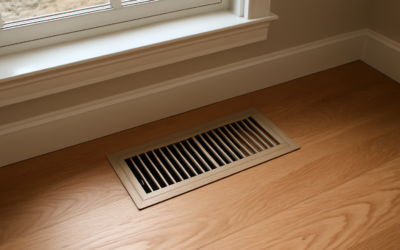
A baseboard register is the low, wall-mounted HVAC vent that sits near the floor along the bottom of a wall, delivering heated or cooled air from your forced-air system into the room. People often confuse it with baseboard heaters, but a register is simply an air outlet for a ducted system, not a heat source of its own. When an old register rusts, dents, or sticks, swapping it out is an easy upgrade that improves both looks and airflow. Here is what you need to know to choose and install the right one.
Register vs Grille vs Vent
The terms get used loosely, but there is a distinction. A register has adjustable louvers or a damper that lets you control or close off airflow. A grille is a fixed cover with no damper, often used for return air. A vent is the general word for any of these air openings.
A baseboard register specifically refers to the supply outlet mounted low on the wall in a forced-air system. Knowing the difference helps you order the correct part rather than a fixed return grille by mistake.
How a Baseboard Register Works
Ductwork carries conditioned air from your furnace or air handler to each room, and the register is where that air enters the living space. Mounted low, baseboard registers let cool air settle in summer and distribute heat along the floor in winter. Many include a built-in damper, a small lever that opens, closes, or partially restricts airflow to balance temperatures room to room.
Because warm air rises and cool air falls, the low placement works with natural air movement to circulate conditioned air through the space.
Common Register Materials
Registers come in several materials, each with trade-offs in durability and appearance.
- Steel: strong and affordable, the most common option, usually painted white
- Aluminum: rust-resistant and lightweight, good for damp areas like basements
- Plastic: inexpensive and corrosion-proof, but less sturdy underfoot
- Brass and decorative metals: a premium look for finished, visible spaces
For high-traffic spots near the floor where the register may get bumped, steel or aluminum holds up better than plastic.
Sizing and Measuring Correctly
Getting the size right is the most important step in a replacement. Registers are described by the duct opening they cover, not the outer faceplate, so measure the opening in the wall, not the old cover. A common notation lists the opening width first and height second, such as a 10 by 6 inch duct.
Measure the duct opening carefully, then confirm the register’s stated opening size matches before buying. The faceplate will be larger than the opening, which is normal and how it conceals the rough edges.
Using the Damper to Balance Airflow
The adjustable damper is a simple tool for comfort and efficiency. In rooms that run too warm or too cool, partially closing or opening the damper redirects air toward problem rooms. During seasons when an unused room needs little conditioning, you can dial its register down.
Avoid closing too many registers at once, though. Forced-air systems are balanced to move a certain volume of air, and shutting down many vents can raise duct pressure and strain the blower. Adjust a few at a time and let the system settle.
Replacing a Baseboard Register
Replacement is a quick DIY task that needs only basic tools. Follow these steps for a clean swap.
- Remove the old register by unscrewing the faceplate from the wall
- Vacuum dust and debris from inside the duct opening while it is exposed
- Confirm the new register’s opening size matches the duct
- Position the new register over the opening and secure it with screws
- Test the damper lever to make sure it opens and closes smoothly
Cleaning the duct while the register is off is a smart bonus, since dust and pet hair collect just inside these low openings.
Decorative and Specialty Registers
Beyond plain white steel, registers come in styles that complement a finished room. Decorative metal registers with scrollwork or geometric patterns suit traditional and craftsman interiors. Wood registers match hardwood trim and built-ins. Some homeowners choose flush-mount or low-profile registers for a cleaner, less noticeable look against modern walls.
Whatever the style, the air opening size still has to match the duct, and the louvers or damper must move freely. A handsome register that restricts airflow defeats its purpose, so confirm the open area is adequate before choosing form over function. Many decorative options offer the same airflow as standard registers in a more attractive face.
Troubleshooting Weak or Noisy Airflow
If one register delivers far less air than others, work through the simple causes first. Confirm the damper is open, the louvers are clear of dust, and no furniture or rug blocks the outlet. Check that the duct behind the register is not crushed or disconnected, which sometimes happens in basements and crawlspaces.
Whistling or rattling usually points to a loose register or a damper vibrating in the airflow. Tighten the mounting screws, and bend or adjust a rattling damper so it sits firmly. If airflow is weak at every register in the house, the issue is more likely a dirty filter or a system problem, which calls for an HVAC technician.
Maintenance and Airflow Tips
Keep registers clear of furniture, drapes, and rugs that block the outlet, since obstructed airflow wastes energy and creates hot or cold spots. Vacuum the louvers regularly to remove dust that restricts air and circulates allergens. Wipe painted registers with a damp cloth to keep them looking fresh.
If a register feels weak compared with others, check that nothing is blocking it, the damper is open, and the duct behind it is clear before assuming a system problem.
The Bottom Line
A baseboard register is the low supply vent that brings your forced-air heating and cooling into each room, and replacing a worn one is a fast, affordable upgrade. Measure the duct opening rather than the old faceplate, choose a durable steel or aluminum register for floor-level use, and use the damper to balance comfort room to room. Keep the vents clear and clean, and your system delivers comfortable, even airflow throughout the home.