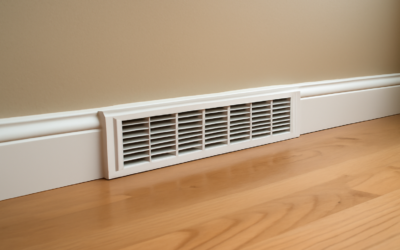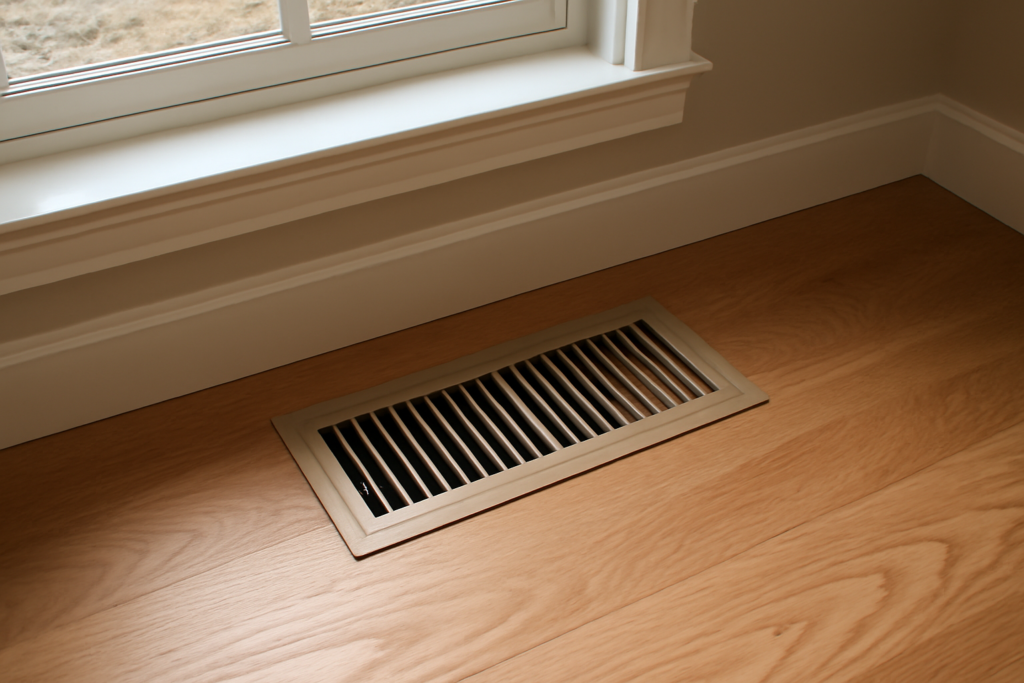
They are easy to overlook, but floor registers are where your heating and cooling system actually meets the room, and the right ones improve both airflow and looks. A floor register is the vent cover set into the floor over a duct opening, usually with movable louvers and a damper to control how much conditioned air enters. Choosing the correct size, material, and style affects comfort, energy efficiency, and even the finished appearance of your flooring. Getting them wrong leads to weak airflow, ugly mismatches, or vents that rattle and rust.
What a Floor Register Actually Does
A register is more than a decorative grille. It directs warm or cool air from the duct into the room, and most include an adjustable damper, a small lever that opens or closes the blades to throttle airflow. This lets you balance temperatures room by room, closing a register slightly in a space that runs warm or opening it fully where you want more output. A plain grille without a damper, by contrast, simply covers the duct and offers no control.
Register vs. Grille vs. Diffuser
The terms get mixed up, so a quick distinction helps when shopping.
- Register: a vent cover with adjustable louvers and a damper to control airflow, used on supply vents
- Grille: a fixed cover with no damper, often used on return-air openings
- Diffuser: spreads air in multiple directions, more common in ceilings
For floors, you will mostly be choosing supply registers with dampers and return grilles without them.
Sizing Floor Registers Correctly
Sizing trips up most homeowners because registers are listed by the duct opening they fit, not their overall outside dimensions. A “4 by 10” register fits a 4-by-10-inch duct hole but has a larger faceplate that overlaps the surrounding floor. Measure the actual duct opening, not the old faceplate, before buying. Common sizes include 4 by 10, 4 by 12, 6 by 10, and 6 by 12 inches, though many others exist. An undersized register chokes airflow, while an oversized one will not seat properly.
Materials and Finishes
Floor registers take foot traffic, so material matters for both durability and looks. Match the finish to your flooring for a clean, intentional appearance.
- Steel: strong and affordable, the most common, available in many painted finishes
- Aluminum: rust-resistant, good for bathrooms and damp areas
- Brass and bronze: decorative and durable, suit traditional and high-end interiors
- Wood and flush-mount: can match hardwood floors for a near-seamless look
For floors that get walked on heavily, choose a sturdy register rated for foot traffic rather than a thin wall-style vent.
Placement and Airflow Tips
Where registers sit, and how you use them, affects comfort and efficiency. Keep registers clear of furniture and rugs, since covering a vent blocks airflow and makes the system work harder. Avoid closing too many registers at once, which can raise pressure in the ductwork and strain the system; balancing a few rooms is fine, but shutting off large numbers can cause problems. In multi-story homes, you may open lower-level registers more in summer and upper-level ones more in winter to even out temperatures.
Cleaning and Maintenance
Floor registers collect dust, hair, and dropped crumbs faster than any other vent because they sit at floor level. Pull each register out, vacuum the visible duct opening, and wash the cover with warm soapy water, drying it before reinstalling. Doing this a couple of times a year improves air quality and airflow. Check that the damper moves freely, and replace any register that is bent, rusted, or rattling. If you notice heavy dust buildup in the ducts themselves, consider a professional duct cleaning.
What Floor Registers Cost
Registers are an inexpensive upgrade. Basic steel floor registers often run about $8 to $25 each, decorative brass, bronze, or designer styles land around $25 to $75, and premium solid-metal or custom wood registers can exceed $100. Treat these as general ranges, since size, material, and finish drive the cost. Replacing tired registers throughout a home is one of the cheapest ways to refresh both airflow control and the look of your floors.
Replacing a Floor Register Yourself
Swapping out a floor register is one of the easiest home upgrades there is, requiring no tools beyond your hands and maybe a screwdriver. Lift the old register out of the duct opening, measure the actual duct hole, not the old faceplate, and buy a replacement sized to that opening. Set the new register into the hole so the faceplate rests flush on the floor; most floor registers simply drop in and stay put under their own weight, while some screw down. If the new register rocks or sits unevenly, the duct opening may be slightly off-size, in which case choosing the next correct standard size usually solves it.
Improving Comfort and Efficiency
Beyond looks, registers play a real role in how comfortable and efficient your home feels. Keeping them clean and unobstructed lets the system deliver its full airflow, so the furnace and air conditioner do not run longer than necessary. Using the dampers to gently balance a few rooms, easing back airflow where it runs warm and opening it where it runs cool, can even out temperatures without touching the thermostat. Just avoid closing a large share of registers at once, which raises duct pressure and can reduce efficiency or strain the blower. If certain rooms never seem to get enough air, a professional can check the duct sizing and balancing.
The Bottom Line
Floor registers are small components with an outsized effect on comfort, efficiency, and appearance. Measure the duct opening to size them correctly, pick a material and finish that suits your flooring and traffic, and use the dampers to balance temperatures without closing off too many at once. Keep them clean and clear, and your registers will deliver steady, controllable airflow while looking sharp for years. Best of all, swapping them is a quick, inexpensive job, so there is no reason to live with bent, rusted, or mismatched vents underfoot.
Prefer to explore on your own?
See how new flooring looks in your actual room in seconds — free, no signup.
Try the free Floor Studio →