Choosing the right bathroom floor tile is about more than appearance — it must resist water, prevent slipping, tolerate humidity and cleaning chemicals, and look good for decades. The bathroom floor faces more moisture abuse than any other floor in the home, so material selection and installation quality matter enormously.
Part of our Bathroom Remodeling & Flooring guide — explore the full guide →
This guide covers the best tile types specifically for bathroom floors, slip resistance ratings, waterproofing systems, heated tile floors, grout maintenance, costs, and the trending looks that dominate bathroom floor tile design in 2026.
- Best Tile Types for Bathroom Floors
- Shower Floor Tiles
- Large Format Tiles for Bathroom Floors
- Slip Resistance Ratings
- Waterproofing Under Tile
- Heated Tile Floors
- Grout Selection and Maintenance
- Cost Breakdown
- Trending Bathroom Floor Tile Looks in 2026
- Frequently Asked Questions
- What is the best tile for bathroom floors?
- Is ceramic or porcelain tile better for bathrooms?
- Do I need to waterproof under bathroom floor tile?
- How much does it cost to tile a bathroom floor?
- Can I use large tiles on a bathroom floor?
- What size tile makes a small bathroom look bigger?
- Is heated tile flooring worth it in a bathroom?
Best Tile Types for Bathroom Floors
Porcelain — Best Overall
Porcelain tile is the best overall bathroom floor tile material. Its water absorption rate below 0.5% means it is nearly impervious to the constant moisture in bathrooms. Porcelain is denser and harder than standard ceramic, resists stains, does not harbor bacteria, and holds up to decades of bathroom cleaning chemicals without degrading.
For bathroom floors specifically, choose porcelain tiles with a matte or textured finish rated R10 or higher for slip resistance. Polished porcelain is beautiful on bathroom walls but too slippery for wet floors. Through-body porcelain (where the color extends throughout the tile) is preferable to surface-glazed versions because chips and scratches do not reveal a different colored body underneath.
Ceramic — Budget-Friendly Option
Glazed ceramic tile is a practical, affordable alternative for bathroom floors — especially in guest bathrooms and powder rooms with lighter use. Choose PEI 3 or higher rated ceramic with a matte or satin glaze. Ceramic absorbs more water than porcelain, so ensure all grout lines are sealed properly and any areas near showers or tubs have waterproof membranes.
Natural Stone
Marble, slate, travertine, and limestone create stunning bathroom floors but require more maintenance than porcelain. All natural stone must be sealed upon installation and resealed every 6 to 12 months. Marble is susceptible to etching from acidic products (some cleaning agents, shampoo, soap). Slate provides excellent natural slip resistance. Travertine and limestone are beautiful but softer and more porous than marble.
Glass Mosaic
Glass mosaic tiles are used primarily for accent areas and shower walls. They can work on bathroom floors when small enough (1″ x 1″ or smaller) to create sufficient grout lines for grip. However, glass tiles are slippery when wet unless textured, and they are more expensive than porcelain mosaics with less slip resistance. Use glass mosaics sparingly on floors.
| Tile Type | Water Resistance | Slip Resistance | Maintenance | Cost (per sq ft) | Best For |
|---|---|---|---|---|---|
| Porcelain (matte) | Excellent | Excellent | Low | $3 – $12 | All bathroom floors |
| Ceramic (glazed) | Good | Good (matte glaze) | Low | $1 – $6 | Guest baths, powder rooms |
| Marble (honed) | Moderate | Good (honed) | High | $8 – $25 | Master baths, luxury |
| Slate | Good | Excellent | Moderate | $4 – $10 | Rustic bathrooms |
| Porcelain mosaic | Excellent | Excellent | Moderate (grout) | $5 – $15 | Shower floors |
Shower Floor Tiles
Shower floors have unique requirements that differ from the main bathroom floor. The tile must provide maximum grip when wet and soapy, allow for a drainage slope, and tolerate constant water immersion.
Mosaic tiles (1″ x 1″ to 2″ x 2″) are the gold standard for shower floors. Their small size allows the tile to follow the drainage slope without cracking or lippage. The many grout lines between small tiles create a textured surface that provides grip underfoot. Porcelain mosaics are preferred over glass or ceramic for their superior water resistance and durability.
Penny round tiles (1″ diameter circles) offer excellent shower floor grip and a classic look. The rounded shape conforms well to drain slopes, and the texture of many small circles underfoot provides natural slip resistance.
Hexagonal mosaic tiles (1″ to 2″) combine the grip benefits of small tiles with a geometric aesthetic. They are available in a wide range of colors and create a more contemporary look than square mosaics.
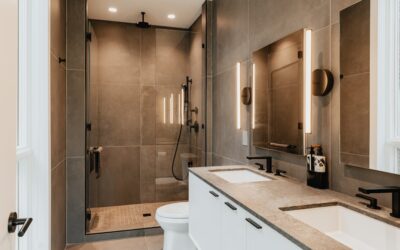
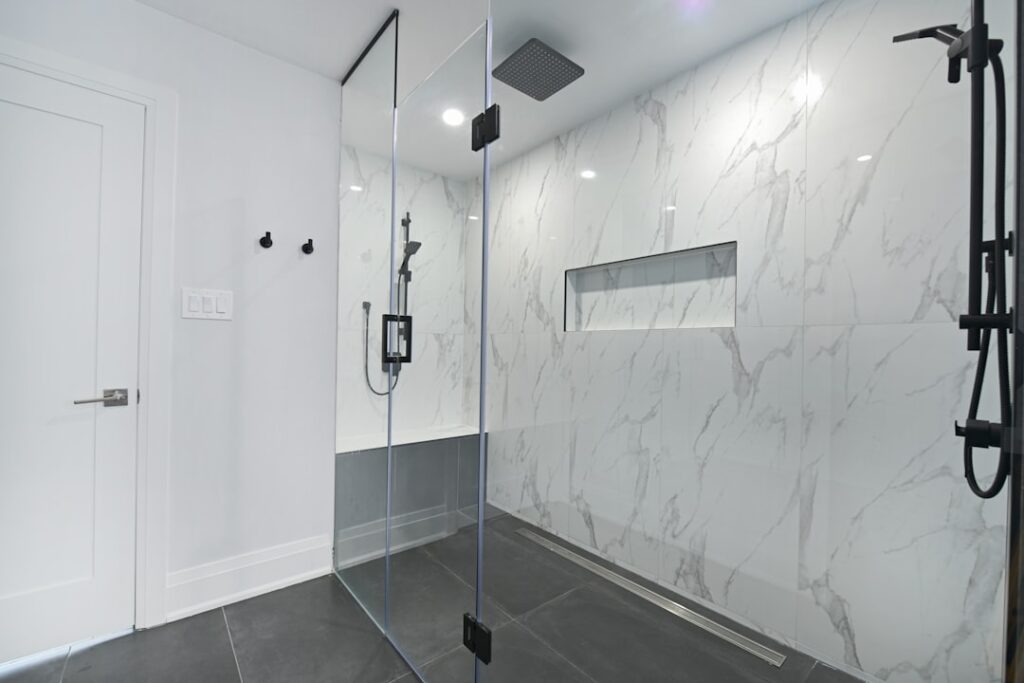
Linear drain systems allow the use of larger tiles on shower floors because the slope is in one direction only (toward the linear drain) rather than four directions toward a center drain. With a linear drain, tiles as large as 12″ x 24″ can be used on shower floors — a major design advantage.
Large Format Tiles for Bathroom Floors
Large format tiles (12″ x 24″ and larger) are the dominant trend in bathroom floor tile design. Fewer grout lines mean a cleaner, more seamless appearance that makes bathrooms feel larger. A 60-square-foot bathroom might need only 20 tiles at 12″ x 24″, creating a smooth, contemporary surface.
Benefits of large format bathroom tiles: fewer grout lines to clean and maintain, more spacious visual effect, modern aesthetic, and reduced grout staining risk. Large tiles in light colors make small bathrooms appear bigger.
Challenges: Large tiles require a perfectly flat subfloor (lippage is amplified with large tiles), and they cannot easily follow the compound slopes needed for standard shower floors. Use large format tiles for the main bathroom floor and mosaics inside the shower enclosure.
The most popular large format bathroom floor tile sizes in 2026 are 12″ x 24″ and 24″ x 24″. Tiles larger than 24″ x 48″ are typically reserved for commercial or very large residential bathrooms due to handling difficulty.
Slip Resistance Ratings
Slip resistance is the most important safety factor when choosing bathroom floor tile. Two main rating systems are used.
| Rating | System | Slip Resistance Level | Suitable For |
|---|---|---|---|
| R9 | DIN (European) | Minimum | Dry interior floors only |
| R10 | DIN (European) | Normal | Bathroom floors (dry areas) |
| R11 | DIN (European) | Good | Bathroom floors (wet areas) |
| R12 | DIN (European) | Very good | Showers, pool decks |
| R13 | DIN (European) | Excellent | Commercial wet areas |
| DCOF ≥ 0.42 | ANSI (US) | Minimum for wet areas | All wet-area floors |
| DCOF ≥ 0.60 | ANSI (US) | Very good for wet areas | Showers, pool surrounds |
For bathroom floors, choose tiles rated R10 or higher (DIN) or DCOF 0.42 or higher (ANSI). For shower floors and areas frequently wet with soapy water, R11-R12 or DCOF 0.60+ is recommended. Check the tile specification sheet — reputable manufacturers list these ratings for every product.
Waterproofing Under Tile
Tile and grout alone are not waterproof. Water can penetrate grout lines, hairline cracks, and the gaps around fixtures. A waterproof membrane under the tile is essential in shower areas and highly recommended for the entire bathroom floor.
Sheet membranes (Schluter DITRA, DITRA-XL): Polyethylene sheet membranes are applied over the subfloor before tiling. They provide waterproofing, uncoupling (absorbing subfloor movement to prevent tile cracks), and vapor management. DITRA is the industry standard for bathroom floor waterproofing under tile.
Liquid-applied membranes (RedGard, Hydroban, AquaDefense): These paint-on waterproofing products are rolled or brushed directly onto the subfloor and allowed to cure before tiling. They are less expensive than sheet membranes and easier to apply around corners and irregular shapes. Two coats are typically required.
Foam panel systems (Schluter KERDI-BOARD, Wedi): Waterproof foam panels serve as both the wall substrate and waterproof membrane. They eliminate the need for cement backer board in shower walls and provide excellent insulation.
Where to waterproof: At minimum, waterproof the shower floor, shower walls to at least 6 inches above the showerhead, and the area around the tub. Best practice is to waterproof the entire bathroom floor — this protects against toilet leaks, sink overflows, and general splashing.
Heated Tile Floors
Radiant floor heating under bathroom floor tile eliminates the biggest complaint about tile floors — cold feet on winter mornings. Electric radiant heat mats are installed between the subfloor and thinset layer, warming the tile surface to a comfortable temperature.
Cost: Electric radiant heat mats cost $6 to $16 per square foot for materials plus $3 to $5 per square foot for installation. For a typical 50-square-foot bathroom, expect $450 to $1,050 total for heated floors. Operating cost is approximately $0.20 to $0.50 per day for a bathroom-sized area.
Best systems: Nuheat, Schluter DITRA-HEAT, SunTouch, and WarmlyYours are the most popular electric radiant heat brands. Schluter DITRA-HEAT combines waterproofing and heating in one system, making it the most efficient option for bathroom floors.
Thermostat control: Programmable thermostats allow the floor to warm before your morning alarm. A floor temperature of 80 to 85 degrees Fahrenheit feels comfortable underfoot without overheating.
Grout Selection and Maintenance
Grout is the weak link in any bathroom floor tile installation. Choosing the right grout and maintaining it properly are critical for long-term performance.
Cement-based sanded grout is the most common type. It is affordable and widely available but must be sealed upon installation and resealed every 6 to 12 months. Sanded grout is used for joints 1/8″ and wider.
Cement-based unsanded grout is used for joints narrower than 1/8″. It has a smoother texture but is still porous and requires sealing.
Epoxy grout is the premium choice for bathroom floors. It is 100% waterproof, stain-proof, does not require sealing, and resists mold and mildew growth. Epoxy grout costs more and is harder to work with (shorter working time, more difficult cleanup), but it virtually eliminates grout maintenance in bathrooms. For shower floors and bathroom floors, epoxy grout is the best long-term investment.
For grout cleaning techniques, see our how to clean grout guide.
Cost Breakdown
| Component | Cost per sq ft | 50 sq ft Bathroom | 100 sq ft Bathroom |
|---|---|---|---|
| Porcelain tile (mid-range) | $4 – $8 | $200 – $400 | $400 – $800 |
| Professional installation | $6 – $12 | $300 – $600 | $600 – $1,200 |
| Waterproofing membrane | $1 – $3 | $50 – $150 | $100 – $300 |
| Backer board | $0.50 – $1.50 | $25 – $75 | $50 – $150 |
| Thinset and grout | $0.50 – $1.50 | $25 – $75 | $50 – $150 |
| Heated floor (optional) | $9 – $21 | $450 – $1,050 | $900 – $2,100 |
| Total (without heat) | $12 – $26 | $600 – $1,300 | $1,200 – $2,600 |
| Total (with heat) | $21 – $47 | $1,050 – $2,350 | $2,100 – $4,700 |
Trending Bathroom Floor Tile Looks in 2026
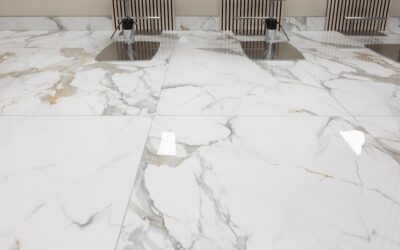
Large format marble-look porcelain. 12″ x 24″ or 24″ x 24″ porcelain tiles that mimic Calacatta, Carrara, or Statuario marble are the most popular bathroom floor tile choice in 2026. They provide the luxury marble aesthetic without the sealing, etching, and maintenance demands of real marble.
Terrazzo-look tile. Terrazzo has made a strong comeback. Porcelain tiles with terrazzo-style chips and speckles in soft pastels, neutrals, and bold colors add playfulness to bathroom floors. They are particularly popular in powder rooms and guest baths.
Zellige-look tile. Handmade Moroccan zellige tile (or porcelain tiles replicating the zellige look) brings organic variation and warmth to bathroom floors. The subtle color variation between tiles creates a handcrafted, artisan feel.
Wood-look porcelain planks. Porcelain tiles that mimic warm wood tones create a spa-like bathroom atmosphere without the moisture risk of real wood. Plank sizes (6″ x 24″ or 8″ x 48″) are laid in staggered patterns to replicate hardwood flooring.
Black and white geometric patterns. Hexagonal, arabesque, and geometric patterned tiles in black and white create a timeless, high-contrast bathroom floor. These patterns work especially well in small powder rooms where they serve as a design focal point.
Matte cement-look tiles. Concrete-inspired porcelain tiles in gray, charcoal, and warm beige tones create a minimalist, industrial-chic bathroom aesthetic. Their matte finish provides good slip resistance and hides water spots.
For a complete guide to bathroom flooring options beyond tile, visit our shower tile guide.
Frequently Asked Questions
What is the best tile for bathroom floors?
Porcelain tile with a matte or textured finish is the best overall bathroom floor tile. It absorbs less than 0.5% water, resists stains and chemicals, requires no sealing, and is available in slip-resistant finishes rated R10 or higher. For shower floors specifically, porcelain mosaic tiles (1″ x 1″ or 2″ x 2″) provide the best combination of slip resistance and drainage slope adaptability.
Is ceramic or porcelain tile better for bathrooms?
Porcelain is better for bathrooms because it absorbs less water and is denser than ceramic. In a high-moisture environment like a bathroom, porcelain’s lower porosity provides better long-term durability. Ceramic is acceptable for guest bathrooms and powder rooms where moisture exposure is lighter, but porcelain is the safer choice for primary bathrooms and showers.
Do I need to waterproof under bathroom floor tile?
Waterproofing under tile is essential in shower areas and highly recommended for the entire bathroom floor. Tile and grout are water-resistant but not waterproof — water can penetrate grout lines and reach the subfloor, causing mold, rot, and structural damage. A waterproof membrane (sheet or liquid-applied) protects the subfloor from moisture.
How much does it cost to tile a bathroom floor?
A standard 50-square-foot bathroom floor costs $600 to $1,300 for mid-range porcelain tile professionally installed, including materials, labor, thinset, grout, and backer board. Adding radiant floor heating increases the total to $1,050 to $2,350. Costs vary by tile material, installer rates, and subfloor condition.
Can I use large tiles on a bathroom floor?
Yes. Large format tiles (12″ x 24″ and larger) are popular for bathroom floors because they create fewer grout lines, look modern, and make small bathrooms appear bigger. However, large tiles cannot follow the compound slope on standard shower floors — use mosaic tiles inside showers and large tiles on the main bathroom floor.
What size tile makes a small bathroom look bigger?
Large format tiles (12″ x 24″ or 24″ x 24″) in light colors make small bathrooms look bigger by minimizing grout lines and creating a continuous surface. Running tiles in the same direction as the longest wall emphasizes length. Avoid very small mosaic tiles on the main floor — they create visual busyness that makes small spaces feel cluttered.
Is heated tile flooring worth it in a bathroom?
Yes, for most homeowners. Heated bathroom floors cost $450 to $1,050 for a typical bathroom and $0.20 to $0.50 per day to operate. The comfort of warm tile underfoot in winter — especially stepping out of the shower — is a significant quality-of-life upgrade that also adds value at resale. It is much easier and cheaper to install during a bathroom renovation than to add later.
Prefer to explore on your own?
See how new flooring looks in your actual room in seconds — free, no signup.
Try the free Floor Studio →