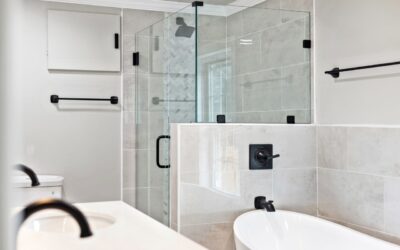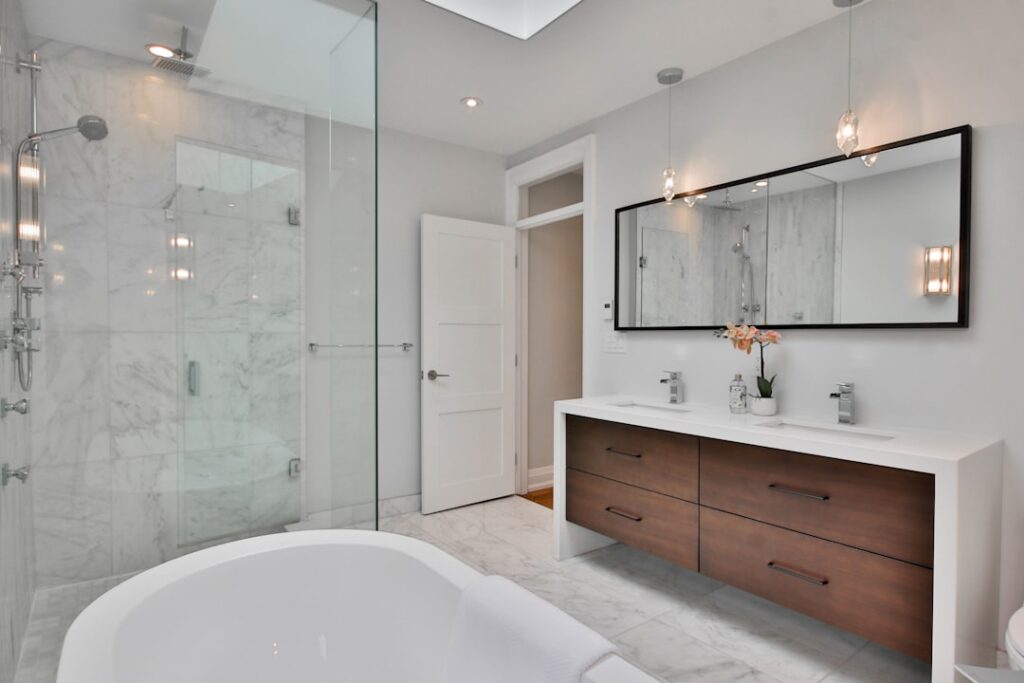
Most homeowners underestimate a shower rebuild by about 30 percent, then discover hidden rot behind the surround once demo starts. A bathroom remodeling shower project touches plumbing, framing, waterproofing, tile, glass, and electrical, which is why the average national spend lands between $6,500 and $15,000 for a mid-tier walk-in. This guide walks through the decisions that drive cost, the products pros actually trust, and the corners you should never cut.
Part of our Bathroom Remodeling & Flooring guide — explore the full guide →
- Set a Realistic Budget Before You Pick Tile
- Pick the Right Shower Pan and Waterproofing System
- Choose Tile That Performs in a Wet Environment
- Plumbing Rough-In: Get It Right the First Time
- Glass Enclosures, Doors, and Steam Considerations
- Niches, Benches, and Accessibility Details
- Timeline, Permits, and Hiring
Set a Realistic Budget Before You Pick Tile
Pricing breaks down into three rough tiers. A prefab acrylic surround swap runs $2,800 to $5,000 installed using kits from Sterling, Aquatic, or Maax. A custom tile shower with a curbless entry, niche, and frameless glass typically runs $9,000 to $18,000. A full luxury rebuild with steam, body sprays, and porcelain slab walls can clear $30,000.
Allocate roughly 35 percent for tile and trim, 20 percent for glass, 15 percent for plumbing fixtures, and the rest for labor and waterproofing. Leave a 15 percent contingency. Once you open a wet wall in a 1970s ranch, you often find galvanized supply lines that should be replaced with PEX or copper before you tile anything back.
Pick the Right Shower Pan and Waterproofing System
The pan dictates the entire build sequence. A Kerdi-Shower-T pre-sloped foam pan from Schluter is the easiest path for a 48×48 inch alcove because it bonds to the subfloor with thinset and accepts the Kerdi membrane directly. For a curbless walk-in, contractors usually order a custom Wedi or LATICRETE Hydro Ban pan with a linear drain from Infinity Drain or Schluter Kerdi-Line, priced around $400 to $650.
Skip the old mortar bed plus rubber liner method unless your installer has decades of experience. Sheet-applied membranes like Schluter Kerdi-Band or LATICRETE Hydro Ban Sheet Membrane fail far less often and are accepted by every major manufacturer warranty. Pressure-test the pan with a 24-hour flood test before any tile touches the wall.
Choose Tile That Performs in a Wet Environment
Porcelain wall tile rated PEI 3 or higher handles daily steam without crazing. Floor tile inside the shower should carry a DCOF rating of 0.42 or higher for wet slip resistance, a standard set by ANSI A137.1. Two-inch mosaic hex or penny rounds give you enough grout lines to grip safely, even when soap residue collects.
Large format wall tile, often 12×24 or 24×48 inches, has become the dominant look because it reduces grout lines and reads cleaner. Run the long edge horizontally for a wider feel, or vertically to stretch an eight-foot ceiling visually. Daltile, Florida Tile, and MSI all carry domestic stock that ships in two to four weeks instead of the 10-week imports.
Plumbing Rough-In: Get It Right the First Time
The valve location should sit 48 inches off the finished floor for a standard shower, 72 inches for a rain head plumbed into the ceiling, and 38 to 42 inches if you want a separate hand-shower diverter at hip height. Use a pressure-balancing or thermostatic valve such as the Delta MultiChoice Universal or Moen M-CORE, both of which let you swap trim later without opening the wall.
Run 3/4 inch supply lines if you plan to add body sprays or a rain head, because 1/2 inch lines cannot feed multiple outlets at usable pressure. Install a Sloan or Oatey shower drain rated for 2 inches with a P-trap and proper venting. Code in most jurisdictions requires a vent within five feet of the trap arm.
Glass Enclosures, Doors, and Steam Considerations
Frameless glass at 3/8 or 1/2 inch tempered with C3 coating from Cardinal, Guardian, or PPG keeps water spots from etching the surface. Expect $1,200 to $2,500 for a standard inline panel and door, and $3,000 to $6,000 for a custom 90-degree return with notches around a bench.
For steam showers, the enclosure must seal to the ceiling, which means a transom panel and a vapor-tight door from Steamist, Mr. Steam, or ThermaSol. Wire a dedicated 20 amp 240 volt circuit for the generator and locate it within 25 feet of the head. Ceilings inside a steam enclosure must slope at least 2 percent toward the wall so condensation runs down instead of dripping on you.
Niches, Benches, and Accessibility Details
Frame at least one 14×28 inch niche between studs at 48 inches off the floor for shampoo and conditioner bottles. Slope the niche sill 1/8 inch per inch toward the shower so water drains out. Pre-fabricated foam niches from Schluter or Wedi install in 20 minutes and waterproof cleanly.
If you plan to age in place, frame a folding teak bench rated for 250 pounds with blocking behind every wall location where a grab bar might land. Moen and Bobrick make ADA-rated grab bars in finishes that match your trim so the bathroom does not look institutional. Curbless entries require a 1/4 inch per foot slope across the entire bathroom floor toward the linear drain, which adds about $800 to $1,500 in subfloor work.
Timeline, Permits, and Hiring
A typical mid-tier shower remodel takes 14 to 21 working days. Demo and rough plumbing take two days, framing and waterproofing two more, tile and grout five to seven, glass templating waits until tile cures (usually day 10), then glass installs around day 17. Pull a plumbing permit anywhere you move or add fixtures, and an electrical permit for steam, fan, or lighting changes.
Get three bids on the same scope of work. Verify the contractor carries general liability of at least $1 million and workers comp, check their license through your state board, and ask for two recent shower references you can visit. A clean installer with a written waterproofing warranty is worth $2,000 more than the lowest bid every time.