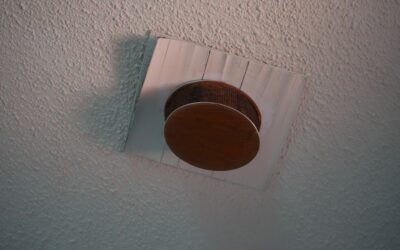
If your bathroom has no ceiling vent and running ductwork through the attic is impractical, a bathroom window exhaust fan can be the simplest way to pull humid air out of the room and protect it from mold, peeling paint, and mildew. Instead of mounting in the ceiling and venting through a duct, this style of fan installs in a window opening and pushes moist air directly outside. This guide explains the types available, how to size one correctly, the installation process, the real pros and cons versus a ceiling fan, and what it all costs.
Part of our Bathroom Remodeling & Flooring guide — explore the full guide →
- Why Bathroom Ventilation Matters
- Types of Window Exhaust Fans
- Sizing the Fan Correctly
- Noise Ratings to Consider
- Installation Overview
- Pros and Cons Versus a Ceiling Fan
- What It Costs
- Controls, Timers, and Humidity Sensors
- Preventing Mold Beyond the Fan
- Common Mistakes to Avoid
- Is a Window Fan Right for You?
- Frequently Asked Questions
Why Bathroom Ventilation Matters
A shower or bath dumps a surprising amount of moisture into the air, and without ventilation that humidity condenses on walls, ceilings, mirrors, and inside wall cavities. Over time this leads to peeling paint, warped trim, musty odors, and, most seriously, mold growth that can damage the structure and affect indoor air quality. Building codes require bathrooms to have either an operable window or mechanical ventilation, and in practice an operable window alone is not enough because people rarely open it in winter. A window exhaust fan gives you mechanical ventilation without cutting into the ceiling.
Types of Window Exhaust Fans
Several designs let you vent through a window rather than the ceiling:
- Window-mounted exhaust fans: a unit that fits into the window sash opening, similar in concept to a small window air conditioner, with a fan that blows air out and often a damper to block backdrafts.
- Through-the-wall fans placed near the window: mounted in the wall adjacent to the window, venting straight outside through a short duct or wall cap.
- Glass-mounted or panel-mounted fans: a fan set into a filler panel or a replacement pane that seals the rest of the window opening.
- Portable clip-in fans: temporary units that fit into a partially open window; least permanent and least effective, but an option for renters.
For a permanent solution, a properly sealed window-mount or an adjacent through-wall fan performs best.
Sizing the Fan Correctly
Fans are rated in CFM (cubic feet per minute), the volume of air they move. Undersizing is the most common mistake and leaves the room humid. The standard rule of thumb is one CFM per square foot of floor area for bathrooms up to about 100 square feet, with a minimum of 50 CFM. So a 7-by-8-foot bathroom (56 square feet) needs at least a 50 CFM fan, while a larger 10-by-10 bath needs 100 CFM.
For bathrooms over 100 square feet, a common method adds CFM for each fixture: roughly 50 CFM for a toilet, tub, or shower and 100 CFM for a jetted tub, summed together. When in doubt, size up slightly; a fan that clears moisture quickly does its job before humidity settles into the walls.
Noise Ratings to Consider
Fan noise is measured in sones, and a lower number is quieter. A fan rated at 4 sones is loud and buzzy; a quality fan at 1.5 sones or less runs quietly enough that you will actually leave it on long enough to clear the moisture. Cheap window fans tend to be noisier, so if quiet operation matters, check the sone rating before buying.
Installation Overview
Installing a window exhaust fan is generally more DIY-friendly than a ceiling fan because you avoid attic ductwork, but it varies by type:
- Window-mounted units fit into the open window and are secured with brackets and adjustable side panels that seal the remaining gap, much like a window AC. You then close the sash down onto the unit and weatherseal it.
- Through-wall fans near the window require cutting an opening in the exterior wall, installing the fan housing, running the short duct, and mounting an exterior wall cap with a damper. This is more involved and touches electrical and possibly siding.
- All powered fans need a proper electrical connection, ideally on a switch, and any wiring in a bathroom must follow code, including GFCI protection where required.
A backdraft damper is essential in any window or wall fan; it lets air out but closes to block cold outdoor air, insects, and drafts from coming back in when the fan is off.
Pros and Cons Versus a Ceiling Fan
A window fan solves a specific problem, but it is not always the ideal choice. Weigh the trade-offs:
- Pro: no attic ductwork. Ideal for bathrooms where routing a ceiling duct to the exterior is impractical.
- Pro: direct venting. Air goes straight outside with a very short path, which is efficient.
- Pro: easier install for the window-mounted type, often within a homeowner’s ability.
- Con: window occupied. The fan takes over the window, reducing natural light and blocking that window’s normal use.
- Con: air sealing and looks. A window unit can be less attractive and, if poorly sealed, let in cold air and noise.
- Con: cold-climate concerns. An improperly sealed window fan can be a source of winter drafts.
What It Costs
Costs vary by type and whether you install it yourself. A basic window-mounted exhaust fan runs $40 to $150 for the unit, and installing it yourself keeps the project cheap. A quality quiet-rated through-wall fan runs $80 to $250, plus the cost of cutting the wall, a duct, and an exterior cap. Professional installation of a through-wall fan, including electrical, typically adds $150 to $500 depending on wall construction and wiring access. Overall, a window solution is usually less expensive than retrofitting a ceiling fan with new attic ductwork.
Controls, Timers, and Humidity Sensors
How you switch the fan on and off has a big effect on whether it actually protects your bathroom. A simple wall switch works, but people routinely forget to leave the fan running long enough after a shower, so the moisture never fully clears. Upgrading to a countdown timer switch, which runs the fan for a preset 20, 30, or 60 minutes and then shuts off automatically, solves this by ensuring the fan runs long enough every time without wasting energy overnight.
Even better for humidity control is a fan or switch with a built-in humidity sensor (humidistat) that turns the fan on automatically when moisture rises and off once the air dries out. This hands-free operation guarantees ventilation exactly when it is needed, which is ideal for a guest bathroom where visitors may not think to flip a switch, or for anyone who simply wants to stop worrying about it. Some window and wall fans include these controls; others let you add a compatible timer or humidistat switch. Choosing smart controls turns the fan from a device you have to remember into one that quietly does its job.
Preventing Mold Beyond the Fan
A fan is the centerpiece of moisture control, but a few companion habits keep a bathroom truly mold-free. Run the fan during and for 15 to 20 minutes after every shower or bath, and squeegee or wipe down shower walls and glass to remove standing water that would otherwise evaporate into the room. Keep the shower door or curtain open after use so the enclosure can dry, and spread out damp towels rather than leaving them bunched where mildew thrives.
Address any leaks promptly, since a dripping faucet or supply line adds constant moisture that ventilation alone cannot overcome. Clean the fan’s grille and blades periodically, because dust buildup reduces airflow and cuts the fan’s effective CFM over time. In persistently humid climates, a small dehumidifier can supplement the fan. Together with properly sized, well-controlled ventilation, these habits keep humidity low enough that mold and mildew never get a foothold, protecting both your bathroom’s finishes and your indoor air quality.
Common Mistakes to Avoid
- Undersizing the CFM. A fan too weak for the room never clears the humidity; match CFM to square footage.
- Poor air sealing. Gaps around a window unit invite drafts, insects, and noise; seal the side panels well.
- No backdraft damper. Without one, cold outdoor air pours in whenever the fan is off.
- Ignoring the sone rating. A loud fan gets switched off too soon, defeating its purpose.
- Improper wiring. Bathroom electrical must meet code; hire an electrician if you are unsure about GFCI and switching.
- Running it too briefly. Leave the fan on for 15 to 20 minutes after a shower to fully clear moisture; a timer switch helps.
Is a Window Fan Right for You?
A bathroom window exhaust fan is an excellent solution when a ceiling-mounted, ducted fan is impractical, such as in a first-floor bathroom with no attic above or a room where running a duct to an exterior wall would be costly. It vents moisture directly outside with a short, efficient path and is often within a homeowner’s DIY reach. Just size it correctly for the room, seal it well against drafts, include a backdraft damper, and run it long enough after each shower. Done right, it keeps your bathroom dry, mold-free, and comfortable without ever touching the ceiling.
Frequently Asked Questions
Do battery-operated or solar bathroom window fans work?
Battery and solar window fans work only as a light supplement, not as primary bathroom ventilation. They typically move far less air than a wired fan, so they rarely meet the 50 CFM minimum and struggle to clear shower steam. They suit a small half bath, a rental, or a window where no wiring is available. For a full bathroom with a shower, a wired fan sized to the room is the reliable choice.
Can you run a bathroom window exhaust fan in winter?
Yes, a window exhaust fan can run all winter if it is well sealed and has a backdraft damper. Winter is when bathrooms need ventilation most, because cold walls and glass collect condensation. Seal the side panels and the sash gap with weatherstripping, use a timer so the fan does not pull warm air out longer than needed, and check the damper closes fully after each use.
Can you put an exhaust fan in a basement window?
Yes, the same window or through-wall fan designs work in a basement window, sized by floor area like a bathroom. One caution matters more below grade: if the basement holds a gas or oil furnace, water heater, or other fuel-burning appliance, a strong exhaust fan can depressurize the space and pull combustion gases back into the house. Have an HVAC pro check for backdrafting in that case.
Does a bathroom window fan need to be rated for wet locations?
A bathroom window fan should be rated at least for damp locations, and any fan installed over or inside a tub or shower area must be listed for that location and protected by a GFCI. Check the listing on the box before buying. Hardwired installs and new circuits are best left to a licensed electrician, who can confirm the rating, GFCI protection, and switch wiring meet local code.