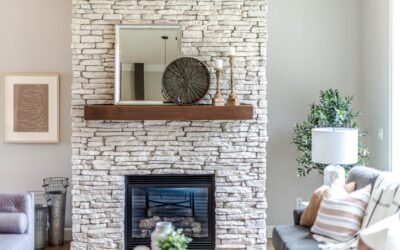
A 150 dollar weekend painting project can shift the entire visual center of gravity of a living room more dramatically than a 4,000 dollar furniture swap. The classic before and after painted fireplace mantel transformation almost always involves the same starting point (orange-toned 1990s oak or builder-grade pine) and one of three current end states: deep moody charcoal, warm putty cream, or limewashed organic textured finish. This guide walks through which paint actually holds up to mantel use, the prep work that determines whether the finish lasts 2 years or 20, and the specific color choices that hit the contemporary look without dating in another year.
Part of our Paint & Walls guide — explore the full guide →
What Surface You Are Painting Matters
Oak mantels with heavy grain need a grain-filler or two coats of high-build primer to read smooth. Pine and poplar painted directly can show knot bleed-through within months if you skip a shellac-based primer over the knots. MDF, painted plywood, and previously painted surfaces are the easiest substrates and skip most of the prep complexity.
Stone or brick mantels (the masonry surround, not just the wooden shelf) follow a different process entirely. Limewash, mineral paints, and German smear over masonry create a softer, more authentic finish than a coat of latex enamel will ever achieve. We will cover both wood and masonry approaches.
Color Choices That Work in 2026
The dominant successful before-and-after transformations right now use one of these palettes:
- Deep charcoal or near-black, like Benjamin Moore Soot (2129-20) or Sherwin-Williams Iron Ore (SW 7069)
- Warm putty cream, like Benjamin Moore Pale Oak (OC-20) or Farrow & Ball Skimming Stone (No. 241)
- Soft sage green, like Sherwin-Williams Sea Salt (SW 6204) or Behr Sage Mist
- Limewashed white over brick, breathable mineral paint in Romabio Classico or Bauwerk Color
- Moody navy, like Benjamin Moore Hale Navy (HC-154) or Sherwin-Williams Naval (SW 6244)
Avoid bright white over wood mantels in living rooms with warm wall colors. The contrast looks jarring rather than crisp, and the white shows every scuff and soot mark. A warm off-white reads as “painted” without screaming for attention.
Prep Work for Wood Mantels
The single biggest reason painted mantels chip and peel within a year is inadequate prep. Set aside a half-day for prep alone if the mantel is currently stained or sealed. The process is straightforward but cannot be rushed.
- Remove any decorative items, clocks, mirrors, and screws holding objects to the mantel
- Clean with TSP substitute or a 50/50 ammonia-water mix to cut grease and soot residue
- Sand all glossy and sealed surfaces with 180 grit until uniformly dull
- Vacuum thoroughly, then wipe with a microfiber tack cloth
- Fill any nail holes, dings, or open joints with Minwax High Performance Wood Filler
- Sand patches smooth at 180 then 220 grit
- Apply a stain-blocking primer over the entire piece (Zinsser BIN shellac primer for knotty wood, INSL-X Stix bonding primer for slick previously-painted surfaces)
- Sand primer lightly with 220 grit between coats
Choosing the Paint
Mantels see daily handling, soot from the firebox, and elevated temperatures during use. Wall paint will not hold up. Use a waterborne alkyd enamel or a pure acrylic cabinet-and-trim paint:
Benjamin Moore Advance, Sherwin-Williams ProClassic Acrylic-Alkyd, and Behr Urethane Alkyd Semi-Gloss Enamel all cure to a hard, washable film that resists scuffs and is rated for trim, doors, and cabinets. Plan on 2 to 3 coats with 4 to 6 hours between coats and 14 to 30 days to full cure. Avoid hanging stockings, candles, or heavy objects on the mantel for at least 2 weeks after the final coat.
For a brick or stone mantel facade, Romabio Classico Limewash gives a true mineral finish that breathes and ages gracefully. German smear is the same product applied thicker and partially wiped off to leave white residue in the joints while exposing brick face. Both run 50 to 150 dollars in materials and produce a finish that improves over years rather than degrades.
Application Techniques
For the mantel shelf and any flat surfaces, use a microfiber mini-roller (4 to 6 inch) for the field and a 2.5 inch angled brush for the corners and detail. Apply long, light strokes and avoid going back into areas that have begun to set up.
Thin waterborne enamels with Floetrol (4 to 8 ounces per gallon) in warm rooms to extend open time and reduce brush marks. Keep the room temperature between 65 and 75°F during application and curing. A garage at 55°F or a humid room at 90 percent relative humidity both cause finish problems that show up only after the paint dries.
Limewash Over Stone or Brick
The limewash technique transforms a dated red brick or orange stone facade into a softly chalky, warm white surface that looks century-old in the right way. Mist the surface lightly with water from a spray bottle, then apply diluted limewash (1 part Romabio Classico to 1 part water for first coat) with a tampico bristle brush in long irregular strokes.
Work in 4 by 4 foot sections and within 5 minutes of application, wipe selectively with a damp microfiber rag to expose some brick texture in random spots. The goal is a deliberately uneven, “old country house” look rather than uniform white coverage. Three coats over 2 to 3 days produces the layered, breathable finish that defines the technique.
The Cost of a Full Mantel Transformation
Total materials cost for a complete before and after painted fireplace mantel runs roughly:
For a wooden mantel and surround: 25 dollars in primer, 35 to 60 dollars in enamel paint (one quart usually covers two coats), 15 dollars in brushes and rollers, 10 dollars in painter’s tape and drop cloths, and 5 dollars in sandpaper. Total: 90 to 115 dollars and one weekend of work.
For a brick or stone mantel limewashed: 50 to 90 dollars in mineral paint (one liter covers about 50 square feet at three coats), 20 dollars in masonry brushes, plus drop cloths and rags. Total: 80 to 130 dollars and a long weekend.
Compared to the 3,000 to 8,000 dollar cost of replacing the mantel and stone surround entirely, a paint transformation delivers 90 percent of the visual impact for 2 percent of the cost. Done with proper prep and the right product, the before and after stays beautiful for a decade or more.