Few weekend projects change a room as dramatically as a coat of paint on a dated brick surround. The best painted brick fireplace ideas take a heavy, orange-toned 1970s hearth and turn it into a crisp focal point that makes the whole room feel current, all for the price of a few gallons of paint and a couple of days of work. The transformation is real, but so are the pitfalls: use the wrong paint or skip the prep and you get a peeling, patchy mess within a year. Here are the color directions that work, the techniques the before-and-after photos never explain, and how to do it so it lasts.
Part of our Paint & Walls guide — explore the full guide →
- Before and After: Why Painting Works
- The Best Colors for Painted Brick
- Choose the Right Paint and Primer
- Step-by-Step: How to Paint Brick
- How Much It Costs and How Long It Lasts
- Techniques Beyond a Solid Coat
- White Brick Fireplace and Gray Fireplace Brick: Styling and Upkeep
- Frequently Asked Questions
Before and After: Why Painting Works
The typical “before” is red-orange brick with dark, uneven mortar that visually anchors and darkens the whole wall, often clashing with newer floors and furniture. The “after” is almost always lighter and calmer. A coat of white, greige, or black instantly unifies the busy multicolor brick into a single clean surface, and the fireplace goes from an eyesore you decorate around to the intentional centerpiece of the room.
The change is so effective because brick is high-texture and multitoned; paint keeps the texture and the character of the mortar lines while erasing the dated color. That is why a painted brick fireplace reads as a design choice rather than a cover-up. It is also largely reversible in spirit, though be honest with yourself, once brick is painted, stripping it fully is difficult and messy, so treat it as a permanent decision.
The Best Colors for Painted Brick
Color choice drives the entire result, so match it to your room’s palette rather than defaulting to plain white.
- Crisp white: The classic, brightening choice that suits farmhouse, coastal, and transitional rooms. Softer whites like Sherwin-Williams Alabaster or Benjamin Moore White Dove avoid a stark, sterile look.
- Warm greige or soft gray: Reads modern and hides soot better than pure white; ties brick to greige walls and wood floors.
- Moody black or charcoal: A dramatic, high-end look, especially matte black on a floor-to-ceiling surround. Grounds a light room and makes a wood mantel pop.
- Limewash and German smear: A softened, old-world finish that lets some brick color show through for texture, rather than full opaque coverage.
For a subtler update, limewash is worth serious consideration. Instead of fully hiding the brick, it gives a mottled, weathered wash you can wipe back while wet to control how much brick shows, a favorite for people who want warmth rather than a flat painted look.
Choose the Right Paint and Primer
This is where most failed projects go wrong. Brick is porous, alkaline, and, near a firebox, hot, so ordinary wall paint alone will not hold. Prime bare brick with a masonry or stain-blocking primer first so the topcoat bonds and old soot does not bleed through. Then topcoat with a quality acrylic latex or a paint made for masonry.
Heat is the critical variable. The outer face of a surround stays cool enough for standard masonry paint, but the firebox interior and any brick that gets truly hot need high-temperature stove or fireplace paint rated to withstand the heat, not regular wall paint that can scorch or off-gas. Never paint the inside of a working firebox with ordinary paint. When unsure whether a surface gets hot in use, treat it as high-heat and use the rated product or leave it unpainted.
Step-by-Step: How to Paint Brick
Give yourself two days, mostly for drying time, and work in this order.
- Clean thoroughly. Vacuum, then scrub the brick with a stiff brush and a degreaser or a TSP substitute to strip soot, dust, and grime. Paint will not stick to a sooty surface. Let it dry fully, ideally overnight.
- Repair and tape. Patch cracked mortar and let it cure. Tape off the mantel, walls, and floor, and lay drop cloths.
- Prime. Roll and brush on masonry primer, working it into the mortar joints. A thick-nap roller (3/4 inch or more) grabs the texture; a brush cuts in the deep mortar lines. Let it cure per the label.
- Paint. Apply two thin topcoats rather than one thick one, again pushing into every joint. Expect the porous brick to drink up more paint than a flat wall, roughly a gallon per 100 to 150 square feet.
- Wait to burn. Let everything cure fully, typically several days, before running a fire, so the paint hardens completely.
How Much It Costs and How Long It Lasts
Painting brick is one of the highest-impact, lowest-cost updates in a home. For a standard fireplace surround, expect to spend roughly $75 to $250 in materials, a gallon of masonry primer, one to two gallons of quality topcoat, a thick-nap roller, brushes, painter’s tape, and cleaner. Hiring a pro to prep and paint a fireplace typically runs $300 to $800 depending on size, height, and whether the brick climbs to the ceiling. Compare that to the cost of stone veneer or a full re-facing, which can run several thousand dollars, and paint is a bargain.
Durability depends almost entirely on prep and product. Properly cleaned, primed, and topcoated with the right paint, a painted brick fireplace holds up for 10 to 15 years or more before it needs a refresh, and touch-ups are simple. Skimp on cleaning or use ordinary wall paint on hot surfaces and you may see peeling, chalking, or scorching within a year. The material is cheap; the labor and patience are what make it last.
Techniques Beyond a Solid Coat
If a flat painted surface feels too plain, try a technique that keeps some depth. German smear, or mortar wash, drags a thin coat of white mortar over the brick and wipes it back so brick peeks through, producing a soft Old-World texture. Limewash achieves a similar mottled effect with a brushed-on, breathable mineral paint that you distress while damp.
Whitewashing splits the difference: dilute latex paint with water (start around a 1:1 ratio) and brush it on so the thinned paint sinks into the brick and leaves a translucent, cottage-y finish. Test any of these on a small, low corner first, brick absorbs differently across a wall, and you want to dial in the look before committing to the whole fireplace. With clean prep, the right primer, and heat-rated paint where it counts, your before-and-after can look like the ones that sold you on the project in the first place.
White Brick Fireplace and Gray Fireplace Brick: Styling and Upkeep
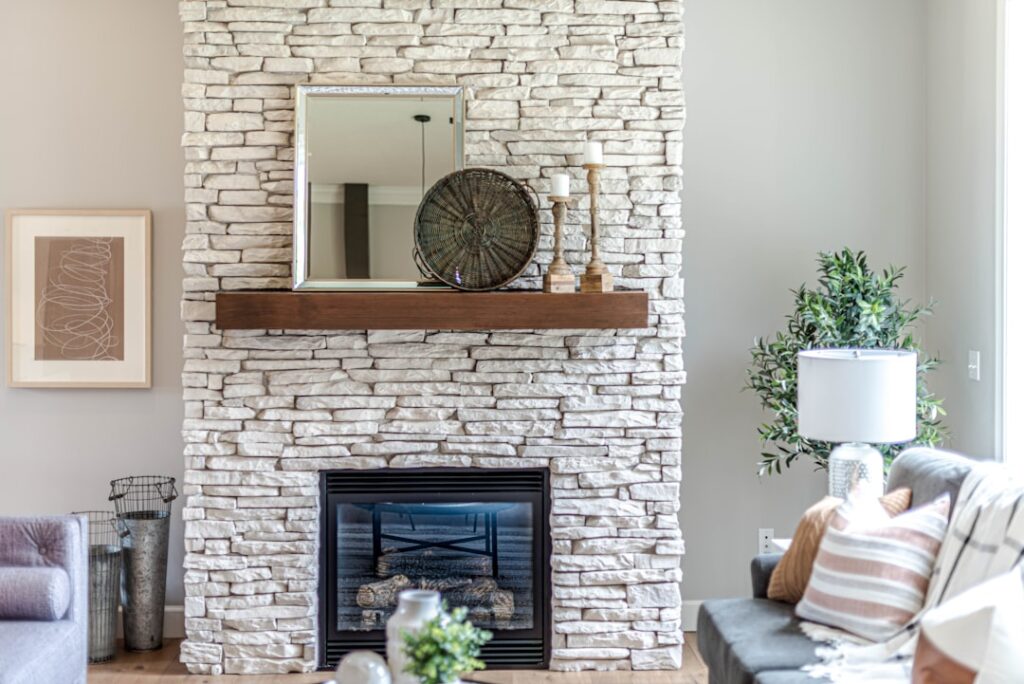
A white brick fireplace looks its best when the shade, the mantel, and the hearth are planned together, and when the area around the firebox opening is built to handle soot. Gray fireplace brick is the lower-maintenance alternative, since it hides smoke staining far better than white while still brightening dark red brick.
Modern White Brick Fireplace Looks
A modern white brick fireplace usually relies on a flat, even finish, a simple slab or floating mantel, and minimal decor. Painting the mortar the same white as the brick makes the surface read as one clean texture. A traditional look keeps the mortar slightly darker so each brick stays visible, which suits farmhouse and cottage rooms.
White Mantle Brick Fireplace Pairings
A white mantel on white brick can disappear, so most designers either contrast the mantel or commit to a fully monochrome surround. The common pairings:
| Brick finish | Mantel | Effect |
|---|---|---|
| Soft white brick | Natural or stained wood beam | Warm, rustic contrast |
| Soft white brick | White painted mantel | Clean, monochrome, modern |
| Light gray brick | White painted mantel | Crisp, coastal contrast |
| Charcoal or dark gray brick | Light oak or white mantel | Bold, defined focal point |
Gray Fireplace Brick: Paint, Limewash, or New Brick
There are three routes to grey fireplace brick. Painting gives the most uniform result. A gray limewash lets some of the original brick tone show through for a softer, aged look. The third route skips paint entirely: thin brick veneer and new face brick come in factory gray and white blends, which never peel and are worth pricing if the existing brick is damaged or the surround is being rebuilt anyway. A pale to mid gray is the most forgiving choice for a fireplace that sees regular fires.
Keeping White Brick White
Soot collects first on the header bricks directly over the firebox opening. Options that keep a white surround clean longer:
- Choose a washable finish such as satin rather than flat on the bricks nearest the opening.
- Keep the damper fully open while a fire burns, and have the chimney inspected yearly so smoke draws up rather than out.
- Clean marks with a soft brush and mild soap and water before reaching for stronger cleaners, and never mix cleaning products.
- Keep a small can of the original paint for touch-ups, since whites shift slightly between batches.
Frequently Asked Questions
What kind of paint do you use on a brick fireplace?
Prime bare brick with a masonry or stain-blocking primer, then topcoat with quality acrylic latex or masonry paint. Any brick that gets truly hot, especially inside the firebox, requires high-temperature fireplace or stove paint, never ordinary wall paint.
What is the best color for a painted brick fireplace?
Soft whites like Alabaster or White Dove brighten most rooms, warm greige hides soot and reads modern, and matte black creates a dramatic, high-end focal point. Limewash offers a softer, mottled look that lets some brick show through.
Can you paint the inside of a fireplace firebox?
Only with high-temperature paint rated for the heat, and even then many people leave the firebox unpainted. Standard wall or masonry paint can scorch and off-gas. Never use ordinary paint inside a working firebox.
How do I prep a brick fireplace before painting?
Vacuum, then scrub the brick with a degreaser or TSP substitute to remove soot and grime, and let it dry fully. Patch cracked mortar, tape off surrounding surfaces, then prime with masonry primer before applying two thin topcoats.
Is painting brick permanent?
Practically, yes. While paint is reversible in theory, fully stripping paint from porous brick is difficult, messy, and rarely complete. Treat painting a brick fireplace as a permanent decision and choose your color carefully before you start.