Few looks feel as crisp and timeless as a black-and-white floor or backsplash, and black and white peel and stick tile lets you achieve that classic style without grout, mortar, or a contractor. From bold checkerboard patterns to delicate Moroccan and geometric motifs, these adhesive-backed tiles bring high-contrast drama to kitchens, bathrooms, and entryways in a single afternoon. For renters and DIYers especially, they are one of the easiest ways to make a big visual statement on a small budget.
This guide covers the popular patterns, the best places to use them, how to install them cleanly, what to budget, and how to keep them looking sharp. With a little planning, you can transform a tired space into a striking one with nothing more than a utility knife and a steady hand.
Why Black and White Never Goes Out of Style
The combination of black and white is a design classic for good reason. The high contrast reads as clean, graphic, and sophisticated, and it works across many styles, from vintage and farmhouse to modern and eclectic. Because the palette is neutral, it pairs with almost any wall color, cabinet finish, or decor, giving you flexibility to change everything else around it.
Peel and stick versions make that timeless look accessible. Instead of the cost and labor of real tile, you get a self-adhesive product that installs quickly, lifts away later in many cases, and delivers the pattern you want at a fraction of the price. It is a low-commitment way to enjoy a high-impact look.
Popular Black and White Patterns
One of the joys of this style is the range of patterns available. Each creates a different mood:
- Checkerboard — the iconic alternating squares, perfect for kitchens and entryways with a retro or farmhouse feel.
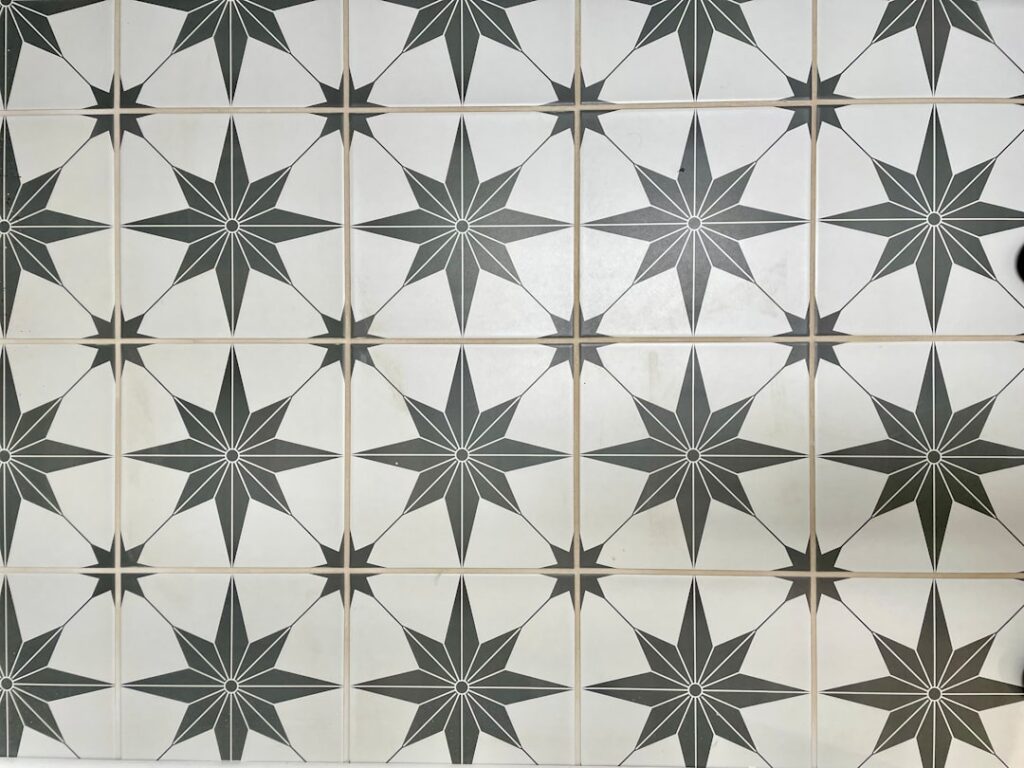
- Moroccan and encaustic-look — intricate, ornate motifs that add old-world character and visual richness.
- Geometric and hexagon — modern shapes and bold lines for a contemporary statement.
- Marble-look — white tiles with black or gray veining for an elegant, upscale appearance.
- Subway and brick patterns — clean rectangular layouts that read classic and understated.
Pattern scale matters: large, bold patterns make a strong statement in roomier spaces, while smaller, busier patterns can overwhelm a tiny room. Order a sample and lay a few tiles out to see how the pattern reads in your space before committing.
Best Places to Use Them
These tiles come in both floor and wall varieties, so check which type you are buying, since floor tiles are thicker and rated for foot traffic. Common applications include:
- Kitchen and bathroom floors — using floor-rated tiles for a durable, eye-catching surface.
- Backsplashes — a quick, grout-free way to add pattern behind a counter or stove.
- Entryways and laundry rooms — high-impact looks in small, hardworking spaces.
- Accent walls and stair risers — creative touches that add personality.
- Rental updates — temporary upgrades that many products allow you to remove later.
Keep wall-rated tiles off floors and away from constant water, and use floor-rated products underfoot. Behind a stove, keep tiles clear of direct high heat or use a heat-resistant barrier, since adhesive can soften near intense heat.
How to Install Peel and Stick Tile
Good preparation is what separates a crisp result from a peeling mess. Work through these steps:
- Clean the surface. Remove all grease, dust, and residue, and let the floor or wall dry completely. Adhesive needs a clean, dry base to grip.
- Make sure it is smooth. The surface should be flat and free of texture; bumps and grout lines telegraph through the tile.
- Plan your layout. Find the center of the room and dry-lay tiles to balance the pattern, so cut tiles end up at the edges rather than the focal point.
- Snap reference lines. Use a chalk line or level to keep rows straight; a crooked start ruins a geometric pattern.
- Peel and press. Remove the backing, align carefully, and press firmly from the center outward to remove air. Alignment is critical for patterns to line up.
- Cut to fit. Use a sharp utility knife and straightedge for edges and cutouts, cutting away from your body and replacing the blade as it dulls.
- Roll or press firmly. Go over the whole surface to ensure full adhesion, paying extra attention to edges and seams.
Take special care aligning the pattern at every seam, because high-contrast designs reveal even small misalignments. Working slowly in good light pays off in a clean, professional-looking result.
What Black and White Peel and Stick Tile Costs
Affordability is a major draw. As general estimates, peel and stick tiles often run about $1 to $5 per square foot for basic vinyl floor tiles, with thicker, higher-quality or designer patterns reaching $5 to $10 or more per square foot. Because you supply the labor, a small room can be redone for a modest total compared with traditional tiling.
To budget, measure your space in square feet, then add roughly 10 to 15 percent for cuts, pattern matching, and mistakes. Buying a little extra from the same lot also gives you spares for future repairs, since dye lots can vary between orders.
Cleaning, Durability, and Removal
These tiles are easy to maintain. Sweep or vacuum regularly to keep grit from scratching the surface, and damp-mop or wipe with mild soapy water, avoiding harsh chemicals and abrasive scrubbers that can dull the finish. Wipe up spills promptly, and use mats in high-traffic spots to extend the life of floor tiles.
Keep your expectations realistic on durability. Quality floor-rated peel and stick tiles hold up well to normal household traffic, but they will not last as long as ceramic or porcelain and can be damaged by heavy or sharp impacts. When it is time to remove them, warm the adhesive with a hair dryer and peel slowly from a corner; test a hidden area first, especially on rental surfaces, and expect some adhesive cleanup.
Is It the Right Choice for You?
Black and white peel and stick tile is ideal for renters, budget-conscious homeowners, and DIYers who want a bold, classic look without a major renovation. If you want maximum durability and resale value, traditional tile is the better long-term investment, but for a fast, affordable, and stylish refresh, these tiles are hard to beat.
Order a sample, test how the pattern and adhesive perform on your surface, and plan your layout before peeling a single backing. With careful preparation and patient alignment, black and white peel and stick tile can give any room a crisp, high-contrast makeover that looks far more expensive than it was.
Prefer to explore on your own?
See how new flooring looks in your actual room in seconds — free, no signup.
Try the free Floor Studio →