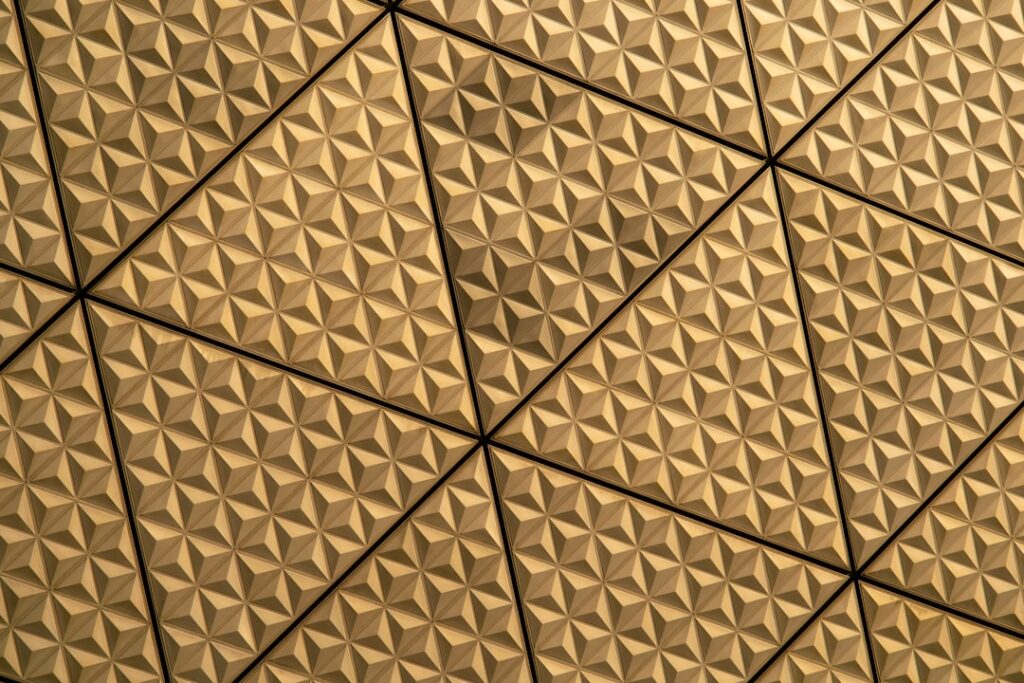
Metallics went from tacky to tasteful somewhere in the last decade, and nothing captures that shift faster on a budget than gold peel and stick tile. A shimmering brass or champagne backsplash used to require expensive glass mosaics and a pro installer. Now you can peel a liner, press a sheet to the wall, and add warm metallic glamour to a kitchen or bar in a single afternoon.
Part of our Tile & Grout guide — explore the full guide →
Before you order, it helps to understand the different gold tones on the market, where the material genuinely works, what it costs, and how to keep that shine from dulling or lifting.
- What Gold Peel and Stick Tile Really Is
- Gold Tones and What They Pair With
- Where Gold Peel and Stick Tile Works
- What It Costs
- Installation Step by Step
- Keeping the Shine
- Durability and Common Problems
- Design Ideas That Look Expensive
- Removing Gold Peel and Stick Tile
- Gold Peel and Stick Versus Real Metallic Tile
- Buying Tips Before You Order
- Is It the Right Choice
What Gold Peel and Stick Tile Really Is
Most products are thin vinyl or gel-based tiles, roughly 1/16 to 1/8 inch thick, with a metallic printed or foil surface and a pressure-sensitive adhesive backing. Some use small glass or acrylic mosaic pieces with a genuine reflective coating mounted on adhesive mesh, which looks more like real tile and costs more.
The gold effect comes in two flavors. Foil-backed and mirror-finish tiles are highly reflective and read as bold glamour. Brushed and matte-gold tiles have a subtler, more expensive-looking sheen that ages better and hides fingerprints. Know which look you want before buying, because the reflective versions are far less forgiving of an uneven wall.
Gold Tones and What They Pair With
Gold is a family of colors, and the undertone dictates the whole vibe.
- Warm brass and antique gold: rich and traditional, pairs with wood cabinetry and warm whites.
- Champagne and rose gold: soft, romantic, and flattering in bathrooms and vanities.
- Bright polished gold: high glamour, best used as a small accent rather than a full wall.
- Matte and brushed gold: modern and understated, the safest choice for resale.
Match your gold to the room’s existing metal finishes. Gold tile with brass faucets and cabinet pulls looks intentional; gold tile fighting chrome and nickel fixtures looks like a mistake.
Where Gold Peel and Stick Tile Works
This is an accent material, and treating it that way is the difference between chic and gaudy. The strongest applications are dry, vertical, and limited in scope: a kitchen backsplash strip, a bar or beverage station wall, a bathroom vanity backsplash, or a laundry room feature panel.
Full walls of bright gold overwhelm a room fast. A single backsplash band or a framed feature section gives you the glamour without the fatigue. Avoid floors entirely with metallic peel and stick, since the reflective surface scratches and the seams cannot handle foot traffic or standing water.
What It Costs
Pricing tracks with how convincing the metallic effect is.
- Printed vinyl gold tiles: $4 to $8 per square foot.
- Foil and mirror-finish tiles: $6 to $12 per square foot.
- Glass or acrylic gold mosaic on mesh: $10 to $20 per square foot.
- Tools: $30 to $50 for a utility knife, straightedge, J-roller, and rubbing alcohol.
A typical 25-square-foot backsplash runs $120 to $300 in materials. Real gold-tone glass mosaic professionally installed would run $700 to $1,500 for the same area, which is exactly why peel and stick has taken off for accent walls.
Installation Step by Step
Reflective tiles magnify every flaw in your prep and every wobble in your alignment, so patience pays off more here than with matte materials.
- Clean the surface with degreaser, then wipe with rubbing alcohol and let it dry completely.
- Snap a level pencil line as your baseline. On a reflective tile, a crooked start is glaringly obvious.
- Peel the backing, align the first tile to your line, and press from the center outward.
- Run a J-roller firmly over every tile to lock the adhesive. Skipping this is the top cause of lifting.
- Cut edges with a fresh blade against a straightedge. Score the front lightly to avoid tearing the foil.
- Seal edges near sinks or counters with a thin bead of clear silicone.
Expect two to three hours for an average backsplash. Take your time on the first row, because everything above it follows that line.
Keeping the Shine
Metallic finishes are more delicate than printed stone looks. Clean with a soft microfiber cloth and a mild soap solution only. Skip abrasive pads, ammonia glass cleaners, and anything gritty, all of which dull or scratch the reflective coating.
Keep gold peel and stick tile away from direct heat. Position it at least 4 inches from a cooktop, and never behind a gas burner where real tile or a steel shield belongs. Heat can warp the vinyl and loosen the adhesive. In direct sunlight, cheaper foils can tarnish or fade over a few years, so brushed finishes hold up better in bright rooms.
Durability and Common Problems
On a dry accent wall with good prep, quality gold tiles hold up three to six years before you might notice edge lift or surface dulling. Corner lifting is the usual complaint, and it nearly always traces to poor surface cleaning or a skipped roller pass. A dab of clear adhesive under the corner and a few weighted hours fixes it.
The other issue is disappointment with reflectivity. Buyers expecting true mirror glass sometimes find printed vinyl looks flatter in person. If a genuine reflective finish matters to you, spend up for the glass or acrylic mosaic version rather than the cheapest printed sheets.
Design Ideas That Look Expensive
Restraint is what makes metallic tile read as designer rather than gimmick. Rather than covering a whole kitchen wall, run a single band of gold behind open shelving or beneath upper cabinets so the light catches it as an accent. In a bar or coffee nook, a framed rectangle of gold mosaic behind the bottles turns an ordinary corner into a focal point.
Mixing gold with a matte material dials up the sophistication. Pair brushed gold tiles with white subway tile, or set a thin gold pencil-strip border around a field of neutral tile for a jewelry-like effect. In bathrooms, champagne and rose gold behind a floating vanity flatter the lighting and photograph beautifully, which matters for anyone staging a space.
Removing Gold Peel and Stick Tile
Because it lifts off, this material is ideal for renters and for anyone who likes to redecorate often. Warm each tile with a hair dryer for 20 to 30 seconds to soften the adhesive, then peel slowly from a corner at a shallow angle. Pulling straight out or rushing tears the foil and leaves glue behind.
Residual adhesive comes off with a citrus-based remover or rubbing alcohol and a plastic scraper. Test any solvent on a hidden patch first if the wall is painted. The full removal on a small backsplash usually takes well under an hour and leaves the wall ready to repaint.
Gold Peel and Stick Versus Real Metallic Tile
Be clear about your goal before you choose. If you want a quick, reversible refresh for a rental, a bar cart wall, or a seasonal update, gold peel and stick tile is the obvious pick. It costs little, installs in an afternoon, and comes off cleanly later. That flexibility is its whole reason for being.
If this is a permanent kitchen you plan to keep for a decade and you want a genuine glass or metal mosaic that catches light with real depth, invest in true tile set in thinset. The peel and stick version trades some longevity and optical richness for speed, affordability, and the freedom to change your mind. Neither is wrong; they simply serve different jobs.
Buying Tips Before You Order
A little scrutiny at the ordering stage prevents disappointment on the wall.
- Order one sample sheet first and view it in your actual room lighting. Gold shifts hard between warm and cool bulbs.
- Check the thickness. Sturdier gel and mosaic-style tiles feel more like real tile than paper-thin printed vinyl.
- Read reviews for fade complaints if your wall gets direct sun, and lean toward brushed finishes there.
- Buy 10 to 15 percent extra for cutting mistakes and future repairs, since dye lots vary between orders.
- Confirm the product is rated for your surface. Not every peel and stick tile bonds well to textured or glossy walls.
Those five checks cost you a few dollars and a couple of days of patience, and they save you from ordering a full backsplash of tile that turns out wrong in your space.
Is It the Right Choice
Gold peel and stick tile is a fast, affordable, reversible way to add warm metallic drama to a dry accent surface. Keep it to backsplashes and feature panels, match the tone to your existing fixtures, prep the wall properly, and clean it gently. Follow those rules and you get a high-glamour look for a fraction of custom mosaic cost, installed before dinner.
Prefer to explore on your own?
See how new flooring looks in your actual room in seconds — free, no signup.
Try the free Floor Studio →