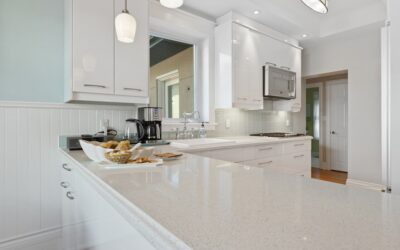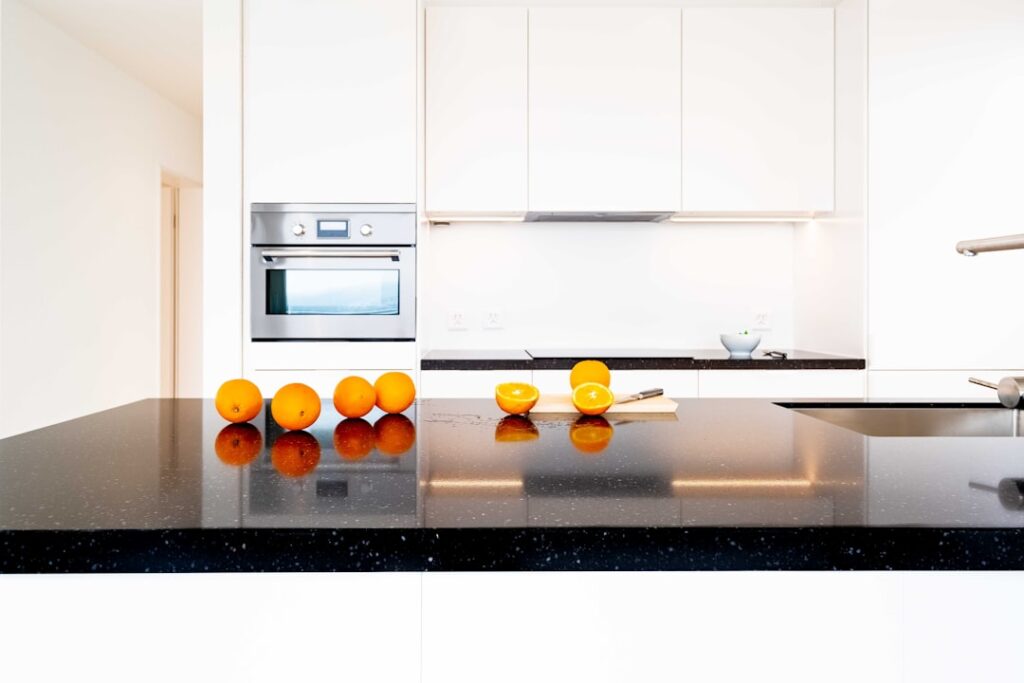
For years, the dramatic look of black marble shot through with white — think Nero Marquina — belonged to people willing to baby a soft, etch-prone stone. Engineered quartz changed that math, and today black quartz countertops with white veining are one of the fastest-growing requests I see in kitchen design, because they deliver the drama of dark marble with the durability of a nonporous engineered surface. But the category is wide: some patterns are convincing marble mimics, others are graphic and obviously manufactured, and the difference between a stunning kitchen and an overwhelming one usually comes down to vein scale, finish, and restraint in the rest of the room. Here is how I walk clients through the choice.
Part of our Countertops guide — explore the full guide →
Why This Look Took Over
Two currents converged. First, the decade-long reign of white-and-gray marble looks (Calacatta everything) left designers hungry for contrast, and a black slab with bold white movement is the photographic negative of the Calacatta kitchen — familiar drama, fresh direction. Second, quartz manufacturing caught up. Early black quartz was flat and speckled; modern veining technology lets manufacturers lay directional, full-body veins through a dark base, so the pattern flows across the slab like sedimentary stone rather than repeating like wallpaper. The result reads high-end even to people who cannot name the material.
The practical case seals it. Real black marble etches — every lemon slice and vinegar splash leaves a dull ghost on the polished surface — and dark stones show etching more cruelly than light ones. Quartz is roughly 90 percent quartz aggregate in resin: nonporous, unsealed forever, unfazed by wine, citrus, and coffee. For a busy kitchen, black veined quartz is the version of this look that survives real life.
The Main Pattern Families
Manufacturers name their patterns, and knowing the reference points speeds up your slab-yard visits enormously. The recurring styles across major brands:
- Marquina-inspired: true black base with crisp, irregular white veins — the Nero Marquina homage. Look at Silestone Eternal Marquina, Caesarstone 5100 Vanilla Noir, and MSI Marquina Midnight. Veins are moderate width and high contrast; this is the most classic take.
- Thunderstorm / lightning styles: thin, electric white veins branching across a deep black field, more dramatic and more contemporary. Cambria Blackbrook and similar patterns live here.
- Soft-vein charcoal: off-black or charcoal base with gray-white veils rather than crisp lines — quieter, forgiving of crumbs and dust, good for people who love the idea but fear the boldness. Think smoky patterns like Caesarstone Piatra Grey adjacent colorways.
- Gold-accent black: black base with white veining warmed by threads of gold or bronze — pairs beautifully with brass hardware. Cambria Golden Dragon and its many imitators.
Brand matters less than pattern scale, but it is worth knowing the tiers: Cambria, Caesarstone, and Silestone occupy the premium bracket with the most sophisticated veining; MSI Q, LX Hausys Viatera, Wilsonart Quartz, and the big-box house lines deliver the look for meaningfully less. On a dark dramatic pattern the budget brands close much of the visual gap — flaws hide better in black than in white marble mimics.
Finish: The Decision People Get Wrong
On black quartz, finish is not a styling detail; it is a maintenance lifestyle choice.
Polished is the showroom default and the highest-contrast presentation — veins snap, the black goes deep and glassy. It is also merciless. Fingerprints, water spots, smudges, and fine micro-scratches all read on a polished black surface exactly the way they do on a black car. Families with kids touching everything should hear this clearly before they buy.
Honed / matte mutes the contrast slightly and hides fingerprints far better, but bare honed black shows hand oils as darker patches until you wipe them. Manufacturers have largely solved this with modern suede and velvet-touch textures.
Suede / leathered-look textures — Silestone Suede, Caesarstone Rough or Honed variants, MSI’s brushed finishes — are, in my experience, the sweet spot for black: soft sheen, dramatically better smudge behavior, and a tactile quality that makes the counter feel expensive. Expect a modest upcharge, often $5 to $15 per square foot over polished in the same pattern.
Designing Around a Bold Slab
A high-contrast black-and-white slab is a statement, and statements need quiet neighbors. The pairings that consistently work:
- White or cream cabinets — the classic inversion; the counter becomes the room’s anchor. Warm whites soften the graphic edge better than stark ones.
- Natural wood — white oak or walnut cabinetry against black veined quartz is the current designer favorite, and for good reason: wood grain and stone veining are both organic patterns and they de-escalate each other.
- Black or charcoal cabinets — monolithic and moody; let the veining be the only pattern in the room and light it well.
- Hardware and fixtures: brass and champagne bronze warm the palette; matte black disappears into it; polished nickel keeps it crisp. All work — mixed metals against this counter get busy fast, so pick one and commit.
Two placement notes from jobs I have seen succeed and fail. First, vein scale versus room scale: a huge lightning-vein pattern on a 4-foot bathroom vanity looks like a random crop of something larger; small rooms want smaller, tighter veining or a soft-veil pattern. Second, the waterfall island: black veined quartz is the single best material for a waterfall edge, because the mitered corner shows off vein continuity — but only if your fabricator vein-matches the miter. Ask to see the layout before cutting; a waterfall with veins that dead-end at the corner announces its own shortcut forever.
Cost, Honestly
| Tier | Installed $ / sq ft | Typical 45 sq ft Kitchen |
|---|---|---|
| Big-box / MSI Q / house brands | $55–$80 | $2,500–$3,600 |
| Mid (Silestone, Caesarstone core) | $75–$110 | $3,400–$5,000 |
| Premium veined (Cambria, designer lines) | $100–$150 | $4,500–$6,800 |
| Real Nero Marquina marble, for reference | $80–$150+ | Plus sealing and etch anxiety, forever |
Add-ons that move the number: mitered waterfall edges ($400 to $1,200 per side), full-height quartz backsplashes (a spectacular pairing with veined black, at $30 to $60 per square foot more), and thicker 3 cm versus 2 cm slabs in markets where 2 cm is standard.
Living With Black Veined Quartz
Daily care is the easy part: soft cloth, warm water, a drop of dish soap. No sealing, ever. Skip abrasive powders and magic erasers on polished finishes — they leave micro-dull patches — and keep acetone, oven cleaner, and paint strippers away from the resin. The two real vulnerabilities of all quartz apply doubly to black: heat, because resin scorch marks show as pale rings on a dark surface and cannot be polished out (trivets under everything hot, no exceptions — quartz tolerates roughly 300°F briefly, and a 400-degree pan bottom exceeds it), and impact on edges, where a chip exposes lighter material below and flags itself against the black. An eased or small-radius edge profile chips less than a crisp square arris.
One quirk worth knowing: prolonged direct sunlight can slowly shift resin color, and on black slabs UV fade shows as subtle graying. Most brands exclude outdoor use and UV exposure from warranty — black veined quartz belongs indoors, and a counter that catches full southern sun through a big window for six hours a day is worth a conversation with the manufacturer first.
Buying It Right
See the actual slab, not the 4-inch sample — veined patterns vary across the sheet, and the sample chip cannot tell you where the big vein lands on your island. Good fabricators do a digital layout over slab photos so you approve vein placement before cutting; insist on it for islands and waterfalls. Ask whether the veining is full-body (running through the slab thickness, visible at exposed edges) or surface-printed — budget lines sometimes print, and a white vein that vanishes at the edge profile cheapens the whole effect. Finally, order a bit generously: matching a replacement slab from a different production batch is noticeably harder with bold veining than with plain colors.
Done with a little discipline — suede finish, vein-matched miters, quiet cabinetry, trivets in the drawer — black quartz countertops with white veining give you the rare combination of maximum visual drama and minimum daily worry. It is the black-tie look that does the dishes, and after years of watching trends cycle through kitchens, I would bet on this one having a long run.