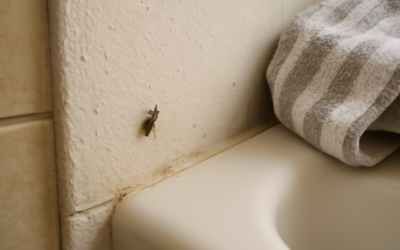
Spotting a swarm of tiny, pale specks crawling across your wall is unsettling, but the good news is reassuring. Booklice on walls are almost always harmless; they do not bite, do not spread disease, and do not damage your home’s structure. What they are is a clear signal that your home has too much humidity. These minuscule insects, properly called psocids, thrive in damp conditions and feed on the microscopic mold and mildew that grows in moist environments. Solve the moisture problem, and the booklice disappear.
- What Are Booklice?
- Why They Appear on Walls
- Are They Dangerous?
- The Real Solution: Reduce Humidity
- Cleaning and Drying the Affected Areas
- Protecting Books, Food, and Stored Items
- Do You Need an Exterminator?
- How to Tell Booklice From Other Pests
- Seasonal Patterns to Expect
- Keeping Booklice Away for Good
What Are Booklice?
Despite the name, booklice are not lice and have nothing to do with the parasitic kind that live on people. They are tiny insects, usually under one-sixteenth of an inch long, ranging from translucent white to light gray or brown. Their name comes from a fondness for old books, where they feed on the mold growing on damp paper and the starchy paste in bindings. You will also find them on walls, windowsills, in pantries, around houseplants, and anywhere humidity is high.
Because they are so small and pale, people often mistake them for dust mites, baby cockroaches, or bed bugs. The key difference is behavior and habitat: booklice cluster in damp areas and move in slow, scattered groups rather than biting or feeding on blood.
Why They Appear on Walls
Booklice show up on walls for one reason: there is something there for them to eat, namely mold and mildew thriving in moisture. Walls become hospitable when humidity climbs above roughly 50 to 60 percent, especially in newer construction where plaster and paint are still curing, or in rooms with poor ventilation.
- Recently built or renovated homes with damp building materials.
- Bathrooms, basements, and kitchens with high humidity.
- Walls behind furniture where air does not circulate.
- Condensation around windows and exterior walls.
- Areas near leaks or water damage.
Are They Dangerous?
Let us be clear and honest: booklice are a nuisance, not a threat. They do not bite humans or pets, do not carry disease, and will not chew through your walls or wiring. In large numbers they can contaminate stored food and damage paper goods over time, and their presence indicates mold that may bother allergy sufferers. But the insects themselves are harmless. The real concern they point to is excess moisture and the mold that comes with it.
The Real Solution: Reduce Humidity
Since booklice cannot survive in dry conditions, controlling moisture is both the cure and the prevention. This is far more effective than chasing individual bugs with sprays, which only treats the symptom. Aim to bring indoor humidity below 50 percent, and the booklice will die off as their food source dries up.
- Run a dehumidifier in damp rooms, especially basements and bathrooms.
- Increase ventilation by opening windows, running exhaust fans, and using ceiling fans.
- Fix any leaks, drips, or sources of standing water promptly.
- Use your air conditioner, which also pulls moisture from the air.
- Move furniture slightly away from walls to improve air circulation.
Cleaning and Drying the Affected Areas
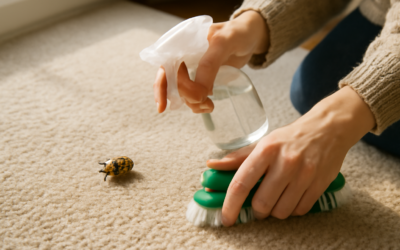
Once you are tackling the humidity, clean the walls and surfaces where booklice gathered. Wipe them down to remove the insects and the mold they feed on, using a household cleaner or a diluted vinegar solution on suitable surfaces. For any visible mold, address it properly with an appropriate mold cleaner and good ventilation. Vacuum up clusters of booklice with a hose attachment and empty the canister outside. Drying the area thoroughly afterward is essential, because lingering dampness invites them right back.
Protecting Books, Food, and Stored Items
If booklice have reached your pantry or bookshelves, take a few extra steps. Discard any food that appears infested and store dry goods in airtight containers going forward. For books and papers, move them to a dry, well-ventilated spot, and sealing valuable items in a bag in the freezer for a few days can kill any hidden booklice. Keeping these areas dry is the long-term fix here too.
Do You Need an Exterminator?
In the vast majority of cases, no. Booklice respond so reliably to lower humidity that chemical treatment is rarely necessary and rarely solves the underlying problem on its own. If you have controlled the moisture, cleaned the affected areas, and still see large persistent populations, or if you suspect a significant hidden mold or leak issue behind the walls, then calling a pest control or moisture-remediation professional makes sense to find the source.
How to Tell Booklice From Other Pests
Misidentifying these insects leads people to overreact, so it pays to know what you are looking at. Booklice are extremely small, soft-bodied, and pale, and they cluster in damp spots, moving slowly in scattered groups. Compare that with the pests they are often confused for, and the differences become clear.
- Bed bugs are larger, reddish-brown, and feed on blood; they hide near beds, not on damp walls.
- Dust mites are microscopic and invisible to the naked eye, so if you can see it crawling, it is not a dust mite.
- Baby cockroaches are darker, faster, and have a more defined body shape.
- Termites are larger and target wood structurally, not surface mold.
If the bugs are tiny, pale, slow, and concentrated where it is humid, you are almost certainly dealing with harmless booklice rather than anything that bites or destroys your home.
Seasonal Patterns to Expect
Booklice populations rise and fall with humidity, so timing tells you a lot. They are most active in warm, humid weather, which is why outbreaks peak in summer and during rainy stretches. In a new home, you may see them heavily in the first year or two as construction moisture in plaster, paint, and lumber slowly dries out, then watch them fade as the building stabilizes. Spotting more of them after a humid spell or a plumbing leak is a useful warning sign that moisture is climbing somewhere it should not be. Treat that signal as a prompt to check for dampness before the population grows.
Keeping Booklice Away for Good
Prevention is simply ongoing moisture management. Keep humidity in check year-round, ventilate damp rooms, fix leaks quickly, and stay alert in new or recently renovated spaces where building materials are still drying out. Booklice are one of the easier household pests to defeat precisely because their fate is tied entirely to moisture. Keep your home dry, and these tiny wall-crawlers will have nowhere to live and nothing to eat.