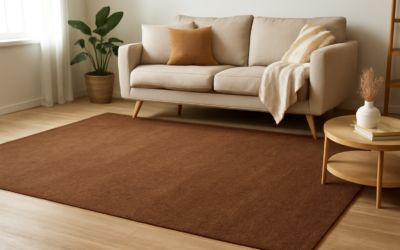
A well-chosen brown rug for living room spaces does more than warm up a cold floor. It anchors your furniture, hides the dirt and pet hair that lighter rugs broadcast, and gives the entire room a grounded, lived-in feel. Brown is one of the most forgiving colors you can put underfoot, which is exactly why it stays in style season after season.
After years of helping homeowners choose flooring and rugs, I can tell you the difference between a rug that looks intentional and one that looks like an afterthought usually comes down to three things: the right shade, the right size, and the right material for how you actually live. Let’s walk through each one.
Why Brown Works So Well in a Living Room
Brown sits in the neutral family, but unlike gray or beige it carries genuine warmth. That warmth reads as cozy in the evening and inviting during the day. It pairs cleanly with almost any wall color, from crisp white to deep navy to sage green, so you are rarely boxed into repainting later.
The practical upside is just as real. A medium-to-dark brown disguises crumbs, coffee splashes, muddy paw prints, and the inevitable traffic lane that forms between your couch and the kitchen. Households with kids, dogs, or both tend to be much happier with brown than with cream or pale blue, which show every speck. If your living room sees heavy daily use, brown buys you weeks between deep cleanings.
Choosing the Right Shade of Brown
Brown is not a single color. The shade you pick changes the mood of the whole room, so match it to your existing palette rather than guessing.
- Light tan and camel: Airy and casual. Great for small rooms or north-facing spaces that need to feel brighter. Shows dirt a bit more than darker tones.
- Medium chestnut and walnut: The all-purpose choice. Hides wear, works with both warm and cool decor, and photographs well.
- Dark chocolate and espresso: Dramatic and grounding. Best in larger or well-lit rooms, since a dark rug can shrink a small, dim space.
- Rust and cognac: Browns with a red or orange undertone. They add energy and pair beautifully with leather furniture and warm wood floors.
Bring home a swatch or order a sample before committing. Lighting shifts brown dramatically. A rug that looks rich walnut in the store can read flat and muddy under your warm LED bulbs at home.
Getting the Size Right
Sizing is where most people go wrong. A rug that is too small makes furniture look like it is floating, and it is the single most common styling mistake I see.
Follow one of three layouts. In the most polished arrangement, all furniture legs sit on the rug, which usually calls for a 9×12 or larger in a standard living room. The middle-ground approach puts just the front legs of the sofa and chairs on the rug, tying the seating group together while saving money; an 8×10 covers most rooms here. The budget option floats a smaller rug under the coffee table only, but aim for at least a 5×8 so it does not look like a postage stamp.
As a rule, leave 10 to 18 inches of bare floor between the rug edge and the walls. Measure your seating area, then size up rather than down. A rug an inch too big looks generous; one a foot too small looks like a mistake.
Materials and Durability
The fiber matters as much as the color. Match it to your traffic and your tolerance for upkeep.
- Wool: The gold standard. Naturally stain-resistant, resilient underfoot, and it holds its color for decades. Expect to pay more, often $5 to $15 per square foot.
- Polypropylene (olefin): Budget-friendly, fade-resistant, and easy to clean with soap and water. Ideal for families and a great value at roughly $1 to $4 per square foot.
- Jute and sisal: These natural fibers come in beautiful warm browns and add texture, but they are rough underfoot and hard to clean if spills are common.
- Polyester: Soft and inexpensive, with rich color saturation, though it flattens faster than wool in high-traffic zones.
Pile height is a comfort-versus-maintenance tradeoff. Low-pile and flatweave rugs vacuum easily and let chairs slide; plush high-pile rugs feel luxurious but trap dust and crumbs. For a family room, a low-to-medium pile in a polypropylene or wool blend is the sweet spot.
Styling a Brown Rug
Once the rug is down, a few choices make it look designed rather than dropped. Layer in contrast so the brown does not blend into a wood floor and disappear. A jute or natural-fiber rug underneath a smaller patterned brown rug adds depth and dimension.
Pull the brown into your accessories. Throw pillows, a knit blanket, or a wood-toned coffee table echo the rug and make the palette feel cohesive. To keep the room from going flat, add one or two cooler accents, such as a blue pillow, a green plant, or brass lighting, so the warm browns have something to play against.
Texture is your friend with a neutral color. A rug with subtle pattern, a chunky weave, or tonal variation reads far more expensive than a flat, single-tone brown. If your furniture is busy or patterned, choose a quieter rug; if your sofa is plain, a textured or patterned brown rug becomes the star.
Care and Maintenance
Brown forgives a lot, but a little maintenance keeps it looking sharp. Vacuum weekly, and more often in traffic lanes, to keep grit from grinding into the fibers and dulling them. Always use a quality rug pad. It prevents slipping, cushions your step, extends the rug’s life by reducing friction, and protects the floor underneath.
Treat spills immediately by blotting, never rubbing, with a clean cloth. For synthetic rugs, mild dish soap and water handle most messes. For wool, stick to wool-safe cleaners and avoid harsh chemicals that strip the natural oils. Rotate the rug 180 degrees every few months so it wears and fades evenly, especially if one side gets direct sunlight.
Is a Brown Rug Right for You?
If you want a floor covering that hides everyday mess, flatters nearly any decor, and stays in style longer than trend-driven colors, a brown rug is one of the safest investments you can make for a living room. Choose a shade that complements your walls and furniture, size it generously, and pick a fiber that matches your household. Get those three right, and the rug will quietly do its job for years, grounding the space and shrugging off the daily wear that comes with a room people actually live in.