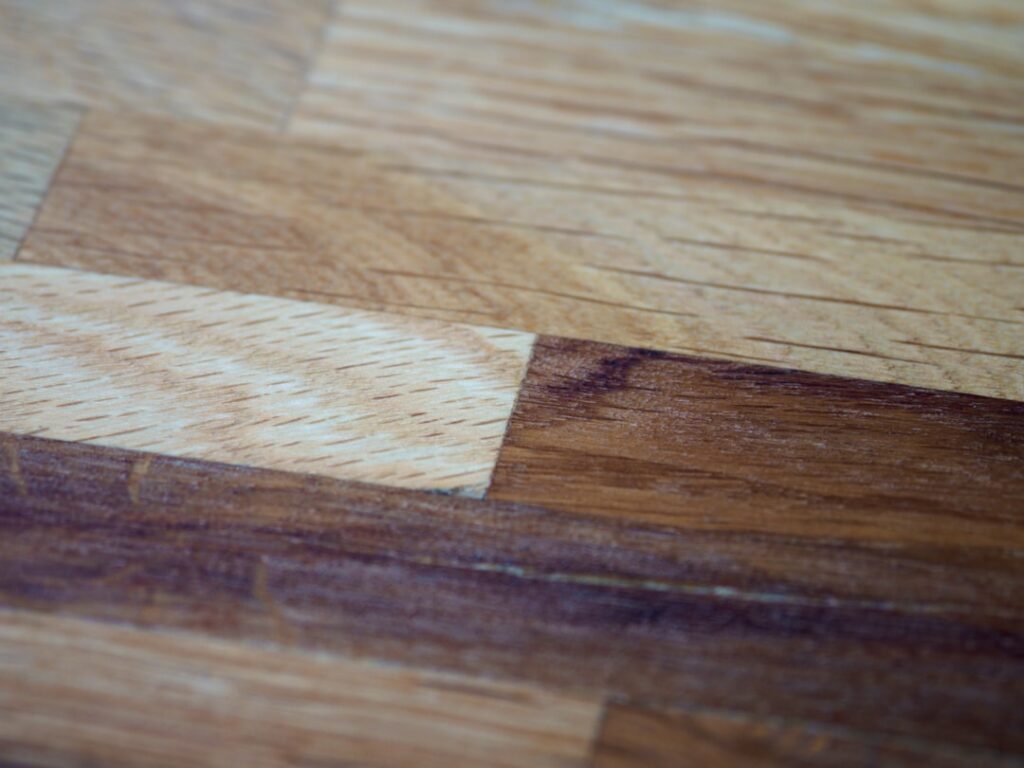
I have installed butcher block in dream kitchens and torn out butcher block that a sink leak turned into black-ringed regret — usually the same product, separated only by how honestly the buyer understood the deal they were making. So here is the straight version of butcher block countertops pros and cons, from someone who both installs the slabs and gets the repair calls. Wood counters are neither the maintenance nightmare their critics claim nor the effortless farmhouse fantasy the photos suggest. They are a specific trade: the lowest-cost warm-material counter you can buy, infinitely repairable, in exchange for real rules about water and a small ongoing maintenance habit.
Part of our Countertops guide — explore the full guide →
The Pros
1. Price — the cheapest “premium look” counter there is
Prefab butcher block slabs run $150–$400 for an 8-foot birch, oak, or maple blank and $400–$900 in walnut. Installed by a pro you are at $40–$100 per sq ft for common species — but this is also the single most DIY-friendly counter material in existence, cutting with ordinary carpentry tools. A handy homeowner can counter an entire kitchen for under $1,000; nothing else with this much visual warmth comes close. Granite, quartz, and solid surface all start around $50–$60 per sq ft installed and go up fast.
2. Infinitely repairable — the superpower
Scratch quartz or chip granite and you are negotiating with a fabricator. Scratch, dent, stain, or lightly scorch butcher block and the fix is sandpaper and oil, done in minutes for pennies. Every 5–10 years you can re-sand the entire top to literally new condition with a $40 rental orbital sander. No other counter material resets to zero like this.
3. Warmth, acoustics, and feel
Wood is warm to the touch, quiet under dishes (no granite clatter), and kind to dropped glassware and knife edges. Design-wise it pairs with everything and is the standard prescription for breaking up an all-stone kitchen — the wood island in a quartz kitchen is half my countertop work these days.
4. You can actually cut on it
Under a food-safe oil finish, the counter is a giant cutting board. Knife marks blend into patina and sand out. (Caveat below about film finishes.)
5. Genuinely sanitary when maintained
The old fear that wood harbors bacteria has been repeatedly contradicted by research — wood’s capillary structure actually pulls surface bacteria down away from food contact, and maple boards test comparably to or better than plastic. Standard practice still applies: hot soapy wipe-downs, and keep raw-meat work on a washable board.
The Cons
1. Water is a genuine enemy
This is the big one, and it deserves plain language: nearly every failed butcher block I have seen died at the sink. Standing water, an unsealed sink cutout, a slow faucet leak, or a chronically wet dish-drying zone leads to black staining, raised grain, cupping, and eventually joint failure. The material demands wiped-up spills, a maintained silicone bead, and obsessive sealing of the cutout’s raw edges. If your household will not do that — rentals, teenagers on dish duty, set-and-forget personalities — put stone at the sink run and wood elsewhere.
2. Ongoing maintenance is real (if modest)
Oiled tops want oiling monthly at first, then every 2–3 months — a 10-minute job, but forever. Film-finished (polyurethane) tops drop that burden to near zero but surrender cut-on-ability and easy spot repairs. There is no version with both zero maintenance and full wood function; pick your compromise.
3. Dents, scratches, and stains happen constantly
Wood is soft compared with stone — Janka 950–1,450 for common species versus effectively scratch-proof quartz. Cast-iron pots, dropped cans, dragged appliances, wine rings, and beet juice all leave marks. Yes, everything sands out, but between sandings a working wood counter shows its life. Buyers who want permanent showroom perfection are the wrong customer for this material.
4. Heat tolerance is poor
A hot pan scorches wood, period — figure anything over about 350°F leaves a mark, and a 450°F skillet brands it instantly. Trivet discipline is mandatory, same as quartz but with lower stakes since scorches sand out.
5. Wood moves
Slabs expand and contract seasonally across their width — up to 1/8 inch or more on a 25-inch top between humid summer and furnace-dry winter. Installation must use slotted or oversized screw holes so the top can float; hard-fastened tops crack. Big overhangs need proper support, and very dry or very humid houses stress end-grain tops especially. This is an installation-knowledge con more than an ownership one, but bad installs are common in DIY-land.
6. Sink and dishwasher zones need engineering
Undermount sinks in wood are possible and popular but unforgiving — the exposed cutout needs waterproofing (I use epoxy or multiple finish coats) and vigilant caulk. Drop-in sinks are far safer. The dishwasher steam vent area wants a film finish or a deflector. None of this is hard; all of it is skippable, and skipping it is how horror stories start.
Cost Comparison Snapshot
| Material | Installed cost/sq ft | Maintenance | Repairability |
|---|---|---|---|
| Butcher block (birch/oak/maple) | $40–$100 | Oil quarterly or film finish | Excellent — sand and refinish |
| Butcher block (walnut/teak) | $75–$180 | Same | Excellent |
| Laminate | $20–$45 | None | Poor |
| Quartz | $55–$125 | None | Fair |
| Granite | $45–$120 | Seal every 1–3 yrs | Good |
Species and Grain Quick-Pick
The pros-and-cons balance shifts with what you buy. Hard maple is the benchmark working surface — hardest common choice, food-industry standard, mid-priced. Birch delivers 85 percent of maple’s performance at the lowest price, which is why it dominates big-box shelves. Oak brings bold grain on a budget; white oak resists water better than red. Walnut and cherry are the luxury tier — softer, pricier, and beautiful enough that their dents read as character. On construction: edge grain is the default for counters; end grain is the premium chopping surface that drinks more oil and money; face grain is the furniture look you should not chop on. If you just want the shortest answer: edge-grain maple with a hardwax-oil finish is the combination I would put in my own rental — and edge-grain walnut, oiled, is what is in my kitchen.
Who Should Buy Butcher Block — and Who Shouldn’t
- Great fit: cooks who want a working surface and like patina; budget remodels that need warmth without laminate; islands, baking centers, bars, coffee stations, laundry rooms, desks; DIYers who want pro-looking results with carpentry tools.
- Poor fit: rental properties and flip houses (deferred maintenance is guaranteed); households that want zero upkeep; the main sink run for non-wipers; outdoor kitchens; anyone who will grieve the first dent.
- The hybrid answer most of my clients land on: quartz or granite on the sink and stove runs, butcher block on the island. You get 90 percent of the warmth with 10 percent of the risk.
Stacking the Deck: How Owners Win With Wood
- Seal every raw edge before install — especially sink cutouts, underside included. Unbalanced finishing causes cupping.
- Choose the finish for the location: penetrating oil where you cook and cut; hardwax-oil or waterborne poly near water.
- Keep a $10 bottle of mineral oil under the sink and tie oiling to something monthly, like the first grocery run.
- Maintain the sink caulk yearly. Ninety seconds of inspection prevents ninety percent of failures.
- When the top looks tired at year seven, spend the sanding weekend. It resets the clock entirely — and no stone counter can say that.
Verdict from the field: butcher block is the best value in warm countertops and the only surface you can renew forever, and it fully deserves its popularity — among owners who accept that wood is an organic material with house rules. Respect water, feed it oil, and let it earn its patina, and a $600 slab will outlast surfaces costing five times as much. Demand stone-like invincibility from it, and you will be sanding out resentment along with the water rings. Know which owner you are before you buy, and butcher block will never disappoint you.