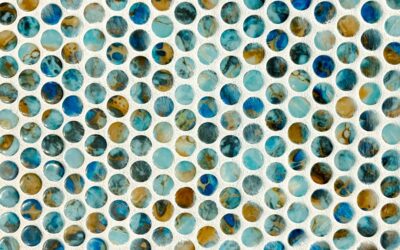
Few tiles pull off vintage charm and modern luxury at the same time, but this one does. Calacatta vecchia ceramic penny mosaic pairs the soft, veined look of Calacatta marble with the round, coin-sized dots of a classic penny tile, giving you a floor that feels both timeless and fresh. The word “vecchia” means “old” in Italian, and the finish leans into that aged, honed appearance you would find in a century-old European bathhouse. If you have been hunting for a way to add character to a small bathroom, shower floor, or niche, this mosaic deserves a spot on your shortlist. Below, you will find everything a contractor would tell you before you buy.
Part of our Tile & Grout guide — explore the full guide →
What Exactly Is a Penny Mosaic?
Penny mosaic gets its name from the individual tiles, which are roughly the size of an old copper penny, usually between 3/4 inch and 1 inch in diameter. Instead of setting hundreds of tiny circles by hand, manufacturers glue the rounds onto 12-inch by 12-inch mesh-backed sheets. You install the sheets, not the individual dots, which makes the job far more manageable for a homeowner or a pro on a deadline.
The Calacatta vecchia version prints a marble-look glaze onto a ceramic or porcelain body. Each little round shows a slightly different slice of the white-and-gray veining, so no two dots look identical. That variation is exactly what sells the marble illusion. From a standing height of five feet, a well-grouted floor reads as one flowing field of soft stone rather than a grid of repeated pattern.
Why Homeowners Choose This Tile
Small round tiles have a practical advantage that gets overlooked: grip. All those grout lines break up the surface into hundreds of tiny sections, which gives bare feet more traction than a large, smooth slab. That makes penny mosaic a smart pick for shower floors and wet areas where slip resistance matters.
- Marble look without marble upkeep. Real Calacatta stains, etches from shampoo and citrus, and needs sealing. A ceramic or porcelain copy shrugs all of that off.
- Built-in slip resistance. The dense grout-line network improves footing in showers and around tubs.
- Curved-surface flexibility. Mesh sheets bend around shower pans, drains, and curbs far better than big-format tile.
- Budget-friendly luxury. You get the high-end aesthetic at a fraction of natural stone pricing.
Where to Use It
This mosaic shines in tight, detail-driven spaces. Shower pans top the list because the small format hugs the slope toward the drain without awkward cuts. Bathroom floors, powder rooms, and mudrooms work beautifully too, especially in homes that lean traditional or transitional in style.
Niches and accent bands are another favorite. Run a strip of penny mosaic inside a shower niche, and it instantly looks custom. Some homeowners carry the tile up an accent wall behind a freestanding tub. Just keep in mind that walls demand a slightly different thinset approach than floors, so tell your installer where each sheet is headed.
Cost and What to Budget
Ceramic and porcelain penny mosaics typically run between $8 and $20 per square foot for the material alone, depending on brand, thickness, and whether the body is ceramic or the denser porcelain. Premium marble-look glazes like Calacatta patterns sit toward the upper half of that range. A designer or specialty-import sheet can push past $25 per square foot.
Installation adds meaningfully to the total. Because every sheet has hundreds of grout joints, tile setters charge more for mosaic than for standard field tile, often $12 to $25 per square foot in labor. Budget for extra grout, too. A small penny mosaic floor can drink up three to four times the grout of a large-format installation thanks to all those lines. For a typical 40-square-foot bathroom floor, plan on $800 to $1,600 all in, materials and labor combined.
How It Is Installed
Setting mesh-backed mosaic is not hard, but it rewards patience. Here is the general sequence a pro follows:
- Prep the substrate. The floor must be flat, clean, and rigid. Use a cement backer board or an uncoupling membrane over the subfloor to prevent cracking.
- Comb on thinset. Spread a white polymer-modified thinset with a 3/16-inch or 1/4-inch notched trowel, then flatten the ridges so they do not squeeze up between the dots.
- Set the sheets. Press each sheet in, aligning the edge spacing so the seam between sheets matches the gaps inside them. Tap it flat with a grout float and a block.
- Let it cure. Give the thinset 24 hours before grouting so nothing shifts.
- Grout and seal. Push unsanded or fine-sanded grout into every joint, wipe clean, and seal the grout after it cures.
Grout Color Makes or Breaks the Look
Grout choice matters more with penny mosaic than almost any other tile because so much of the surface is grout. A bright white grout emphasizes each round and gives a crisp, graphic result. A soft gray or greige grout blends the joints into the marble veining and reads as a smoother, more seamless stone field, which is the classic “vecchia” aged effect.
For wet areas, consider an epoxy grout. It costs more and is trickier to apply, but it resists staining and never needs sealing, which is a real advantage on a shower floor that sees soap, oils, and constant moisture. If you use a standard cement grout, reseal it once a year.
Care and Maintenance
Day-to-day cleaning could not be simpler. Sweep or vacuum grit, then damp-mop with a pH-neutral tile cleaner. Skip acidic cleaners like vinegar on the grout, and skip harsh abrasives that could dull the glaze over time. Because the tile face is glazed ceramic or porcelain, it will not stain, so your only real maintenance target is the grout.
In a shower, squeegee the floor after use and run the exhaust fan to keep the grout dry between washes. That single habit does more to prevent mildew than any cleaner you can buy.
Pros and Cons at a Glance
Pros
- Marble aesthetic with zero stone maintenance
- Excellent slip resistance for wet areas
- Bends around curves, slopes, and drains
- Waterproof, frost-tolerant porcelain options available
Cons
- Grout-heavy, so more cleaning and higher install labor
- Material cost climbs for premium marble-look glazes
- Time-consuming to set compared with large tile
Frequently Asked Questions
Is calacatta vecchia ceramic penny mosaic good for shower floors?
Yes. The dense grout-line network gives strong slip resistance, and the small sheets conform to the slope toward the drain. Pair it with epoxy grout for the best moisture performance.
Ceramic or porcelain, which should I buy?
Porcelain is denser and less porous, so it handles heavy foot traffic and outdoor cold better. Ceramic costs a little less and works fine for standard indoor bathroom floors and walls.
How much extra tile should I order?
Order 10 to 15 percent over your measured square footage. Mosaic sheets get cut at edges and drains, and you will want matching spares from the same dye lot for future repairs.
The Bottom Line
If you want a floor that looks like it has been in a grand old home for decades but performs like a modern, low-maintenance surface, this tile delivers. A calacatta vecchia ceramic penny mosaic gives you the veined elegance of marble, the grip you need in a shower, and a price that stays reasonable. Nail the grout color, prep the substrate properly, and you will have a bathroom detail that earns compliments for years.
Prefer to explore on your own?
See how new flooring looks in your actual room in seconds — free, no signup.
Try the free Floor Studio →