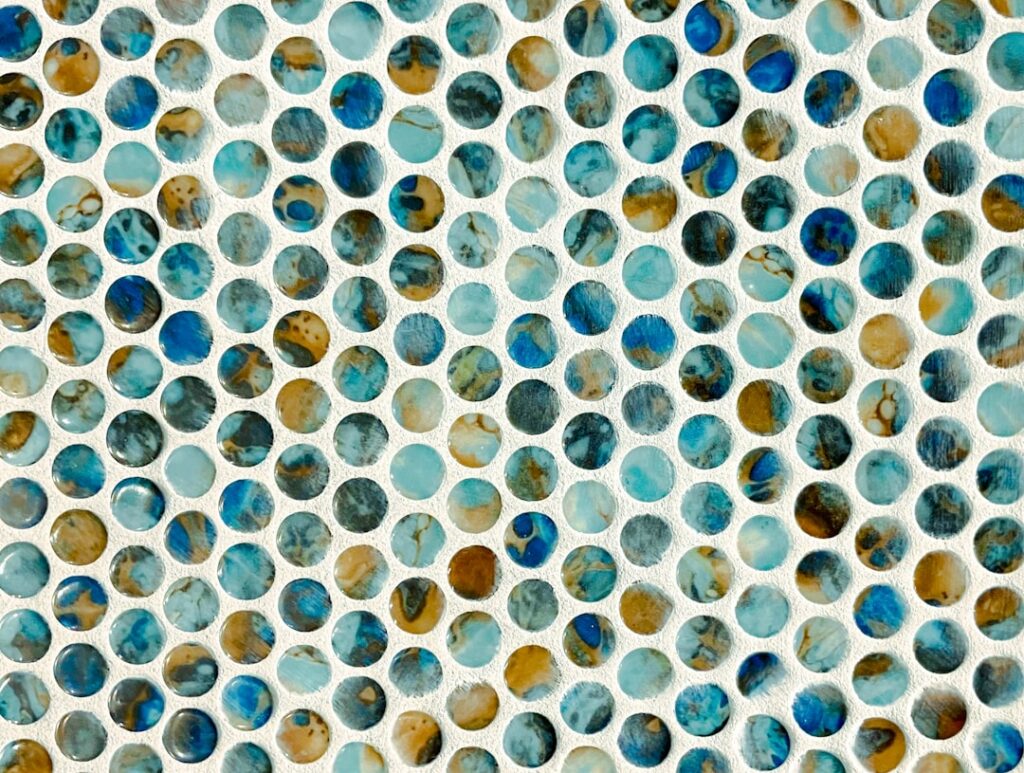
Few tile styles carry as much retro charm and modern versatility as the small round mosaic, and green penny tile takes that classic shape into rich, characterful territory. Whether you lean toward soft sage, deep emerald, or a glossy bottle green, these coin-sized rounds bring texture, color, and personality to bathrooms, kitchens, and entryways. This guide covers the shades, materials, installation, and styling so you can use green penny tile with confidence.
Part of our Tile & Grout guide — explore the full guide →
What Penny Tile Is
Penny tile gets its name from the small, round tiles roughly the size of a penny, usually between three-quarters of an inch and one inch across. The format dates back to early twentieth-century bathrooms and has stayed popular ever since for its blend of vintage appeal and practical grip. Because the tiles are tiny, they come mounted on mesh-backed sheets that you install as units rather than placing each round individually.
Adding green to that format opens a wide design range. The color reads as fresh and natural, calling to mind gardens, sea glass, and mid-century kitchens. Depending on the shade and finish, green penny tile can feel calming and spa-like or bold and statement-making.
Shades and Finishes to Consider
Green is one of the most flexible colors in tile, and penny rounds show it off beautifully. Popular directions include:
- Sage and soft green: Muted, earthy tones that feel serene and pair easily with neutral walls and natural wood.
- Emerald and forest green: Deep, saturated shades that make a luxurious, dramatic statement, especially in glossy glaze.
- Mint and seafoam: Light, airy greens with a retro, nostalgic feel that brighten small spaces.
- Olive and moss: Warm, complex greens that bring an organic, grounded quality to a room.
Finish changes the mood as much as the hue. Glossy glazes reflect light and amplify color, while matte and satin finishes feel softer and more contemporary. Some sheets mix several green tones or blend green with white and gray for a speckled, hand-laid look.
Materials: Porcelain, Ceramic, and Glass
Green penny tile comes in a few materials, each with its own strengths. Porcelain is dense, durable, and water-resistant, making it a reliable choice for floors and wet areas. Ceramic is slightly softer and often more budget-friendly, well-suited to walls and backsplashes. Glass penny tile glows with depth and color saturation and works beautifully on walls, though it’s typically reserved for vertical surfaces rather than heavy-traffic floors.
For a shower floor, the many grout lines between penny rounds are an asset, providing natural slip resistance underfoot. That same quality makes penny tile a longtime favorite for bathroom flooring.
Where Green Penny Tile Works Best
The format is remarkably versatile. Common applications include:
- Bathroom floors, where the texture and grip make it both stylish and practical.
- Shower walls and niches, where green tones create a fresh, spa-like atmosphere.
- Kitchen backsplashes, where a band of green penny rounds adds personality behind a stove or sink.
- Entryways and powder rooms, where a small space can carry a bold color without overwhelming the home.
- Accent borders and feature strips that introduce color alongside larger field tile.
Because the tiles are small and the color is distinctive, green penny tile often works best as a focal point rather than covering every surface in a large room. Used thoughtfully, it adds character without becoming overwhelming.
Installation Basics
Installing penny tile follows the same general path as other mosaic sheets, though the round shape calls for extra attention to spacing and alignment. The manufacturer’s instructions and your specific substrate always govern the details, but the typical sequence looks like this:
- Prepare a clean, flat, and properly waterproofed substrate, which is essential for wet areas like showers.
- Spread thinset with a notched trowel sized for mosaics, working in small sections so it doesn’t skin over.
- Press each mesh sheet into place, lining up the edges so the gaps between sheets match the gaps within them.
- Use a flat board and gentle taps to set the sheet evenly and avoid lippage between rounds.
- Let the thinset cure fully before grouting.
The trickiest part is keeping the spacing consistent where sheets meet. Take your time aligning seams so the finished surface reads as one continuous field of rounds rather than a grid of obvious squares.
Grout Choices That Change the Look
Grout color dramatically shapes the final appearance of penny tile because there’s so much of it. A contrasting grout, such as charcoal or dark gray against light green, emphasizes each round and creates a graphic, vintage feel. A matching or tonal grout lets the color blend into a softer, more seamless field.
For wet areas, consider a high-performance or epoxy grout for better stain and moisture resistance, and seal cement-based grout once it cures. Because penny tile has abundant grout lines, the grout you choose is not an afterthought; it’s a core design decision.
Cleaning and Long-Term Care
One practical reality of penny tile is the sheer number of grout lines, which catch more dirt than a large-format tile would. Routine sweeping or vacuuming keeps grit from settling into the joints, and regular mopping with a pH-neutral cleaner keeps the tile faces bright. Avoid harsh acidic cleaners on natural-stone versions, and skip abrasive pads that could scratch a glossy glaze.
Grout deserves periodic attention. Sealed cement grout resists staining far better, but it benefits from resealing over time, especially in showers and other wet areas. If grout starts to discolor, a dedicated grout cleaner and a small brush usually restore it. Glass and glazed porcelain penny tile wipe clean easily, which is part of their lasting appeal in busy kitchens and bathrooms.
Styling and Final Thoughts
Green penny tile pairs naturally with warm metals like brass and gold, with natural wood vanities, and with white or cream walls that let the color sing. For a cohesive look, echo the green elsewhere in towels, plants, or accessories rather than competing with other strong colors. A glossy emerald floor under a freestanding tub or a sage backsplash behind open shelving can anchor an entire room’s palette. With its timeless shape, practical texture, and rich color range, green penny tile offers homeowners a way to add lasting character that feels both vintage and fresh.
Prefer to explore on your own?
See how new flooring looks in your actual room in seconds — free, no signup.
Try the free Floor Studio →