

The short answer is no — using a steam mop on hardwood floors is not recommended. While steam mops are excellent for tile and sealed concrete, the combination of heat and moisture they produce can cause serious damage to hardwood flooring, including warped boards, cloudy finishes, and voided warranties.
This guide explains exactly why steam and wood do not mix, what kind of damage you can expect, what the manufacturers say, and the safe alternatives that will keep your hardwood floors clean and beautiful for decades.
Why Steam Mops Damage Hardwood Floors
Moisture Penetration
Steam mops work by heating water to approximately 212°F and releasing it as pressurized steam through a microfiber pad. This steam is extremely effective at loosening grime and killing bacteria on non-porous surfaces like tile and sealed stone. But wood is a porous, organic material that absorbs moisture — and steam is moisture in its most penetrating form.
When steam contacts a hardwood floor, the heat opens the pores in the wood and the finish, allowing moisture to penetrate deeper and faster than liquid water would. Even floors with a polyurethane finish are not fully sealed. The finish has microscopic imperfections, gaps at board edges, and wear spots where steam can infiltrate.
Once moisture gets beneath the finish and into the wood, it causes the wood fibers to swell. Over time, this repeated swelling and drying cycle leads to cupping (boards curving upward at the edges), crowning (boards doming in the center), and eventually permanent warping.
Finish Damage
The heat from a steam mop can damage the polyurethane finish on hardwood floors in several ways:
- Clouding: Steam trapped beneath the finish creates a white, hazy appearance called blushing. This clouding can be permanent and may require professional sanding and refinishing to correct.
- Peeling: Repeated steam exposure weakens the bond between the finish and the wood, causing the polyurethane to lift, bubble, or peel.
- Dulling: The combination of heat and moisture breaks down the finish at a molecular level, accelerating the loss of sheen and protective qualities.
- Cracking: Thermal shock from hot steam on a cool floor can cause the finish to develop fine cracks (crazing) that allow even more moisture penetration over time.
Warping and Structural Damage
The most serious consequence of steam mopping hardwood floors is structural warping. When wood absorbs moisture unevenly — which is exactly what happens when steam hits the top surface — the boards distort.
Cupping is the most common form of steam-related damage. The top surface of each board swells from moisture absorption while the bottom remains dry, causing the edges to rise higher than the center. In severe cases, boards can buckle entirely, pulling away from the subfloor and creating a dangerous tripping hazard.
Engineered hardwood floors are somewhat more resistant to moisture than solid hardwood because the cross-layered plywood core resists expansion and contraction. However, the top veneer layer is still real wood and can suffer the same finish damage and surface warping from steam exposure.


What Hardwood Floor Manufacturers Say
Every major hardwood flooring manufacturer explicitly warns against using steam mops on their products. Here is what some of the biggest names say:
- Bruce Hardwood: “Do not use a steam cleaner on your hardwood floors. The heat and moisture can damage the finish and the wood.”
- Shaw Hardwood: Their care and maintenance guide states that steam mops are not recommended and may void the warranty.
- Mohawk Hardwood: “Steam mops should never be used on hardwood flooring. The excessive moisture can cause irreversible damage.”
- Bona: As the leading hardwood floor care brand, Bona explicitly states that steam cleaners should not be used on any hardwood floor.
Warranty Implications
This is the point that catches many homeowners off guard. Most hardwood floor warranties specifically exclude damage caused by excessive moisture, including steam cleaning. If your floors warp, cloud, or peel after steam mopping, the manufacturer is under no obligation to cover repairs or replacement under warranty.
Some warranties include language about “following recommended maintenance procedures,” which means using a steam mop — against the manufacturer’s explicit instructions — can void your warranty entirely, even for damage unrelated to the steam mopping.
Before using any cleaning method on hardwood floors, check your specific warranty documentation. If you have lost the paperwork, the manufacturer’s website almost always has care and maintenance guidelines available for download.
What About Sealed Hardwood Floors?
Some steam mop manufacturers claim their products are safe for “sealed hardwood floors.” This is misleading for several reasons.
First, virtually all hardwood floors installed in the last 50 years have some form of finish — polyurethane, varnish, or lacquer. When steam mop companies say “sealed,” they are implying that a finished floor is impervious to steam. It is not. As discussed above, every finish has microscopic vulnerabilities that steam can exploit.
Second, the definition of “sealed” is vague. A floor that was sealed 15 years ago has wear, scratches, and thinned finish that makes it far more vulnerable to moisture than a freshly finished floor. Even a brand-new polyurethane finish is not a moisture barrier the way tile or glass is.
Third, the damage from steam mopping is cumulative. You might use a steam mop once or twice without visible damage and assume it is safe. But each use introduces moisture beneath the finish, and the effects may not become apparent until months or years later when clouding, warping, or finish failure finally manifests.
The safest approach is to take the hardwood flooring manufacturers at their word: do not steam mop hardwood floors, sealed or otherwise.
Safe Alternatives for Cleaning Hardwood Floors
The good news is that hardwood floors are easy to keep clean without steam. Here are the recommended methods.
Microfiber Dust Mop (Daily)
A dry microfiber dust mop is the single best daily cleaning tool for hardwood floors. Microfiber attracts and traps dust, pet hair, and fine grit that can scratch the finish. Dust mopping daily (or every few days in low-traffic homes) prevents the buildup that makes floors look dull.
Vacuum with Hard Floor Setting (Weekly)
Use a vacuum cleaner with a dedicated hard floor setting that disengages the beater bar. The beater bar on a carpet setting can scratch hardwood. Many stick vacuums and canister vacuums have a hard floor mode specifically designed for this purpose.
Damp Mop with Hardwood Floor Cleaner (Weekly to Biweekly)
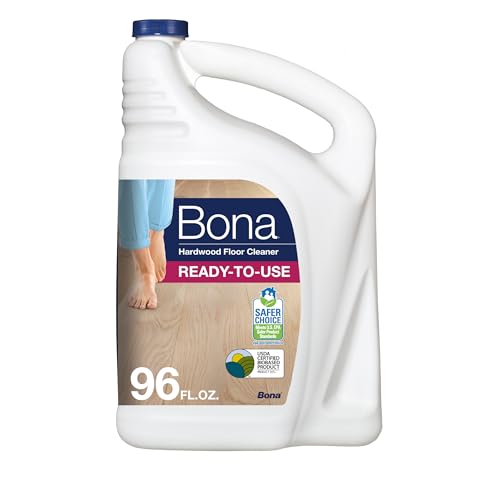
Damp mopping — not wet mopping — is the proper way to deep clean hardwood floors. Spray a hardwood-specific cleaner like Bona Hardwood Floor Cleaner directly on the floor, then wipe with a well-wrung microfiber mop. The mop should be barely damp, not dripping.
Key principles for damp mopping hardwood:
- Never pour water directly on the floor
- Wring the mop until no water drips when squeezed
- Work in small sections (4×4 feet)
- Dry the floor immediately if any standing water appears
- Mop in the direction of the wood grain
Spot Cleaning
For sticky spots or dried spills, spray a small amount of hardwood floor cleaner directly on the spot and let it sit for 30 seconds before wiping with a soft cloth. For stubborn residue, a cloth dampened with mineral spirits can dissolve sticky substances without damaging the finish. Test in an inconspicuous area first.
Products to Use
- Bona Hardwood Floor Cleaner: The industry standard. pH-neutral, residue-free, safe for all polyurethane finishes.
- Method Wood for Good Floor Cleaner: Plant-based, non-toxic, almond-scented. Good eco-friendly option.
- Weiman Hardwood Floor Cleaner: Cleans and adds a light protective layer. Good for floors that need a refresh.
Products to Avoid
- Vinegar: While commonly recommended online, vinegar is acidic and can dull polyurethane finishes with repeated use.
- Murphy’s Oil Soap: Leaves a residue on polyurethane-finished floors that builds up over time. Only use on oil-finished or waxed wood floors.
- Bleach or ammonia: Strips and discolors the finish.
- All-purpose cleaners: Most contain surfactants that leave residue on hardwood.
- Wax-based products: Creates a buildup on polyurethane floors that is difficult to remove and causes haziness.
When Steam Cleaning Might Be Acceptable
There are very limited situations where steam cleaning might be considered on hardwood floors, though it is still not recommended:
- Floors scheduled for refinishing: If you plan to sand and refinish the floors soon anyway, a one-time steam clean to sanitize before refinishing will not matter since the existing finish is being removed.
- Commercial hardwood with industrial finish: Some commercial hardwood floors with extremely thick, industrial-grade finishes may tolerate occasional steam cleaning. This does not apply to residential hardwood.
- Testing a small area: If you absolutely want to try steam cleaning, test in a closet or hidden area first and wait several weeks to observe for clouding or other damage before proceeding.
What If Steam Has Already Damaged Your Floors?
If you have been using a steam mop and are now seeing cloudy spots, dulling, or early signs of warping, here is what to do:
- Stop using the steam mop immediately. Further use will worsen the damage.
- Assess the damage level. Minor clouding may buff out with a hardwood floor polish. Significant cloudiness, peeling, or warping will require professional attention.
- For minor clouding: Apply a hardwood floor restorer product like Bona Refresher or Weiman Hardwood Restorer. These products add a thin protective layer that may reduce the appearance of light clouding.
- For moderate damage: A professional floor technician can screen (lightly sand) the finish and apply a new coat of polyurethane without fully sanding the floor. This is less expensive than a full refinish.
- For severe damage: Full sanding and refinishing is the only solution for deeply clouded, peeling, or warped floors. This typically costs $3 to $8 per square foot.
Final Thoughts
Steam mops are fantastic cleaning tools — just not for hardwood floors. The combination of heat and moisture penetrates wood finishes, promotes warping, and voids manufacturer warranties. Stick with a microfiber dust mop for daily cleaning and a damp mop with a pH-neutral hardwood cleaner for weekly maintenance. Your hardwood floors will stay beautiful far longer with this gentle approach than they ever would with steam.
Prefer to explore on your own?
See how new flooring looks in your actual room in seconds — free, no signup.
Try the free Floor Studio →

